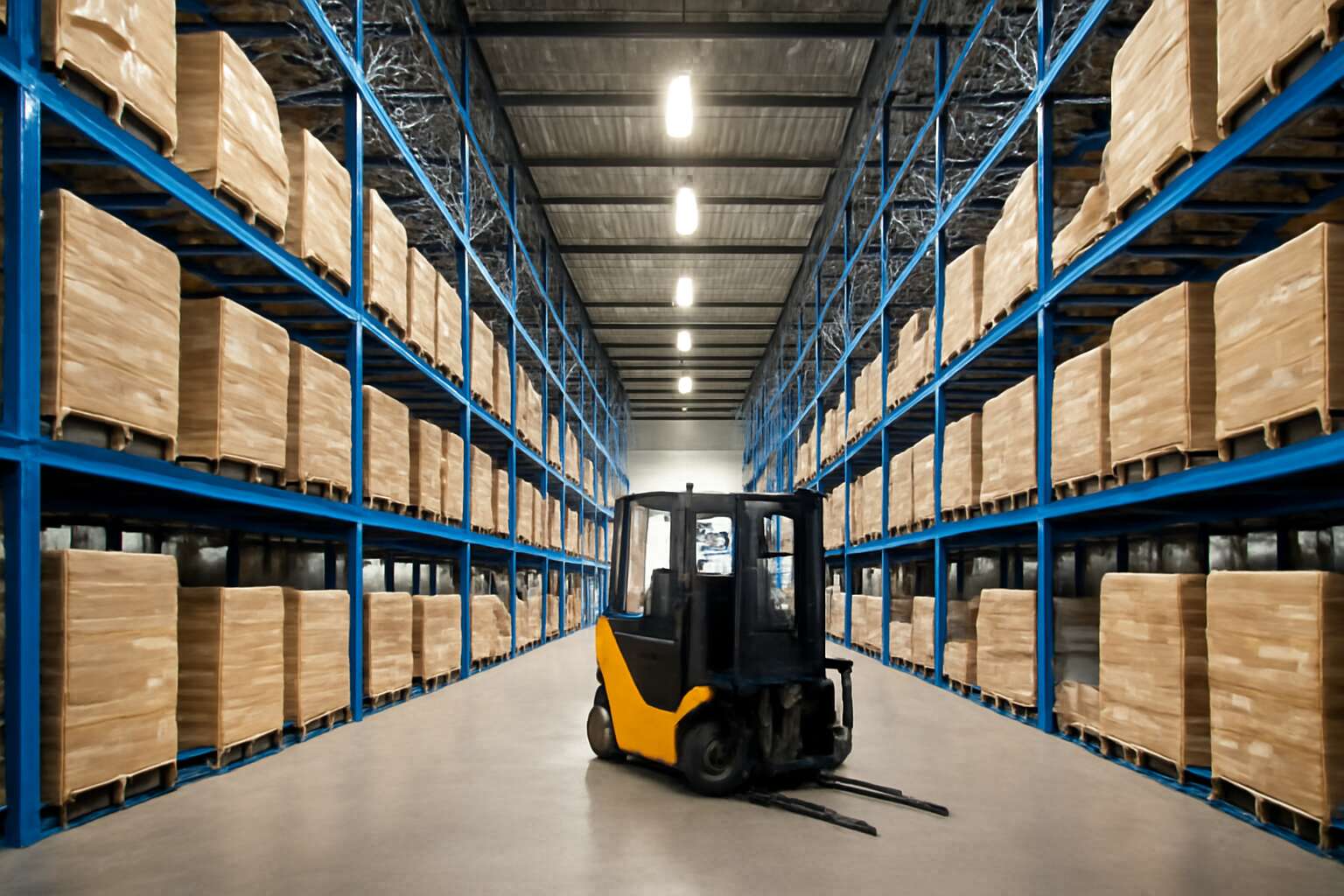
Understanding racking systems and their purpose
Racking system basics and how it works
South Africa’s bustling distribution hubs move pallets with surprising speed. A practical stat anchors the claim: storage density can rise up to 40% when racking is designed with intent—an elegant nudge toward efficiency that logistics teams value.
Understanding what is racking system reveals a modular backbone that holds stock aloft. It’s uprights, beams, decking, and optional accessories that click into place to form secure bays, balancing safety with easy access for daily operations.
- Safety: preventing collapses and injuries
- Scalability: reconfiguring for new SKUs or volume
- Efficiency: faster picks and inventory accuracy
Within South Africa, local standards and climate nuances matter; the racking system must accommodate common pallet sizes and withstand humidity. When well matched to the operation, it underpins shifts without fanfare—quietly supporting performance.
Primary uses and benefits across industries
Across South Africa’s distribution hubs, a well-tuned racking system can shave hours off weekly picks, proving that organized space is productive space. So, what is racking system? It’s a modular backbone that holds stock aloft—uprights, beams, decking, and optional accessories clicked into secure bays.
Its purpose is to balance safety with access, and its form adapts to the seasonality of demand. The setup supports a spectrum of operations—from fast-moving e-commerce orders to steady-manufacturing streams—across sectors such as retail, logistics, and cold storage.
- Demand-driven picking and faster inventory checks
- Space optimization with scalable layouts
- Audit-ready stock control and resilience in temperature-controlled environments
In South Africa, local climate and pallet norms guide choice, from humidity resistance to standard pallet sizes. When aligned to the operation, racking quietly underpins performance without fanfare.
Material options and durability considerations
Warehouses across South Africa report up to 30% faster picking when racking is tuned to demand. So, what is racking system in practice? It’s a modular backbone that holds stock aloft—uprights, beams, decking, and optional accessories snapped into secure bays. Understanding racking systems and their purpose reveals a balance of safety and access, adapting as seasons shift.
Material options guide durability and cost. Below are common choices for varied environments:
- Powder-coated carbon steel for durability and cost-efficiency
- Galvanized steel for humidity and corrosion resistance
- Stainless steel for washdown environments and cleanliness
- HDPE decking or polymer options for corrosion-free, lightweight setups
Durability depends on load ratings, joinery, and environmental exposure. In local settings, humidity, temperature swings, and pallet norms push choices toward corrosion resistance and robust finishes.
Design principles and load management
What is racking system in practice? A modular backbone that holds stock aloft—uprights, beams, decking, and optional accessories snapped into secure bays. In the real world, it is a careful balance of safety and access, designed to flex when demand skews with the seasons. South African warehouses know this well: when racks align with flow, picking becomes a choreography, not a sprint.
Design principles and load management keep that choreography smooth. Consider these pillars:
- Compatibility with pallet dimensions and aisle widths
- Clear load ratings and redundant safety margins
- Corrosion resistance and finishes suited to the environment
Seen from the mezzanine, a well-tuned racking system seems almost editorial—space, light, order. It whispers: efficiency is a choice, not a chance.
Industry standards and compliance overview
Festooned with pallets and the hum of forklifts, a warehouse runs on a solid backbone. The simple answer to what is racking system: it’s a modular framework that holds stock aloft—uprights, beams, decking—so items are accessible and auditable.
Understanding its purpose means placing it inside a safety-and-quality backbone. Industry standards and compliance keep the system honest, especially in South Africa’s bustling warehouses.
- ISO 9001 quality management
- ISO 45001 health and safety
- SABS local safety standards
Operational dignity comes from standards; the yard stays efficient and safe.
Types of racking systems and their applications
Selective pallet racking and its advantages
Space is the new currency in South Africa’s warehousing world. Understanding what is racking system helps frame smarter choices. Among options, selective pallet racking remains the standard for its clear balance of accessibility and capacity. It lets you reach most pallets without moving others, supports varying pallet heights, and adapts as demand shifts. In short, it delivers practical flexibility on a busy floor without overcomplication.
- Maximum pick-face accessibility for fast retrieval
- Simple installation and easy reconfiguration as needs change
- Broad compatibility with varied pallet sizes and weights
- Cost-effective setup that scales with demand
This versatility makes selective pallet racking a staple for South Africa’s fast-moving industries, where uptime and accuracy truly matter!
Drive-in and drive-through racking differences
Space in South Africa’s warehouses is gold, and every square meter counts. A recent benchmark suggests efficient racking can cut handling time by up to 30%. So, what is racking system? It is the quiet architecture that gives order to chaos, steel arches that hold inventory in graceful balance and turn chaos into choreography.
Drive-in and drive-through racking are tailored for high-density shelves. Drive-in uses one entry and exit, stacking pallets on rails in a last-in, first-out rhythm to squeeze space. Drive-through offers access points, front and back, enabling flow and FIFO-friendly inventory.
- Drive-in racking emphasizes density and tolerance for identical pallet sizes — ideal for bulk goods.
- Drive-through racking expands accessibility, supporting varied turns and better control over stock rotation.
These systems, paired with thoughtful design, are the backbone of South Africa’s fast-moving industries.
I see the shelves as a chorus of industry and dream, where steel meets purpose!
Pallet flow and push-back systems
South Africa’s warehouses run on momentum; a 30% cut in handling time is the whisper behind the numbers. So, what is racking system? It’s the quiet skeleton that orders chaos—steel arches that cradle pallets and choreograph movement with unsentimental precision.
Types of racking systems unfold like lanes in a relay. Pallet flow systems use gravity on rollers to deliver fast, FIFO-ready access for high-turnover SKUs.
- Pallet flow: gravity-fed rollers, high throughput, FIFO-compatible organization.
- Push-back: deep storage with wheeled carts, dense packing, last-in-first-out access.
- Choosing between them hinges on turnover rate, pallet uniformity, and desired retrieval times.
These choices energize South Africa’s fast-moving sectors, where every meter becomes momentum and every pallet tells a beat.
Cantilever and mezzanine racking solutions
We explore what is racking system — the quiet spine that orders chaos, granting forklifts a stage and pallets a patient rhythm. Cantilever racking stretches for long, awkward loads—lumber, pipes, artful coils—while mezzanine racking turns unused vertical space into living storage, a ghostly second floor rising above the floor.
- Cantilever for long, irregular loads and unobstructed pick paths
- Mezzanine systems to multiply floor space without expanding footprint
- Hybrid layouts combining both for scalable storage quests
Used across South Africa’s corridors of commerce, these configurations shape workflows with quiet authority, letting bulk items breathe while small goods follow a swift, deliberate cadence.
Components, accessories, and installation considerations
Key components of a racking system
This is how we frame it: what is racking system, and why does it matter? In South African warehouses, the right framework can cut pick times by up to 30%. It is the architectural backbone that aligns beams, uprights, and decks, transforming gravity into a patient, helpful hand rather than a stubborn obstacle. The components and installation considerations that follow shape every operation with enduring grace.
At the core, a racking system relies on a few sturdy partners.
- uprights and beams forming the frame
- pallet supports and decking to cradle the load
- bracing, safety bars, and load indicators for integrity
- labels, dividers, and protective guards as accessories
These pieces must satisfy local standards and be installed with care, aligning with aisle widths and forklift realities.
Installation considerations ripple through the project like a careful orchestration: site flatness, anchoring strategy, clearances for operators, and access for maintenance. We bring a measured approach—calm, precise, and ready to adapt!
Beams, uprights, and connectors
To answer what is racking system, imagine a warehouse spine that holds everything steady when bustle swirls at dusk. Beams, uprights, and connectors form the frame, while pallet supports and decking cradle the load. Bracing, safety bars, and load indicators knit integrity together, with labels, dividers, and protective guards adding practical polish. In South Africa’s busy yards, these components must meet local standards and align with aisle rhythms, turning gravity into a patient, reliable helper.
Installation considerations ripple through the project: site flatness, anchoring strategy, clearances for operators, and access for maintenance. A measured, adaptable approach keeps space safe and workflows smooth, even when the floor throws a curveball.
- Site flatness and level checks
- Anchoring and restraint strategy
- Operator clearances and maintenance access
Together, beams, uprights, and connectors anchor a system that quietly powers day-to-day logistics with grace and resilience.
Anchoring, bracing, and safety accessories
To answer what is racking system, picture a warehouse spine that keeps pace with bustle and gravity alike. Components, accessories, and installation considerations hinge on solid anchoring, resilient bracing, and smart safety add-ons. In South Africa’s busy yards, this framework not only supports loads but upholds compliance, ergonomics, and smooth workflows. The dialogue moves from floor flatness to anchor strategy and from cross-bracing to guard protection—an elegant choreography that makes everyday logistics look effortless!
- Anchoring options aligned with floor conditions and load profiles
- Bracing types that resist sway without overbuilding
- Safety accessories such as guards, end stops, and load indicators
Together, these decisions turn raw metal into a disciplined operational partner—quiet, compliant, and ready for the next shift.
Installation tactics and space optimization
Components and accessories converge to form a disciplined spine for your warehouse. Installation considerations hinge on floor flatness, load profiles, and the ergonomics of day-to-day movement. what is racking system? It is a modular framework that translates heavy metal into a responsive storage partner, aligning capacity with flow, safety with access, and durability with cost. In South Africa’s bustling yards, this framework must flex with shifts, heat, and handling variants while keeping compliance and clarity at the heart of every choice.
- Layout that preserves clear aisles
- Accessible picking zones
- Future-proof footprints for expansion
Installation tactics and space optimization demand granular calibration of rack footprints, aisle geometry, and pallet flow. The right approach reduces travel time and snag risk—without overbuilding. What is racking system becomes a reference point for engineers and operators, anchoring decisions in safety, efficiency, and scalable capacity.
Safety, maintenance, and compliance
Safety protocols and forklift interaction
What is racking system? It’s more than metal and shelving—it’s the safety backbone of a busy South African warehouse. When designed well, it maximizes space, supports heavy loads, and helps crews move efficiently without compromising stability.
Safety protocols and forklift interaction are baked into every fit. Good racking design creates clear sightlines, adequate aisle widths, and anchored uprights to reduce collision risk as trucks pass between bays.
- Clear sightlines and pedestrian zones
- Regular inspections of beams and connectors
- Dedicated truck routes to minimize cross-traffic
Maintenance and compliance keep that safety edge sharp. Regular inspections, corrosion checks, and bracing reviews help answer the question what is racking system in practice, while aligning with South Africa’s workplace safety standards and local warehouse regulations.
Inspection routines and maintenance schedules
A warehouse floor is a stage where gravity earns its tip. So, what is racking system? It’s not just metal and shelves; it’s the safety backbone that keeps forklifts polite and pallets from auditioning for a demolition derby. When maintenance is predictable, space opens up and staff breathe a little easier.
Inspection routines and maintenance schedules are the quiet superheroes of the operation. Here’s how they flow:
- Routine visual checks for damage, corrosion, and displaced loads
- Periodic verification of fasteners and connections
- Documentation of findings and corrective actions
- Independent audits to confirm alignment with South Africa’s safety standards
Keep the plan fresh by tying inspections to real-time changes in the warehouse environment. Compliance isn’t a checkbox; it’s a living discipline that protects people and profits in equal measure.
Regulatory compliance and standards
In South Africa’s bustling warehouses, a loose bolt or a bent beam can derail a shift. So, what is racking system? It’s the quiet backbone that keeps pallets aligned, forklifts courteous, and livelihoods intact—an invisible guardian of productivity. Industry data show up to 80% of pallet damages begin with overlooked maintenance, a statistic that lands where it hurts and where it counts.
Safety, maintenance, and compliance aren’t chores but daily rituals that anchor trust. These pillars surface in routine visual checks, precise documentation, and the steady cadence of inspections.
- Regulatory compliance checks with national safety codes
- Independent audits to confirm alignment with South Africa’s safety standards
- Documentation and certification renewals
Compliance isn’t a checkbox; it’s a living discipline that protects people and profits. In South Africa, audits and ongoing training keep the system honest, and clear records prove your commitment to safety as much as uptime.
Damage assessment and repair strategies
In the din of a South African warehouse, a compromised rack can derail a shift before the forklift horns ring. So, what is racking system? It’s the quiet backbone that keeps pallets aligned, forklifts navigating with confidence, and livelihoods intact—an unseen guardian of uptime and safety.
Damage assessment and repair rely on disciplined, proactive protocols rather than guesswork.
- Immediate red-tagging and isolating the affected bay
- Systematic visual inspection and non-destructive testing of beams, uprights, and bracing
- Targeted component replacement with compatible uprights and connectors
- Post-repair verification including load testing and managerial sign-off
Documentation and meticulous records bind maintenance to compliance, turning repairs into lasting safeguards that protect people and profits in today’s busy South African warehouses.
Buying guide and ROI considerations
Assessing space, load requirements, and scalability
Competition in South Africa’s hubs hinges on space efficiency and speed. A well-configured racking investment can boost throughput by up to 20% and cut handling times by 15%, industry benchmarks show. Understanding what is racking system—how racks, aisles, and pallets interact—frames the ROI conversation in clear terms. This buying guide segment invites you to weigh space, load, and growth against upfront cost, so the warehouse breathes rather than buckles under demand.
- Assess space: footprint, aisle width, high-density configurations to exploit vertical real estate
- Measure load requirements: static vs dynamic loads, pallet weights, reach distances
- Plan for scalability: modular uprights, adjustable beams, future expansion without major overhauls
ROI considerations hinge on lifecycle costs—installation, maintenance, energy, and downtime—balanced against resale value and depreciation. In a South African context, currency stability and serviceability influence payback periods as pallet density and workflow design shape decisions with pragmatism and ambition.
Cost factors: equipment, installation, and downtime
Space is money in a SA warehouse. If you ask what is racking system, the answer starts with total cost of ownership and how quickly you recoup it. Equipment price is only the opening move; true ROI hinges on uptime and throughput.
Key cost factors to weigh include:
- Equipment price and configuration matching your footprint
- Installation labour and any site preparation
- Downtime during conversion and reallocation of inventory
- Maintenance contracts, parts, and periodic re-certification
- Energy use, depreciation, and resale value of assets
In the SA context, currency stability and serviceability influence payback periods as pallet density and workflow design shape outcomes with pragmatism and ambition.
Vendor selection and durability considerations
In South Africa’s bustling logistics landscape, every idle second costs more than you think. Downtime gnaws at margins and tightens the payback clock. If you ask what is racking system, the answer sits at the crossroads of total cost of ownership, uptime, and throughput—the trio that turns a plan into profit.
ROI hinges on choosing a partner you can trust. When evaluating durability, look past price to serviceability, spare-parts availability, and a robust local network.
- Local service network and spare parts availability
- Warranty terms and recertification support
- Installation expertise and project management
- Delivery lead times and after-sales training
- References from SA warehouses and documented performance
Durability is a living attribute—components designed for SA climates, forklift wear, and evolving density needs help preserve depreciation and sustain uptime.
ROI, lifecycle cost, and total cost of ownership
In South Africa’s bustling warehouses, downtime is not just an annoyance—it’s a tax on margins. Ask what is racking system and you’re really asking about the DNA of your footprint: ROI, uptime, and throughput. A smart choice trims the payback clock rather than inflating it.
ROI gains if you measure lifecycle cost, not just the upfront price. The total cost of ownership (TCO) accounts for installation, maintenance, spare parts, depreciation, and how density evolves with demand. Durability and serviceability aren’t add-ons; they’re the ballast that preserves uptime and space efficiency.
- Lifecycle cost vs initial price
- Maintenance cadence and spare parts availability
- Downtime reduction and throughput gains
Investing in a well-supported partner means you’re buying reliability, not a temporary fix. A good buying guide aligns local service networks, warranty terms, and recertification support with the true business value of durable racking systems.



0 Comments