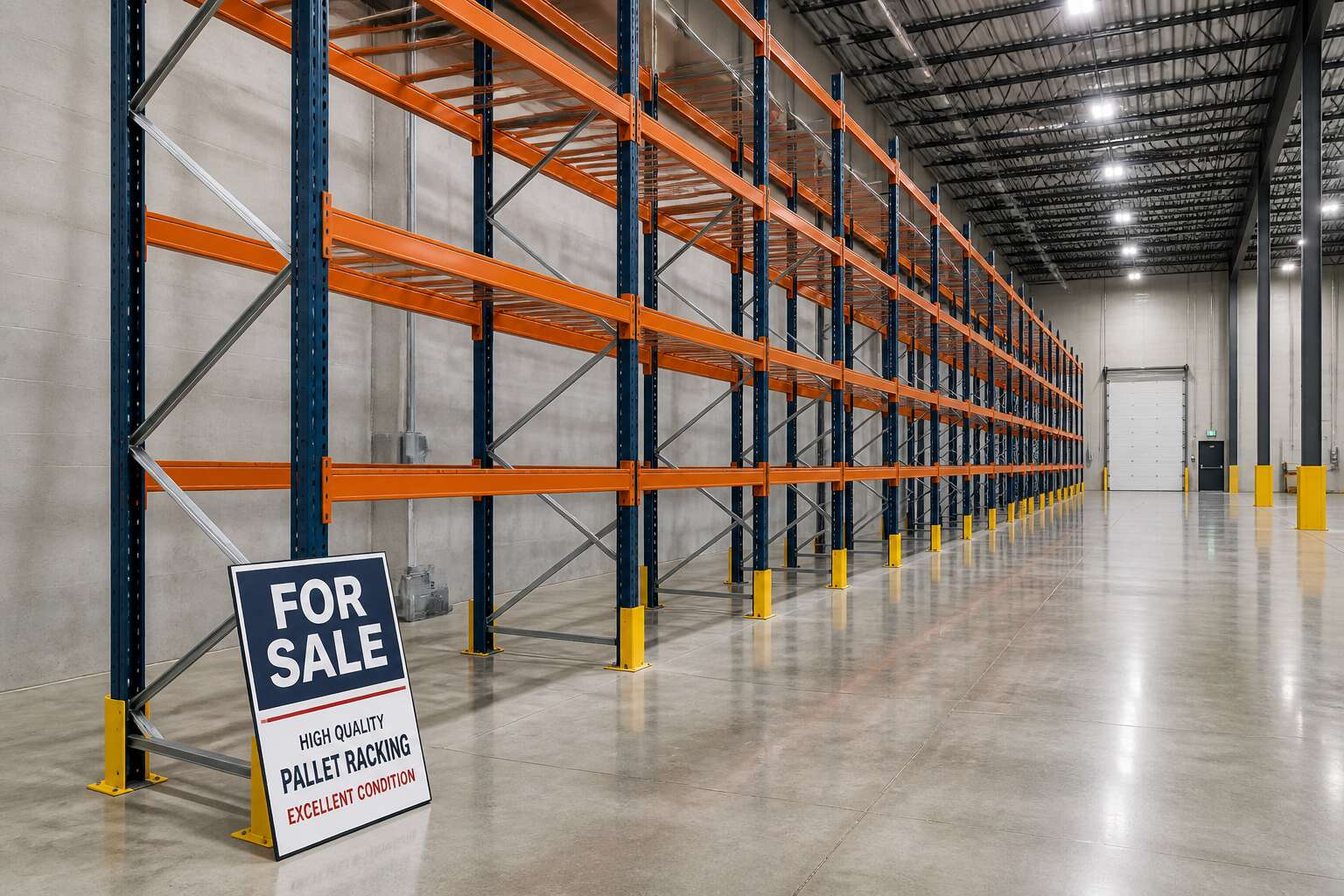
Local Sourcing Options for Warehouse Storage Equipment
Exploring Regional Distributors
There is a quiet art to finding pallet racking that does not involve a cross-country trek. The tyranny of choice online often leaves you staring at shipping quotes that cost more than the steel itself. As a warehouse manager, I have learned that the most practical solution is often hiding in an industrial park just past the traffic jam you normally avoid. The hunt for racking for sale near me usually begins with a map and a prayer, but it ends with a forklift reversing into your loading bay.
Regional distributors offer something that national chains cannot: a willingness to inspect your actual floor space. They understand that your warehouse has a support column where a racking bay should go. When you visit a local supplier, you can touch the beams, check for rust, and haggle over the price of a few hundred kilograms of galvanised steel. This proximity matters when a bolt goes missing on a Friday afternoon.
A sensible approach to vetting a local supplier includes:
1. Confirming their delivery capacity for your suburb or industrial zone.
2. Checking if they offer installation teams or just drop the pallets at the kerb.
3. Asking about fire safety compliance for your specific building regulations.
The advantage of buying closer to home is the reduced lead time. A distributor in Johannesburg can deliver to Pretoria within a day, whereas an online order from another province might linger in a depot for a week. You save on freight, and you gain a contact who knows the quirks of the local logistics network.
I have also found that regional stockists often carry used or refurbished units that never appear on their websites. A quick visit to their yard can reveal a row of cantilever racks that would suit an awkward corner of your facility. That is the secret value of the physical search. A phone call might get you a price, but a handshake gets you the truth about the condition of the uprights.
Factory Outlets and Showrooms
Factory outlets and showrooms strip away the abstraction of online retail. The racking for sale near me sits in front of you, fully assembled and marked with a price tag that reflects local demand. You can pace out the footprint of a double deep bay or check the weld quality on a beam before committing a single rand. That hands-on inspection reveals details like shim thickness and seam alignment that no spec sheet conveys.
Most manufacturers in South Africa maintain a showroom attached to their production line. That means you are seeing the same steel that will arrive at your warehouse, not a marketing render. I have found that showroom staff, who often work on the factory floor, will point out load rating limits with a level of candor that website chatbots lack. They also keep a bin of replacement clips and bolts for sale, which saves a trip later. The outlay of an hour here beats a week of back-and-forth emails.
Online Marketplaces with Local Pickup
Online marketplaces have turned surplus warehouse steel into a lively secondhand economy in South Africa. A search for racking for sale near me surfaces everything from cantilever racks to boltless shelving on platforms like Gumtree, BidorBuy, and Facebook Marketplace. Most listings come from businesses clearing out a depot after a relayout or closure, so the steel is often structurally sound but priced to move fast.
The local pickup option changes the logistics. You collect the frames and beams directly from the seller’s yard, avoiding delivery fees that can erode savings. The quality varies, so photographs and load capacity tables become your first filter. Some sellers provide original invoices from local manufacturers, which confirms the steel’s age and origin. I have found that sellers who agree to a viewing are usually straightforward about rust or bent clips.
Useful platforms include:
– Gumtree classifieds, using the industrial equipment filter
– Facebook Marketplace, set to your province
– BidorBuy’s business and industrial section
– OLX South Africa, for smaller quantities
When you find racking for sale near me on these sites, confirm the pickup location and load ratings before committing. The price gap between marketplace steel and new showroom stock often covers the effort of an afternoon pickup. Bring your own bolts and a tape measure.
Auction Houses and Liquidation Sales
The sharp ring of an auctioneer’s gavel often signals a warehouse full of opportunity. When businesses close their doors or consolidate operations, the steel skeletons of their storage systems rarely travel with them. Auction houses and liquidation sales become the final resting place for high-quality pallet racking, and for the savvy buyer, this is where the real value hides. These venues offer a direct line to industrial-grade equipment that is often sold for a fraction of its original replacement cost, simply because the seller needs it gone by Friday.
Navigating these events requires a different mindset than scrolling through a classified ad. You are not just buying a shelf; you are inheriting a system that was engineered to hold tons of weight. The advantage here is the sheer volume available. You can often secure an entire warehouse’s worth of beams and uprights in one transaction, which is a logistical win if you are outfitting a new facility. However, the trade-off is the condition. Unlike a curated showroom, these units have lived a hard life. You must be prepared to inspect the paint for rust spots, check for bent flanges, and verify that the safety locks are still springy.
To make the most of your time on the floor, you should go in with a clear plan and a critical eye. The chaos of a live sale can push you into a bidding war, so remember the maximum price you are willing to pay per bay. Consider these specific checks before you raise your paddle:
– Examine the column connectors for cracks or signs of welding failure.
– Measure the beam thickness with a gauge, as not all steel is created equal.
– Ask if the teardrop or keyhole pattern matches your existing uprights.
The true beauty of liquidation events, however, is the immediacy of the physical assessment. You can touch the steel, feel its weight, and see the manufacturer’s stamp with your own eyes. That tactile confirmation is something a grainy photo on a marketplace listing can never provide. While you may not find “racking for sale near me” with the convenience of a local store, the auction route offers a robust alternative. It rewards the diligent buyer who is willing to sift through the surplus to find the structural gems that are simply being discarded rather than sold for their true worth.
Networking with Nearby Businesses
Your phone is a research tool, but your feet are the real deal-finders. While the digital marketplace buzzes with listings, the most direct route to racking for sale near me often runs through the businesses operating right down the road. A distribution centre that is upgrading or a manufacturer that is downsizing frequently has surplus equipment that never hits the open market.
Networking with nearby logistics managers and warehouse supervisors creates a quiet pipeline of leads. These professionals know when a neighbour is shuffling stock or clearing a bay. A quick conversation over coffee can reveal a set of uprights that matches your current setup perfectly, saving you the headache of mixing incompatible brands. You are also cutting out the freight cost entirely, which is a significant win when you are moving heavy steel beams across town.
The tangible benefits of this hyper-local approach are clear:
– You can physically measure the depth and width against your floor plan.
– You can assess the load capacity stamps without relying on a seller’s description.
– You can schedule a pickup that suits your own operational downtime, not a courier’s timeline.
When you source from a nearby operation, you are also buying a piece of their history. A rack that has held the same pallet size for a decade is a proven system. Just ensure you walk the aisle to check for impact damage from forklift trucks. If the uprights look straight and the connectors click into place, you have secured a bargain that a national buyer would have missed. Keep the relationship warm, as next month’s surplus could be the exact component you need.
Types of Racking Systems to Consider
Selective Pallet Racking for Everyday Access
Nearly every warehouse in South Africa runs on selective pallet racking. It remains the quintessential starting point for businesses seeking racking for sale near me. This system offers direct access to every single pallet, which means you can retrieve any SKU without moving another load first. That immediate accessibility translates into faster turnaround times and a simpler operational flow for your forklift drivers.
Its straightforward design also makes it one of the most cost effective options on the market. If your inventory relies on high product turnover, this is the workhorse you need. Consider how its flexibility compares to other storage methods:
– It accommodates a wide variety of pallet sizes.
– Installation is quick and requires minimal specialised tools.
– You can easily reconfigure the layout as your stock levels shift.
– The upfront investment is lower than automated or high density alternatives.
Choosing selective racking is about prioritizing speed and simplicity. However, if you are working with a constrained floor space, you might sacrifice some storage density. The aisles need to be wide enough for standard forklift turning circles. Our warehouses often pair this system with a robust warehouse management system to track stock movement efficiently. For most growing operations, the ability to grab any pallet at a moment’s notice outweighs the need to cram every square metre with product. It keeps the flow of goods moving without complex scheduling requirements.
Cantilever Racking for Long and Heavy Items
When your inventory includes steel beams, timber lengths, piping, or oversized machinery components, standard pallet racking quickly reveals its limitations. These items are too long, too unwieldy, and too heavy for conventional shelving. This is where cantilever racking steps in as the definitive solution for warehouse operations dealing with extended or bulky stock.
I have seen facilities transform their storage capacity simply by switching to this system. Unlike selective racking, which relies on horizontal beams and back-to-back frames, cantilever racking features upright columns with protruding arms that extend outward. This design creates a completely open frontal area, allowing overhead cranes or forklifts to slide materials in and out without any vertical obstruction. There are no cross beams or diagonal braces blocking your path, which means you can store awkward lengths safely and retrieve them with remarkable speed.
If you are comparing storage options and wondering what other choices might suit your floor plan, the main alternatives you will encounter are drive-in racking, pallet flow racking, and push-back systems. However, none of these offer the same unobstructed access for long goods. For operations dealing with sheet metal, furniture components, or heavy-duty profiles, locating cantilever racking for sale near me often yields the most practical solution. The structure is incredibly robust, frequently manufactured from heavy-gauge steel with welded or bolted arms that can support thousands of kilograms per level.
The true value here continues beyond simple storage. By utilising vertical space effectively, you eliminate the need for multiple single-tier storage sheds or outdoor yards that expose expensive materials to weather damage. Consider the typical applications where this racking excels:
– Steel service centres and metal fabrication shops
– Lumber yards and timber merchants
– PVC pipe and conduit manufacturers
– Aluminium extrusion warehouses
– Furniture and mattress distribution centres
You will also appreciate the cost efficiency. Because the system requires fewer components than traditional pallet racking, the initial investment is often lower per cubic metre of storage. Furthermore, installation is straightforward, and the arms can be adjusted vertically every few inches without needing specialised tools. This adaptability means your storage layout evolves alongside your inventory demands.
Choosing the right supplier is about more than just finding a price list. You want a partner who understands load capacities, floor conditions, and seismic considerations relevant to South African warehouses. When you search for racking for sale near me, focus on vendors who offer site assessments and custom layouts. The best installations consider aisle widths, forklift turning radiuses, and the weight distribution of your heaviest stock. A well-designed cantilever system effectively turns an unused space constraint into an organised, high-density asset. This is how you bridge the gap between having long goods and having the right place to keep them.
Drive-In Racking for High-Density Storage
Space is the silent currency of any successful warehouse. When every square metre carries a monthly cost, maximising your storage density becomes more than a logistical preference—it’s a financial imperative. This is precisely where drive-in racking earns its reputation. Unlike selective systems that grant immediate access to every pallet, drive-in racking allows forklifts to enter the storage structure itself, creating deep lanes that stack pallets consecutively. The result? A dramatic reduction in aisle space and a substantial increase in storage capacity.
This method truly shines for businesses dealing with large volumes of homogeneous products. Think of seasonal inventory, bulk raw materials, or slow-moving stock where FIFO (First In, First Out) isn’t a critical requirement. If your operation uses a LIFO (Last In, First Out) approach, drive-in racking is practically tailor-made for it. For facilities in South Africa grappling with high energy costs and expansive footprints, consolidating stock into a denser configuration can also lower your cooling or lighting expenses, adding another layer of operational savings.
Of course, the upfront cost is a primary consideration for any operation. While drive-in racking can offer a superior return on investment per pallet position, finding the right supplier still requires diligence. When you search for racking for sale near me, you’re looking for a partner who understands the specific stresses of high-density storage. These systems demand precise installation and robust bracing, so working with a local expert who can provide prompt maintenance is crucial.
Here are a few scenarios where drive-in racking is the preferred choice:
–
- Cold storage facilities where reducing cubic volume lowers refrigeration costs significantly.
- Manufacturing plants storing work-in-progress or raw components in bulk.
- Distribution centres managing high-volume SKUs with predictable turnover cycles.
Ultimately, this configuration thrives on uniformity. If your pallet loads are consistent in size and weight, drive-in racking offers one of the most cost-effective ways to maximise every cubic centimetre of your facility. So, as you evaluate your storage needs, consider how deep-lane access could transform your floor plan. It’s a decision that turns wasted aisle space into tangible, revenue-protecting capacity.
Push-Back and Flow-Rack Systems
Push-back racking is the overachieving cousin of drive-in systems. It uses a series of nested carts on a slight incline, allowing a forklift to deposit a pallet and push the previous one back. This gives you high density without the LIFO headache. In fact, push-back offers a smarter compromise: multiple SKUs per lane, which drive-in cannot handle. For a South African operation moving a variety of products, this flexibility is a game changer. You get the depth, but you retain a semblance of access without the full gymnastics routine.
Flow-rack, or gravity flow racking, takes a different approach entirely. Pallets load at one end and glide on rollers to the pickup end. This configuration naturally delivers FIFO, making it indispensable for perishables or time-sensitive stock. The physics of gravity does the work, which is a relief for your forklift drivers. It is a more intricate setup, so the initial investment reflects that complexity.
When you are hunting for racking for sale near me, consider these two systems carefully. They are more expensive than selective racking, but the density gains are undeniable. Here is a quick breakdown of when each shines:
– Push-back: For higher volume, moderate SKU counts, and a LIFO preference.
– Flow-rack: For strict FIFO demands, perishable goods, or high throughput environments.
Both systems require strong, level floors and disciplined forklift operation. A lane that jams in a flow-rack costs you precious time. A heavy pallet on a push-back cart needs correct braking. Local suppliers know these nuances. They see the wear and tear daily. The real value lies in matching the system to your specific product velocityestrategies. So, when you search for racking for sale near me, ask about the lane depths and load weights they support. A pallet that warps or a cracked wheel turns a clever system into a costly obstruction. Look for partners who will walk your facility and understand your workflow before they sell you a solution. That consultation is worth its weight in gold, especially in a market with as much variability as ours.
Boltless Shelving for Versatile Configurations
When your storage needs exceed simple pallet racking but don’t require the density of drive-in systems, boltless shelving provides a practical alternative. These units are common in warehouses for smaller items, retail backrooms, and distribution centres across South Africa. The key feature is the interlocking design; beams snap into uprights without nuts or bolts, which simplifies assembly and adjustments.
The main benefit is the ability to reconfigure your space quickly and cost-effectively. You can move shelving decks up or down in minutes to accommodate different box sizes or product lines as your inventory changes. This flexibility makes boltless shelving a strong option if you handle a wide variety of goods and need to adapt without investing in new equipment.
– Adjustable beam levels allow you to maximise vertical space efficiently.
– The straightforward assembly process reduces downtime during installation.
– It is a cost-effective solution for areas that do not require heavy-duty load capacities.
For many operations, this type of shelving works well for handling items that are too large for standard shelving but too light for pallet racking. When you are looking at racking for sale near me, boltless shelving often represents the most practical balance of cost, durability, and adaptability. It is a straightforward system that lets you organise a diverse inventory without the complexities of high-density storage.
Mezzanine Solutions to Double Floor Space
In any growing distribution centre, the scarcest resource is often not inventory but square metres. A mezzanine solution changes that by building upward within your existing footprint. The principle is straightforward: install a steel platform over part of your floor, then use both levels for storage or operations. When you are evaluating racking for sale near me, remember that mezzanines allow that racking to serve two tiers instead of one.
The result is a significant increase in capacity without the cost of relocation. Many South African facilities use this approach to separate picking from replenishment or to create a clean space for administrative work above the warehouse bustle.
- Ground level: fast movers and dispatch areas.
- Upper level: slow movers and seasonal stock.
I have seen companies double their usable area with careful mezzanine placement. The key is to match the deck design to your actual workflow, not just to available height. Always discuss your racking for sale near me options alongside mezzanine engineering to ensure load compatibility.
Key Factors to Evaluate Before Purchasing
Assessing Your Storage Capacity Needs
Every square metre of your facility either supports your operations or adds to your overhead. In South Africa, where industrial property costs continue to climb, this distinction matters before you search for racking for sale near me. The true capacity of your warehouse includes the air above your floor.
Walk your floor with a tape measure and a notebook. Record your aisle widths, ceiling height, and the weight of your heaviest pallets. These figures determine which racking design will work and which will fail.
Ask yourself:
- How much inventory sits idle versus moves daily?
- What does your peak season demand look like?
- How much floor space do your forklifts need to manoeuvre?
Honest answers prevent overbuying and understocking. When you compare racking for sale near me, you will do so with clarity, knowing which configuration suits your floor plan from the first phone call.
Measuring Warehouse Dimensions and Layout
The true test of a warehouse purchase begins long before the first shelf is secured. A storage system that exceeds your building’s structural limits or fails to accommodate daily operations becomes an immediate liability. This is particularly critical in South Africa, where the cost of wasted cubic space directly impacts the bottom line of distribution-heavy businesses in Gauteng and the Western Cape.
Before you browse options for racking for sale near me, you must first define the physical parameters of your space. Start by measuring the clear ceiling height, accounting for sprinkler systems and overhead doors. Your aisle width must accommodate the turning radius of your forklift fleet; narrow-aisle trucks allow for higher density, but they require specialised equipment and operator skill. The floor slab must be level and capable of supporting the combined weight of the racking and its maximum load capacity, a factor often overlooked until it is too late.
Beyond the static dimensions, consider the dynamic flow of your inventory. A facility handling palletised goods with a high turnover rate needs a system that allows for rapid picking and replenishment. The load beam deflection and frame gauge are not arbitrary numbers; they dictate the safety rating and longevity of the installation. When you finally secure racking for sale near me, the vendor should provide a stamped engineering certificate, but that document is only as good as the data you supply about your daily throughput and pallet weights. The layout must also integrate with fire egress routes and emergency exits, which are non-negotiable under local occupational health and safety regulations.
Evaluating these factors requires a methodical approach. Your final decision should hinge on a precise calculation of accessible storage positions against the operational speed required to move goods. If the racking configuration forces a forklift to travel extra metres for every pick, the efficiency loss will outweigh the initial purchase savings. This is why the search for racking for sale near me should start with a detailed floor plan and a clear understanding of your inventory’s rotation cycle. Only then can you match the physical hardware to the logistical demands of your operation.
Load Capacity and Weight Distribution
The myth that any sturdy shelf will suffice for industrial storage collapses the moment a forklift deposits its first load. Load capacity and weight distribution form the silent contract between your floor, the racking frame, and the goods stacked above your head. Miscalculate this equation and you invite structural fatigue that manifests only under maximum stress, often during peak season when downtime hurts the most.
Your pallet weight dictates the beam thickness and frame gauge you need from suppliers offering racking for sale near me. A uniform load spread across a pallet behaves differently than a concentrated point load from a damaged skid or uneven packaging. South African warehouses dealing with agricultural products or mining components face particularly aggressive weight variations that shift during transit and storage.
Before you commit to a system, calculate the dynamic load, which includes the impact forces of forklift movement. Static weight measurements tell only half the story. The base plates and footplates must distribute this combined force across your concrete floor without creating stress points that crack the slab over time. Consider these factors:
– Verify the manufacturer’s load rating against your heaviest pallet, not your average pallet
– Assess the frame bracing pattern for resistance against lateral forces from wind or seismic activity
– Confirm that the upright protection guards are rated for your specific forklift model’s impact energy
The storage pattern also influences weight behaviour. A drive-in system concentrates load on fewer frames, while selective racking spreads weight across multiple uprights. Your inventory rotation cycle determines which approach suits your operational rhythm. A facility storing bagged cement in the Highveld must accommodate the moisture absorption that adds weight over time, a variable that static calculations rarely capture.
Do not forget the pallet itself. A warped wooden pallet distributes weight unevenly across three beams instead of the intended four, creating a leverage point that accelerates wear. Plastic pallets offer consistent dimensions but react differently to heat and cold in uninsulated facilities. The interaction between pallet quality and beam spacing explains why some installations fail within two years while others last decades. When you eventually find racking for sale near me that fits your budget, inspect the beam connectors for previous stress damage and verify that the weight distribution tolerances match your documented inventory profile.
Matching Racking to Forklift and Pallet Types
Forklifts and pallets are the two most overlooked variables in racking selection. A storage system that performs flawlessly with one machine can fail catastrophically with another. The aisle width, mast height, and turning radius of your material handling equipment define the physical boundaries of your layout, not the other way around.
Before you evaluate pricing from suppliers offering racking for sale near me, take a detailed inventory of your equipment and load carriers. Consider these foundational checks:
- The fork length and carriage width relative to your pallet openings
- The required lifting height versus the racking beam elevation
- Whether your pallets are timber, plastic, or steel, and their exact dimensions
Plastic pallets behave differently than timber when subjected to humidity or impact. A two-way entry pallet forces a different fork approach than a four-way entry design. Measure the bottom deck thickness and the gap between deck boards, as these affect how beams support the load. Matching the racking to your forklift and pallet types prevents the chronic misalignment that causes bent frames and dropped inventory. Do this homework before you search for racking for sale near me, and you will narrow your options with confidence.
Evaluating Used vs. New Equipment
The price tag never tells the whole story of warehouse storage. Some suppliers offering racking for sale near me quote for the lowest grade steel available, leaving you to discover the difference after installation.
Inspect before you commit. Galvanised beams resist corrosion better than painted steel, especially near coastal industrial zones. Fabrication tolerances vary from one manufacturer to the next, and those measurements determine whether your pallets glide or snag. In my experience, these details separate a decade of service from a dangerous failure.
For used racking, verify these details:
- Presence of original load capacity labels
- Signs of past forklift impacts on frame columns
- Beam end connector condition and locking pins
Certification documentation matters as well. Seismic ratings and SANS compliance influence insurance acceptance, and many warehouses only learn this after a claim is denied.
Budgeting and Cost-Effective Strategies
Comparing Prices Across Local Suppliers
In South Africa, storage budgets are often devoured by hidden expenses before a single pallet is stored. The real price of warehouse shelving is usually determined long before the invoice arrives, hiding in the transportation fees and the downtime spent waiting for parts that are never in stock. When I account for the cost of labor to install a complex system, the local supplier with the slightly higher quote often becomes the most economical choice.
To truly master the budget, you must compare the total cost of ownership. Request a quote that itemizes galvanized versus painted steel, as the humid coastal air in Durban or the highveld winters can affect longevity. If you search for “racking for sale near me” with a specific total budget in mind, ensure you also factor in the cost of anchor bolts and safety inspection fees, which many first time buyers overlook.
Price per pallet position is the only metric that matters when comparing quotes. Scrutinize the warranty in years, not just the thickness of the steel. Occasionally, the most expensive option on paper is the cheapest per square meter of monthly use. I have seen warehouses near Cape Town pay more in electricity for their office lights than they did for cheaper, thinner racking. Rather than obsessing over the lowest initial number, calculate the cost over the racking’s usable decade. A lower quote is acceptable, provided the integrity of the load is never silent about the amount of weight it holds. When you look for “racking for sale near me,” consider the cost of transport to your specific suburb, as this is a variable that changes daily. Ultimately, your bottom line will thank you for ordering a spare part kit with every structural item you acquire. The beauty of a bulk order is baffling; the savings are often in the freight. Top up the kitty and inspect the seals on the bolts.
Factoring in Delivery and Installation Fees
In my experience, the price tag on a racking system is rarely the final number you pay. A deal that looks brilliant on paper can quickly turn sour when the delivery truck rolls in with a surprise surcharge for a tricky access route, or when the installation crew hits an unexpected snag. Forgetting to budget for these logistics is a common mistake that erodes the promised savings.
When you are finally ready to buy, comparing the full landed cost is essential. This means looking beyond the sticker price to the practicalities of getting the system operational.
Transport Variations: Verify if the quote includes delivery to your specific door, not just to the nearest kerb. A supplier offering “racking for sale near me” might seem convenient, but factors like bridge tolls and road access fees can still apply.
Installation Complexity: A simple bolt-together frame is one thing; a high-bay system with beam locks and row spacers is another. Confirm if the quote includes the cost of certified installers and the necessary safety equipment, or if that is an additional charge.
Ancillary Items: Floor marking tape, safety nets, and even spare racking pins are often line items that get forgotten. Ask for a complete bill of materials to avoid multiple small, irritating orders.
The most expensive system is often the one that fails to work on day one. You might save a few hundred Rand on a cheaper quote, but if the installation crew needs an extra day because the components are warped or the tolerances are off, you have lost that saving in labour costs. Add the potential cost of a delayed warehouse opening to that, and the “savings” disappear entirely.
For a truly accurate comparison, track every potential cost from the initial phone call to the final torque check. This includes load testing, if it is required for your specific industry. A professional supplier will walk you through these steps to ensure the system meets SANS standards, not just in theory but in the physical reality of your warehouse floor. By taking this comprehensive view, the final invoice becomes a predictable figure, and the racking for sale near me becomes a sound investment, not a gamble on hidden fees.
Leasing or Financing Options
Leasing or financing transforms a daunting capital outlay into a predictable monthly rhythm. This approach frees your working capital for other pressing needs, like inventory or staff, while still securing the storage capacity your operation demands. In my experience, many growing businesses in South Africa prefer this route because it allows them to scale quickly without the financial sting of a full purchase.
When exploring financing, consider these common pathways:
1. A standard rental agreement, which often includes maintenance and service checks.
2. A capital lease, where you claim ownership after the term concludes.
3. An operating lease, which allows for easy upgrades when your needs evolve.
Many suppliers who advertise racking for sale near me also have partnerships with finance houses. These lenders often provide specialised asset finance, allowing you to spread the cost over several years. This option proves particularly valuable when you need a complete warehouse fit-out, not just a few select units. The monthly payment on a robust system can be surprisingly manageable, especially when weighed against the cost of lost opportunities from poor organisation. By choosing this route, the hunt for racking for sale near me becomes a strategic decision about cash flow, not just a simple purchase order. This financial flexibility ensures your warehouse remains efficient and your budget stays intact.
Negotiating Bulk Discounts
Many buyers overlook the power of a clear, honest budget conversation with a supplier. When you search for racking for sale near me, understand that suppliers often have margin to lower prices, especially on larger orders. I have found that asking for a breakdown of costs, including delivery and installation, reveals where you can negotiate without sacrificing quality.
- Request a price match on competing quotes
- Offer to pay a deposit to secure a better rate
- Bundle your maintenance plan into the initial price
The difference between a retail quote and a bulk order quote can be substantial. If this is your first time sourcing racking for sale near me, a single phone call to negotiate multi-unit pricing often uncovers flexibility that was always there.
Hidden Costs of Used Racking
The alluring price tag on used racking often masks a more complex financial reality, one that materialises only after the deal is sealed. A system that appears serviceable may conceal hairline fractures in critical beams, invisible under a fresh coat of paint. Corrosion, particularly in coastal regions, can compromise structural integrity, quietly elevating your risk profile. When you search for racking for sale near me, remember that the initial outlay is merely the deposit on a longer financial commitment.
Financial leakage frequently arises from unexpected components. You may discover that connector pins, base plates, or row spacers are missing. Sourcing these specific parts for an older system can be a costly and time-consuming exercise, especially if the original manufacturer no longer trades.
I have observed that a smart buyer will calculate the cost of certification and rectification before making an offer. Consider these hidden obligations:
1. A professional structural assessment to verify safe load ratings.
2. Replacement of any damaged uprights or safety locks.
3. The application of specialised fire retardant coatings, if required by local regulations.
The true cost of your racking for sale near me is the sum of the purchase price, the remediation work, and the liability you inherit. Without this foresight, a bargain quickly transforms into a financial burden, affecting your operational budget long after the installation trucks have departed.
Installation, Safety, and Compliance
Professional Installation vs. DIY Assembly
Some folks think bolting a shelving unit together is a Saturday afternoon breeze. For a single upright and a few beams, sure. But when you are looking at a warehouse full of racking for sale near me, the calculus changes dramatically. A wobbly shelf holding a few boxes is a nuisance. A collapsed pallet rack holding a ton of steel is a catastrophe waiting for an insurance adjuster.
Going the DIY assembly route can save you a few rand upfront, but it often introduces risk that outweighs the savings. Professional installers understand the specific torque specifications for bolts and the precise shimming required for uneven floors. They also know the local Occupational Health and Safety regulations that govern warehouse storage. This is about compliance, not just convenience. A certified crew will ensure your system meets seismic standards and load ratings, leaving you with the proper documentation to pass any inspection.
Here are three critical safety elements often missed during amateur installation:
– Floor anchoring: Properly expanding anchors into the concrete to prevent tip-overs.
– Locking pins: Securing beam connections to prevent accidental dislodgement.
– Aisle clearance: Maintaining the mandatory distances for fire safety and forklift maneuverability.
While the initial cost of a professional team might sting, consider the liability you carry if something goes wrong. When you search for racking for sale near me, ask the supplier if installation is included or if they recommend a vetted third-party crew. It is an investment in the safety of your staff and the longevity of your storage system. The wrong bolt can literally bring the whole operation down, so it pays to have a keen eye on the details.
Understanding Local Building Codes
In South Africa, warehouse racking falls under strict municipal oversight. The National Building Regulations and SANS 10160 dictate how structures withstand wind and seismic forces. Many business owners only discover these requirements after an inspection fails, forcing costly retrofits.
Installation and safety are inseparable from compliance. A racking system that meets your load calculations but ignores local codes is still a liability. Municipal inspectors check for proper anchoring, fire separation, and accessible emergency exits.
- Certified load certificates for each rack configuration
- Expansion anchors rated for the specific concrete slab
- Fire clearance distances between rows and sprinkler heads
When you search for racking for sale near me, request documentation proving code compliance. Suppliers who skip this step often sell imported systems that fail South African standards. The cheapest quote can become the most expensive installation once the building inspector arrives. Always verify that the racking for sale near me comes with a registered engineer’s sign-off.
Seismic Considerations for Racking Stability
Seismic considerations often dictate the true engineering behind a storage system. The strength of a pallet rack frame is not merely about vertical load; it is about lateral stability during ground motion. A standard frame might hold weight effortlessly, but its capacity to withstand the sway and force of an earthquake is a separate calculation entirely. This is particularly relevant when seismic zones are a factor, as the dynamic forces transferred from the concrete slab into the uprights require specific bracing configurations.
Choosing the right equipment starts with understanding the structural dynamics of your region. When you review options for racking for sale near me, you must cross-reference the seismic design category of your building with the rack’s load capacity. The connection between the upright baseplate and the floor is the critical link. If this interface fails, the entire structure collapses. I always ask suppliers for the specific seismic ratings that apply to their systems, not just the general weight limits.
To ensure your warehouse remains operational and safe during a seismic event, evaluate the following structural features:
– Baseplate thickness and width: Look for thicker plates with a larger footprint to distribute dynamic loads effectively.
– Bolted connections: Verify the grade of the bolts used to anchor the frame to the floor. High-tensile bolts are non-negotiable for high-risk areas.
– Diagonal and horizontal bracing: Check whether the bracing is designed to handle compression and tension forces equally, preventing buckling under stress.
The science of seismic engineering is complex, but the physical requirements are straightforward. A rack that is not seismically rated is a liability. When you compare quotes for racking for sale near me, the price difference between a non-rated system and a seismically compliant one is often minimal compared to the cost of a structural failure. Furthermore, the layout itself matters; row spacers and ties between back-to-back racks are essential to prevent individual units from toppling independently. Without these ties, the racks act as separate, unstable masses rather than a unified structural block.
Ultimately, you must insist on seeing the engineer’s stamped calculations for the specific configuration you intend to purchase. It is not enough for a salesperson to say the unit is “heavy duty.” The documentation must show compliance with the local building code regarding seismic forces. This is where the expertise of a reputable dealer becomes invaluable. A supplier who understands load path and base fixity will guide you toward a solution that protects your inventory and your personnel. The integrity of your operation depends on this meticulous attention to structural details.
Daily Inspection and Maintenance Routines
Installation ends where responsibility begins. The daily inspection routine is the quiet labour that keeps a warehouse honest. I have seen operators walk past a buckled upright for weeks because no one assigned them the duty to look. Compliance with safety regulations depends on routine vigilance, not occasional audits.
A practical checklist for your team includes the following checks:
- Inspect all uprights for dents, bends, or tears after each shift.
- Verify that anchor bolts remain tight and free of corrosion.
- Check beam locks and safety clips before every pallet placement.
- Look for weld cracks at frame joints and baseplate connections.
Maintenance records must be dated and signed. When you source racking for sale near me, factor in the documentation that comes with the system. A supplier who cannot provide a maintenance guide is a supplier who has not considered the life of the rack. Attend to small issues immediately. A loose bolt becomes a leaning frame, and a leaning frame becomes a write-off.
Employee Training for Safe Operation
Finding the right racking for sale near me is one thing. Ensuring it gets installed without turning your warehouse into a hazard zone is another matter entirely. The difference between a storage system that works for you and one that works against you often comes down to the quality of the initial setup. A pallet rack is not a bookshelf; it is a structural framework engineered to hold tonnes of weight, and a poor installation can compromise the integrity of the entire building.
Professional installation teams understand the specific load ratings and seismic considerations relevant to South African conditions. They know that a floor that looks flat might have subtle variations that cause racking to lean. This is why you should never accept a quote from a supplier who does not offer a detailed installation plan. The conversation should move beyond just the price of the steel and delve into the torque specs for bolts and the shimming required to level the frames. If a company offers to drop the racking on your floor and leaves, you have not bought a solution; you have bought a liability.
Beyond the physical setup, the legal and safety framework cannot be ignored. The Occupational Health and Safety Act in South Africa places a strict duty on the employer to provide a safe working environment. This means your responsibility does not end with paying the invoice. You need to verify that the racking meets the standards set by the South African Bureau of Standards (SABS) and that the installation crew is competent. Ask for proof of training and insurance before they start. It is also vital to ensure that the racking is clearly marked with its load capacity and that the entire system is inspected by a competent person after installation and at regular intervals thereafter.
Once the racking is bolted down and loaded, the focus shifts to the human element. Even the strongest steel frame in Johannesburg will fail if the people using it are not trained. A robust safety training program is your primary defence against costly accidents and inventory damage. Your staff needs to know the signs of impact damage and understand that a bent upright is a silent alarm. Consider these key training pillars:
– How to safely place pallets and ensure they are fully seated on the beams.
– The correct procedure for reporting and tagging damaged racking components.
– The importance of keeping aisle widths clear of debris and obstructions.
– Understanding the maximum load heights and weight limits for each bay.
– The proper use of pallet jacks and forklifts in narrow aisles.
Daily inspections are the quiet labour that keeps a warehouse honest. I have seen operators walk past a buckled upright for weeks because no one assigned them the duty to look. Compliance with safety regulations depends on routine vigilance, not occasional audits. A practical checklist for your team includes inspecting all uprights for dents or tears after each shift, verifying that anchor bolts remain tight, checking beam locks before every pallet placement, and looking for weld cracks at frame joints. Maintenance records must be dated and signed. When you source racking for sale near me, always factor in the documentation that comes with the system. A supplier who cannot provide a maintenance guide is a supplier who has not considered the life of the rack. Attend to small issues immediately; a loose bolt becomes a leaning frame, and a leaning frame becomes a write-off.
Getting the Most Value After Your Purchase
Extending Racking Lifespan with Repairs
A cracked weld compromises the entire frame. Repair it within days, not weeks. Timely fixes extend racking lifespan beyond original expectations. You can avoid a costly search for racking for sale near me by restoring damaged components.
The load bearing elements need attention first:
- Replace bent uprights and dislocated braces
- Re torque every anchor bolt to specification
- Repair guard damage before it causes fork impacts
Then treat the surface. Grind rust, apply primer and finish paint. These actions keep the system structurally sound and compliant. A well repaired installation commands better trade in value. In my experience, repairs are not an expense. They are the cheapest new racking you will ever own.
Accessorizing with Wire Decks and Shielding
Once your racking for sale near me is installed, the real value emerges through accessories. Wire decks turn open beams into stable platforms, preventing small items from falling through. They also allow sprinkler water to reach lower levels during a fire.
Shielding offers a different kind of protection. Column guards and mesh panels absorb impacts from forklifts and pallets. In busy warehouses, this reduces downtime and keeps inventory secure.
- Wire decks improve load stability
- Mesh shielding protects stored goods
- Column guards extend frame life
These additions cost less than replacing damaged components. A modest investment now preserves your racking and saves you from another search.
Reconfiguring Systems for Changing Needs
Warehousing is a science of constant adjustment. The static image of a warehouse, with fixed aisles and unchanging shelves, is a relic. Operational reality shifts with every new contract, seasonal spike, or change in supplier packaging. A system that fits perfectly today might be a constraint in six months. The value of your initial purchase, whether sourced from a local auction or a regional distributor, lies in its inherent flexibility. A well designed racking setup from a racking for sale near me search should be treated as a modular toolkit, not a permanent monument.
Reconfiguring is a practical exercise in spatial economics. As your product mix evolves, you might find that deep pallet positions are wasting cubic space that is now needed for shallower shelving. Adjusting beam levels is a straightforward task that can significantly alter your storage density without a capital outlay. The process allows you to reprioritise the velocity of goods, positioning high turnover stock at waist height and relegating slow movers to the upper tiers.
Reconfiguration also addresses changing access patterns. When you initially purchased from that racking for sale near me supplier, you likely planned for forklift counterbalance access. If your fleet has since shifted to reach trucks, the aisle widths and clearance requirements change. A system that can be tweaked to accommodate different handling equipment protects your operational efficiency.
– Realignment of bay openings to suit new pallet dimensions.
– Conversion of static shelving to flow systems for FIFO compliance.
– Reallocation of storage floors to support seasonal inventory peaks.
The longevity of your racking is determined by your willingness to adapt it. Instead of scouring the market for a new system to solve a temporary problem, look at your current footprint. The bolts and beams you already own are often more valuable than you think.
Resale and Trade-In Options
Buying pallet racking is rarely a one-time transaction. It is the beginning of a long relationship with your storage space. While the initial purchase of racking for sale near me often focuses on price and immediate capacity, the real value emerges over years of service. Think of it as an asset that can evolve with your business, not a fixed installation that locks you into a specific layout. The true cost is not just the purchase price, but the cost per year of useful, adaptable service.
The first secret to unlocking this long-term value lies in how you treat the structure from day one. A little preventative care goes a long way. Regularly checking for loose bolts, bent beams, or damaged uprights prevents small issues from becoming expensive replacements. This simple habit protects your investment and keeps your warehouse safe for your team. Furthermore, the modular nature of quality systems means you can often adjust shelf heights or add wire decking as your inventory profile shifts, delaying the need for a full new setup.
When your needs outgrow the current configuration, the journey does not end. This is where the concept of the secondary market becomes your friend. Instead of disposing of old units, consider their residual value. A well-maintained system holds value. You might find that another local business needs exactly what you are removing. Selling your used equipment helps recoup funds that can be reinvested into a new configuration, making the initial outlay for racking for sale near me more of a strategic investment than a sunk cost. Even if selling seems like a hassle, trading in old components with a dealer who refurbishes them can be a surprisingly simple process.
Planning for the future also means considering how the layout will adapt to seasonal peaks and shifting product lines. A static grid of tall pallet racking might be perfect for bulky items, but inefficient for fast-moving individual cases. Investing in systems that allow for the addition of shelving or the removal of levels provides the flexibility to rearrange a section of the warehouse without a major construction project. This adaptability means the racking you buy today remains relevant next year and the year after. When you finally do decide to upgrade, remember that the market for used equipment is active. Searching for racking for sale near me again, but this time as a seller, can feel like a savvy business move. It closes the loop, proving that a smart purchase is one that keeps giving back long after the invoice is paid.



0 Comments