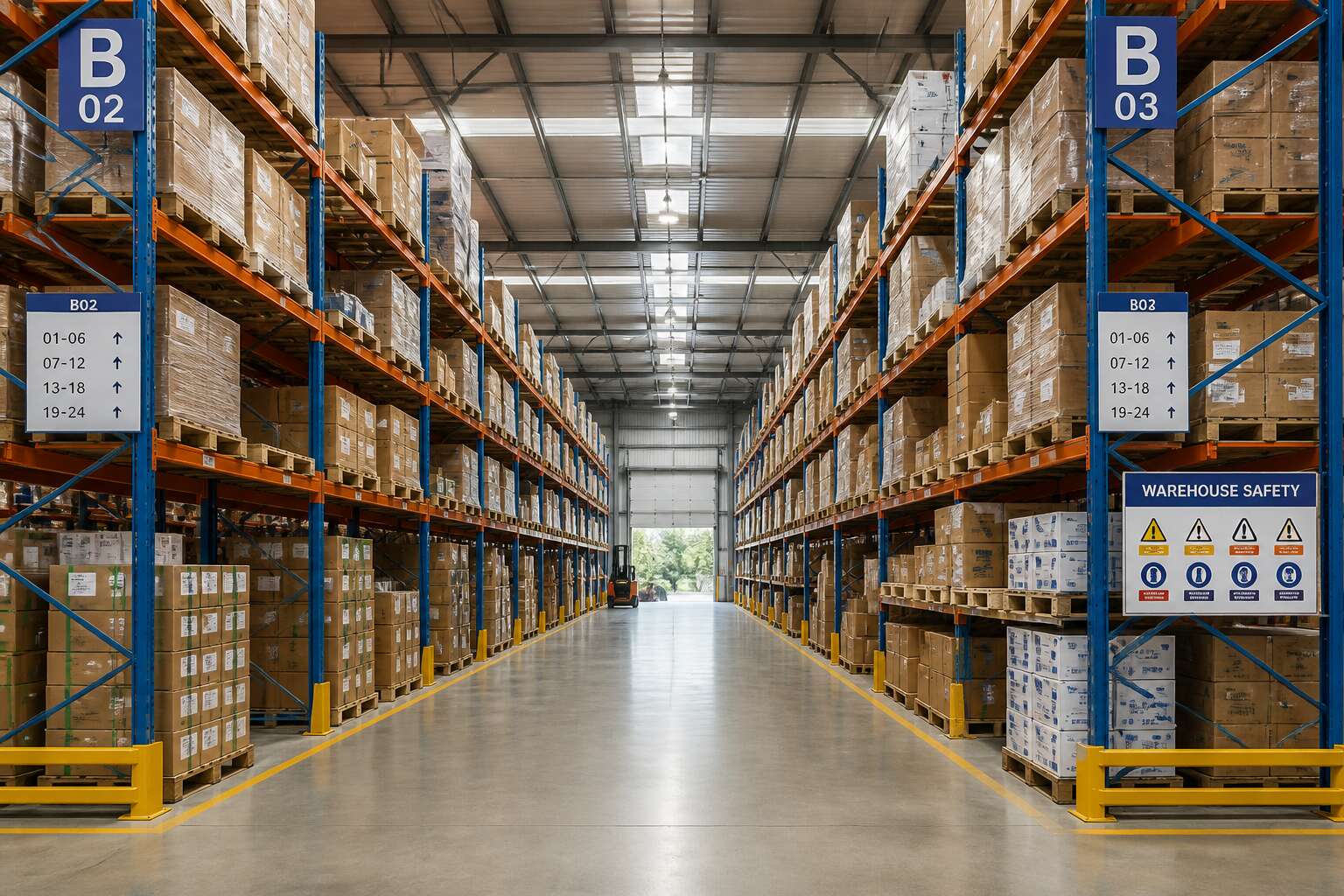
Key Factors That Drive Storage System Expenses
Material and Build Quality
Steel gauge alone explains why racking and shelving prices diverge across the South African market. A 3 mm cold-rolled upright costs roughly 40% more than a 2 mm profile, and that gap multiplies across every beam, brace, and footplate. Buyers who focus only on the quoted price overlook how material grade dictates real-world capacity.
- Steel specification, such as S235JR versus S355MC, determines yield strength and fatigue resistance.
- Surface treatment, from powder coating to hot-dip galvanising, governs performance in coastal or humid warehouses.
- Weld integrity and bolt-hole accuracy affect installation speed and long-term structural safety.
Build quality carries its own expense. Fabricators certified to SANS or EN standards run additional inspections, adding cost while reducing failure risk. I routinely see cheaper alternatives skip protective primers or use thinner gussets, lowering initial racking and shelving prices but inflating maintenance spend across the asset’s lifespan.
Load Capacity and Customization
Load capacity dictates more than just shelf thickness. A system designed for 4,000 kg pallets requires deeper beams, heavier uprights, and stronger base plates than one rated at 800 kg. Every kilogram of rated capacity adds material and engineering time, directly lifting racking and shelving prices across the board. In my experience, underestimating future loads is a costly mistake. You pay twice once for the initial install, then again for a retrofit.
Customization compounds that expense. Standard pallet racks suit most operations, but facilities with narrow aisles, irregular product shapes, or mezzanine interfaces need tailored solutions. Each modification requires new drawings, specialized jigs, and extra fabrication steps. Common cost drivers include:
- Adjustable beam levels for mixed load profiles
- Anti-collapse mesh panels for safety compliance
- Corrosion-resistant finishes for coastal sites
These additions change installation complexity, which shows up in the quoted price. The final quoted price reflects both the mandated load capacity and every custom feature added to the design.
Installation and Labor Fees
Let’s face it: the sticker price on a new racking system rarely tells the whole story. I have seen budgets crumble because the installation and labor fees were treated as an afterthought. Those costs are not a footnote; they are a headline item. A warehouse is not a blank canvas, and every beam that goes up comes with a price tag for the hands that place it.
Labor costs are driven by more than just the number of pallet positions. The site survey, the floor flatness, and the assembly time all factor into the final invoice. Consider these concrete drivers:
– Site preparation: Requiring shims or floor grinding to level the system.
– Access constraints: Tight loading docks or restricted ceiling heights that slow down crane work.
– Team size: A larger crew for heavy-duty structural racking versus lighter shelving.
The truth is, a cheap quote often hides expensive hours on site. When you compare racking and shelving prices, always ask for the installed rate, not just the equipment rate. The gap between those two numbers is where your real budget lives. Smart buyers know that paying for experienced, efficient fitters saves money in the long run, because rework is a luxury no warehouse can afford.
Market Demand and Supply Fluctuations
Ask anyone who has bought steel during a rand slump: the racking and shelving prices you see today are a direct reflection of yesterday’s exchange rate. When the rand weakens, importers pay more, and costs rise quickly. Demand spikes around peak seasons: everyone needs storage at once,and suppliers choose their clients. Lead times stretch, emergency orders cost extra,and planned budgets become outdated. Supply chain issues abroad affect local warehouses. Consider these factors:
- Global steel supply reductions raise base material costs immediately.
- Local demand surges during retail peaks create shortages.
- Currency volatility affects imported components and systems.
These fluctuations guarantee that the price you pay today differs from tomorrow’s.
How Shelving Pricing Models Are Structured
Per-Unit Pricing vs. Bulk Packages
Per-unit pricing and bulk packages represent two philosophies of commerce, and both carry their own social graces. Per-unit pricing suits the warehouse manager who knows exactly what they need, offering precision. Bulk packages appeal to the impulse buyer, promising savings that evaporate once you factor in assembly time and idle components.
In South Africa, wholesale buyers frequently discover that bulk purchases of racking and shelving prices look attractive on paper, yet the per-unit cost difference rarely justifies the extra inventory. The seasoned approach treats both options with equal suspicion.
- Per-unit pricing rewards those with accurate floor plans and clear load requirements.
- Bulk packages reward those who genuinely need identical components across multiple locations.
- The true measure of racking and shelving prices emerges only after installation, not at the point of sale.
Understanding the structure of these pricing models prevents the polite fiction that volume always equals value.
Cost Per Square Foot Breakdown
Most warehouses treat cost per square foot as a simple division problem, but the shelving pricing model actually bends around vertical space. The same floor area can hold three storage levels or five, depending on the mezzanine design. That changes the effective cost per cubic meter, not per square meter!
I have seen buyers compare racking and shelving prices purely on base footprint. They overlook the fact that an extra shelf level often costs only a fraction of the frame price, while the structural columns remain the same. The real breakdown involves three layers:
- The frame footprint, which carries the largest share.
- The decking and beam components, priced per linear meter.
- The safety accessories, which add a modest percentage but affect compliance.
Only after calculating usable volume does the per square meter figure make sense. For South African warehouses, high-density layouts often reduce effective racking and shelving prices by 20% over two years.
Initial Investment vs. Long-Term Value
Racking and shelving prices tell only half the story. The real measure emerges when initial investment is weighed against the operational lifespan. A cheaper frame may reduce today’s spend, yet replacement costs after three years can erase any savings. The pricing model divides into acquisition cost, which includes the frame, beams, and safety accessories, and ongoing value, which depends on how well the system withstands daily forklift impacts.
Consider how the structure allows future reconfiguration. Modular designs hold their value because you can adjust shelf heights without purchasing new uprights. That flexibility matters more than the sticker price.
- Resilience to corrosion in humid coastal warehouses.
- Availability of spare parts locally.
- Resale value if you upgrade your facility.
Each year of service lowers the effective racking and shelving prices per unit of storage. A per pallet position calculation over ten years reveals the true cost.
Accessories and Add-On Charges
Most quotes split racking and shelving prices into two categories: the structural frame and the accessories that complete it. The frame accounts for the largest portion, but add-ons often determine the true cost. Anchors, shims, and safety clips appear as separate line items. Each one protects the system differently.
Accessories frequently surprise first-time buyers. A straightforward pallet rack quote can climb noticeably once you specify:
- Back panels for loose stock
- Column guards for aisle corners
- Mesh decking to prevent falls
- Load signs to confirm safe weight
Each item serves a purpose. Skipping them lowers racking and shelving prices today but raises replacement costs tomorrow.
Volume Discounts and Negotiation Levers
Volume remains the most powerful lever when negotiating racking and shelving prices. Suppliers often slash per-unit costs by 10 to 20 percent once you commit to a full warehouse layout. That does not mean you should accept the first quote handed to you though.
Ask for a break down of every component. You will often find that installation or delivery fees carry double the margin of the steel itself. A smart buyer uses this information to push for bundled deals. If you are buying 50 bays, you can bargain for a reduced rate on the labor. If you are buying 500, you should demand a project manager included at no extra charge.
Consider the hidden negotiation chips too:
- Payment timing, paying upfront often unlocks savings of 3 to 5 percent.
- Freight distance, local suppliers frequently slash prices to avoid long haul costs.
- Off season purchases, buy in winter and you skip the spring rush premium.
- Standardized components, sticking to common sizes keeps racking and shelving prices low.
Every supplier has a floor price. Your job is to discover it. The trick is to ask for concessions that do not affect the material cost. Free bolt-down kits, waived safety inspections, or credit towards future accessories all reduce your total spend without touching the quoted unit price. In South Africa, where logistics costs can eat a third of your budget, focusing on these soft levers often yields greater savings than fighting over the steel itself.
One final note on quoting. Get everything in writing. Verbal promises on add-ons or delivery windows hold little weight when the invoice arrives. A detailed, itemized quote protects you from surprise charges and gives you a clear map for future expansions.
Comparing Material Costs for Different Shelving Types
Steel, Wire, or Plastic – What Fits Your Budget?
When you start pricing storage, the material itself becomes the first fork in the road. Racking and shelving prices shift dramatically depending on whether you choose steel, wire, or plastic, and each option carries its own hidden costs that go beyond the sticker tag. Steel is the heavyweight champion, offering unmatched durability for warehouse floors and industrial back rooms. Wire shelving, on the other hand, gives you visibility and airflow, which makes it a favorite for retail spaces or cold storage where circulation matters. Plastic units are the budget-friendly lightweights, perfect for garages or offices where moisture might rust a metal frame.
Here is the thing about long-term value: a cheaper plastic unit might warp under heavy loads, while a steel frame can last decades with minimal upkeep. That said, the upfront investment for steel can sting if your storage needs are temporary. For a quick breakdown:
– Steel: highest cost, greatest longevity, best for heavy-duty static loads
– Wire: mid-range pricing, excellent for visibility and dust prevention
– Plastic: lowest initial expense, ideal for light or corrosive environments
The trick is matching the material to the environment, not just the price tag. A coastal warehouse with salty air will eat through untreated steel, but that same budget spent on plastic could save you from constant replacement. I have seen businesses burn cash on premium shelving for items that barely weighed a few kilograms. In the end, the raw material dictates your racking and shelving prices more than any other factor, so weigh the physical demands before you commit to a single frame.
How Coatings and Finishes Affect Price
A bare steel frame tells you little about the final cost. The coating is where the quiet expenses accumulate, and it often determines whether that racking and shelving prices estimate holds up over a decade or crumbles into rust.
Powder coating stands as the standard for a reason: it bonds to the metal, creates a barrier against moisture, and adds a factory finish that resists chipping. Galvanised steel goes further. The zinc layer sacrifices itself to protect the base metal, which proves essential in coastal regions where the salt air never rests. A cheaper painted finish might save you on the initial quote, but humid warehouses in Durban or Cape Town will expose that false economy quickly.
Consider what the finish actually means for your total investment:
1. Powder coated steel. The common choice, adds moderate cost, suits dry and controlled interiors.
2. Hot-dip galvanised. Higher price point, but the corrosion protection justifies itself in wet or沿海 environments.
3. Bare or pre-painted steel. The lowest outlay, yet this option carries the highest replacement risk.
4. Epoxy or hybrid coatings. A specialist option for chemical or food storage, where contamination resistance matters more than budget.
The finish also affects how the shelving behaves under load. A thick coating can wear away at contact points where the shelf meets the frame, leaving bare metal exposed. That wear accelerates in busy facilities where staff slide boxes across surfaces. The price of the coating, then, is not just the cost of the paint. It is the cost of the protection that keeps the structural integrity intact.
When you compare racking and shelving prices between suppliers, ask what finish is actually included. The difference between a glossy brochure and a functional safeguard often hides in this detail. A slightly higher upfront figure for a galvanised unit might seem excessive until you calculate the replacement cycle of a cheaper, untreated frame in the same environment. The coating choice ripples through every other cost, from maintenance schedules to safety inspections. It is the quiet factor that separates a smart purchase from a recurring expense.
Weight Capacity and Cost Correlation
When you compare shelving options, the relationship between material, weight capacity, and cost becomes immediately clear. Steel offers the highest load rating but demands the largest upfront investment. Wire shelving sits in the middle, providing decent ventilation and moderate strength for a reasonable price. Plastic units remain the most affordable, yet they limit you to lighter goods and can flex under sustained pressure.
Consider these common specifications when evaluating your needs:
– Steel: 500 to 800 kilograms per shelf level. Expect higher costs.
– Wire: 150 to 350 kilograms per level. A balanced mid-range price point.
– Plastic: 50 to 150 kilograms per level. Budget-friendly but restrictive.
These figures directly influence racking and shelving prices. A warehouse moving heavy pallets cannot rely on polymer construction, just as a retail store displaying boxed stock rarely needs industrial-grade steel. Matching the material to your actual load profile prevents overspending on unnecessary strength or, worse, purchasing a system that fails under routine use. Always check the manufacturer’s rated capacity, not just the visual sturdiness of the frame. The price tag reflects the engineering, so understand what your goods demand before you commit to a quote.
Durability and Replacement Cost Considerations
When comparing racking and shelving prices, the initial price tag only tells part of the story. The true cost lives in how long the unit survives your specific environment. A cheap plastic unit might save you money today, but if it cracks under the Highveld sun or warps in a humid Durban warehouse, you will buy a replacement within eighteen months. That is where the real expense hides.
Durability directly impacts the total cost of ownership. Steel units handle rough treatment, forklift bumps, and heavy loads without flinching, which means they rarely need replacing. Wire shelving offers a solid middle ground, resisting rust when coated properly and lasting years in dry conditions. Plastic, while tempting for light storage, becomes brittle over time and often needs replacement far sooner than you expect. For a business watching every rand, that replacement cycle matters more than the upfront figure.
Consider the maintenance angle too. A steel rack that needs a fresh coat of paint every few years still costs less than buying new plastic units repeatedly. Wire shelving requires minimal upkeep, just a wipe-down and occasional check of the clips. Plastic demands careful handling and protection from UV exposure. When you calculate the lifespan against the purchase price, the “cheap” option often becomes the most expensive one.
The buy-once philosophy applies here. Paying more for a durable system means you avoid the disruption of swapping out failed units, the labour costs of installation, and the downtime while shelves sit empty. Those hidden costs add up quickly.
Here is what to weigh when comparing options:
– Steel: highest upfront cost, longest lifespan, handles heavy loads and abuse
– Wire: moderate price, good airflow, easy to clean, lasts well indoors
– Plastic: lowest entry price, short lifespan, suited only for light, gentle use
Ultimately, the best value comes from matching the material to your environment. A coastal warehouse with salty air demands rust-resistant finishes, even if they cost more. A dry inland storeroom can make do with lighter options. Before you commit, ask yourself how many times you want to buy this shelf. The answer will guide your decision more than any discount or sale price.
Strategies for Estimating and Controlling Your Storage Budget
Calculating the Total Project Investment
Underestimating the total cost of a warehouse setup is a classic budget killer. Many managers focus solely on the sticker price of the units, only to be blindsided by delivery fees, complex assembly requirements, and the need for seismic anchoring. When you are calculating the racking and shelving prices, you must look beyond the initial quote to see the full picture of your project investment.
The truth is that the lowest quote often leads to the highest long-term expense. A cheaper system might require more frequent replacements or fail to utilize your vertical space efficiently. To control your budget effectively, you need to break down the costs into tangible components. Consider the following steps to avoid financial surprises:
– Map out the exact floor dimensions and ceiling height to determine the maximum storage density.
– Factor in the cost of professional installation versus the risk of DIY damage.
– Add a contingency fund of roughly 10% for unexpected site adjustments.
Beyond the hardware, think about the operational impact. The racking and shelving prices fluctuate based on the gauge of steel and the type of surface treatment, but the real value lies in how the system integrates with your workflow. Paying a premium for a boltless design might save you thousands in labor costs if you need to reconfigure the layout frequently. Furthermore, consider the lead time; a longer wait might force you to rent temporary storage, which silently eats into your capital.
Ultimately, controlling the project investment is about balancing immediate cash flow with future durability. Do not let a low per-unit price dictate your decision. Instead, evaluate the total cost of ownership, including maintenance and safety compliance. By negotiating on the scope of the package rather than just the unit cost, you can secure a robust system that protects your inventory and your profit margins. The goal is to achieve a seamless operation where the racking and shelving prices reflect a smart, strategic asset rather than an expense.
Hidden Costs Often Overlooked
Most warehouse budgets in South Africa carry a quiet flaw: the assumption that the quoted unit price tells you everything. But your real exposure to racking and shelving prices includes hidden costs such as energy consumption from lighting and climate control, which rises with poor aisle design. I have seen storage density gains eliminated by higher forklift travel times, a cost no one anticipated.
To control this, you need a deliberate estimation strategy that questions every assumption. Start with these overlooked factors:
- Future reconfiguration costs: can the system adapt without new parts?
- Insurance premiums: some racking designs alter risk profiles.
- Training time: complex systems slow down new staff.
Finally, monitor actual usage patterns. A storage budget that ignores seasonal fluctuations will always mislead. When I recalculate racking and shelving prices against real throughput data, the cost per pallet position shifts dramatically. That insight alone saves your margin!
Leasing vs. Purchasing – Pros and Cons
The eternal debate in warehouse management is whether to lease your racking or bite the bullet and buy it outright. It is a financial tango that has tripped up many a logistics manager. Leasing feels like renting a tuxedo for a wedding; purchasing feels like buying the entire bridal party suits. Both have merit, but the choice often comes down to your company’s cash flow rhythm and how long you plan to call that concrete slab home.
When you lease, you are essentially paying for flexibility. Your monthly outlay is predictable, which is a beautiful thing for a budget that hates surprises. It frees up capital that might be better spent on forklifts or inventory. However, you are signing a contract. Breaking that lease early can sting harder than a bee in a hot warehouse. You are also not building equity; those payments vanish into the accounting ether. For startups or businesses with seasonal spikes, this is often the lifeline that keeps the lights on.
On the flip side, purchasing your racking and shelving prices upfront means you own an asset. It is yours to configure, modify, and abuse as you see fit. The long-term cost per pallet position is usually far lower, especially if you hold onto the system for a decade. But the initial outlay requires serious nerve. If your business model shifts and you need a different layout, you are now the proud owner of a very large, very specific metal puzzle. Sell it? The used market is fickle. Scrap it? You lose money.
To make the call, you have to run the numbers on your specific timeline. Consider these financial checkpoints:
1. The break-even point: how many months until buying costs the same as leasing?
2. The salvage value: what can you realistically sell the steel for in five years?
3. The tax angle: does your accountant prefer deducting lease payments or depreciating a capital asset?
4. The operational risk: what happens to your obligation if you shut down a facility?
The reality is that a hybrid approach often wins. Lease a portion of your racking for the volatile season, and purchase the core structure for your steady, year-round stock. This balances your immediate overhead with your long-term security. Just remember that the lowest quoted monthly payment isn’t always the cheapest deal. Read the fine print on maintenance and damage clauses, because that is where the hidden costs live. Your racking and shelving prices should be a strategic decision, not a knee-jerk reaction to a sales pitch. Match the financial structure to your actual physical storage needs, and you will keep both your aisles and your balance sheet in great shape.
Smart Cost-Reduction Tactics
Sniffing out the true cost of your storage layout feels a bit like forecasting the weather in the Highveld. It changes rapidly, and the forecast is often wrong. Everyone wants to know the bottom line for racking and shelving prices before signing off, but the sharpest operators know that the quote is merely the opening bid in a much longer negotiation. The real battle is fought against time, movement, and the dreaded cost per cubic meter that sneaks up on you when you are not looking.
Your budget forecast should be built on hardware data, not hopeful dreams. If your monthly inventory turnover resembles a rollercoaster, your layout needs to flush out wasted motion. The smart cost-reduction tactics here are not about buying the flimsiest option. They are about mapping the exact flow of goods to avoid bottlenecking your forklift drivers, which burns fuel and time. A system that forces a driver to take three extra turns per pallet will bleed your operational budget faster than any price hike on steel. However, a system that optimizes the pick path pays for its own premium within a few operational cycles.
A practical calculation starts with a simple audit. The goal is to trim the fat without cutting into the muscle of your facility. Consider the following before you commit to a purchase order:
– Measure your actual vertical space and compare it to your current stacking height. Most warehouses leave 15 percent of their airspace untouched, which is cash floating near the ceiling.
– Calculate your order pick frequency per SKUause check the velocity. Slow movers should not be sitting at eye level where they cost you premium access time.
– Assess the damage rate on your current uprights. If you are replacing bent frames every year, that recurring cost is a major signal in your racking and shelving prices evaluation.
The second step involves a touch of vulnerability. Look at your projected growth with a skeptical eye. It is a classic error to buy a massive, sprawling system based on a sales forecast that is overly optimistic. Racking and shelving prices in South Africa are sensitive to the current import duties and the rand exchange rate, but the cost of unused space is a silent killer that ignores exchange rates altogether. A compact, denser configuration might hold 15 percent less than your wildest peak season dreams, but it will also hold your overheads down during the quiet months when your cash flow resembles a dry riverbed.
The cleverest controllers harness a quarterly review system. They do not lock a budget for the year and hope for the best. They treat racking and shelving prices as a living metric, tracking the cost against the volume of goods moved through the system. By acknowledging that your storage needs are fluid, you can pivot your spending towards modifications that genuinely reduce labor hours, rather than throwing money at an expansion that sits idle. This is where the real financial control lives; it is in the detailed calculation of your flow, not just the labeled price tag on a box beam.
How to Request and Compare Accurate Quotations
A quotation is a starting point, not a promise. In my experience, most facility managers compare racking and shelving prices by lining up supplier quotes and picking the lowest number. That approach ignores the variables that determine whether a quote holds up over time. Delivery lead times, installation schedules, and payment terms all affect the final figure.
When you request a quotation, ask for a line item for every component. A thorough supplier will itemise base plates, anchors, and safety signage. A quote that omits these details will mislead your budget forecast. The differences between suppliers often appear in these smaller entries.
- delivery lead times and fuel surcharges
- installation crew size and hourly rates
- validity period of the quoted pricing
Comparing quotations requires a standardised specification. Send the same layout drawing to every supplier so the racking and shelving prices you receive are genuinely comparable. Then adjust each quote for the soft costs that only surface after installation.



0 Comments