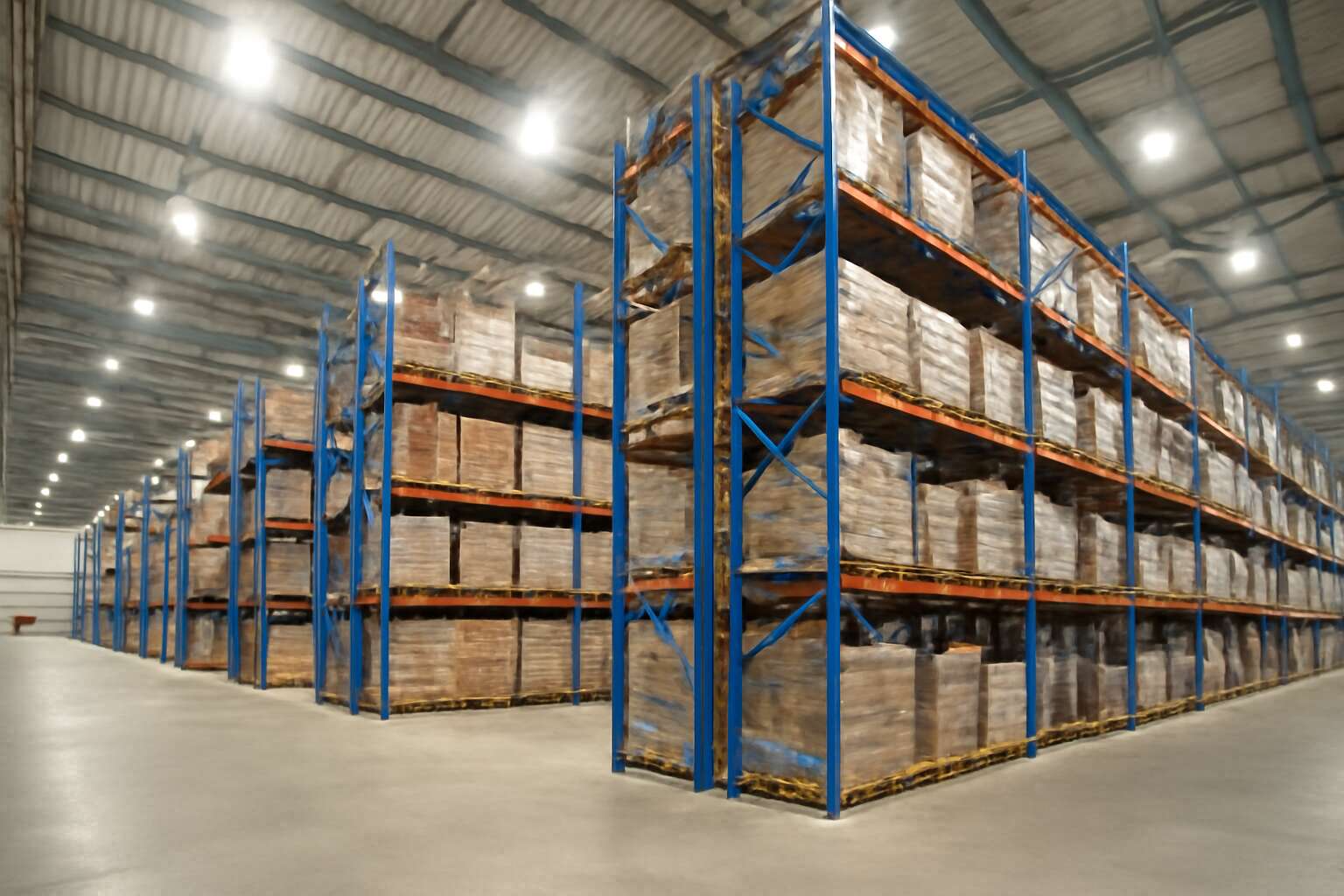
Overview of storage racking in industrial facilities
Types of racking systems explained
In South Africa’s bustling warehouses, space is gold and missteps are expensive. About 30% of floor area sits idle because racking doesn’t match demand or forklift routes. Industrial warehouse racking isn’t just shelving—it’s a strategic asset that speeds up picking.
Storage racking in industrial facilities is all about efficiency, safety, and scalability. It aligns with operations, stacks goods to the ceiling, and keeps high-turn items within arm’s reach. With the right layout, you cut walk time, improve accuracy, and glide past the chaos of peak shifts—industrial warehouse racking at its finest.
When it comes to types of racking systems, one size rarely fits all. Here’s a quick tour of common configurations that support varied SKUs and seasons:
- Selective pallet racking—the flexible workhorse that keeps most items accessible.
- Drive-in/drive-through racking—for high-density storage with fast-moving pallets.
- Cantilever racking—for long, awkward or unusually heavy loads.
- Pallet flow or push-back systems—optimize first-in, first-out in compact aisles.
Key components and materials
Across South Africa’s bustling warehouses, space is currency and precision is profit. A well-laid layout can halve walking time and lift picking accuracy, turning clutter into clear paths. Up to 30% of floor area sits idle when racking doesn’t mirror demand. This is the heartbeat of industrial warehouse racking—a spine for daily operations that speeds deliveries.
Overview of storage racking in industrial facilities rests on a few essential components and materials that withstand daily wear. Key components and materials include:
- Uprights and beams engineered for load ratings
- Decking and pallet supports sized for common SKUs
- Safety features such as aisle guards and column protectors
From the hum of forklifts to the rhythm of daily logs, the design matters. Robust uprights, precise beams, and durable finishes turn a frame into a trusted partner in South African facilities.
How to read load ratings and specifications
Racks are silent enforcers of speed: the right load rating can shave minutes from every pick. In South Africa’s bustling warehouses, the numbers on a rack decide whether a pallet glides or strains under load.
Reading load ratings isn’t a mystery—look for static per-level capacity, beam span, and deflection, plus safety margins for forklift dynamics.
- Per-level static capacity
- Beam span and deflection
- Dynamic safety margins
When these details align, industrial warehouse racking becomes a steady backbone for daily operations.
Common applications and outcomes
In South Africa’s bustling warehouses, a single pallet tucked into the right industrial warehouse racking can turn a brutal shift into a fluent dance. A well-tuned system unlocks space you didn’t know was possible and trims minutes from every pick.
Storage racking turns vertical dreams into grounded reality, offering configurations that cradle bulk loads or place fast-moving SKUs near picks faces. The magic lies in balance—density without sacrificing access.
- High-density storage for bulk goods
- Fast-moving items at central pick faces
- Seasonal SKU management with flexible bays
- Cross-docking and steady distribution flow
Across South Africa’s industrial landscapes, these systems shrink footprints while expanding capability. Industrial warehouse racking becomes not just shelves, but a living backbone—quiet, resilient, and instantly scalable.
Racking system types for warehouses
Selective pallet racking advantages and use cases
Space is currency in logistics: up to 60% of picking time is spent wandering aisles in a typical warehouse. Selective pallet racking is the workhorse that keeps items within arm’s reach, letting teams pull any pallet without shuffling others out of the way. This is the essence of flexible, practical storage.
Within the broader landscape of industrial warehouse racking, selective pallet racking remains the most adaptable choice. Its advantages include direct access to each pallet, straightforward reconfiguration, and cost-effective expansion as demand shifts—critical in South Africa’s dynamic distribution networks.
- Direct pallet access with minimal handling
- Easy reconfiguration for seasonal changes
- Lower upfront costs per bay compared to alternatives
Use cases span regional distribution centers, e-commerce hubs, and multi-SKU facilities where speed, accuracy, and inventory visibility drive performance.
Drive-in and push-back racks: when to choose
Space is currency in logistics, and dense racking is how you squeeze more pallets into the same footprint. Drive-in and push-back racks lift density without sacrificing control over stock.
In the realm of industrial warehouse racking, these systems offer different access and rotation patterns: drive-in creates a single-aisle tunnel for bulk pallets, while push-back stacks pallets on gravity-loaded carts to support multiple SKUs.
When to choose? A few guidelines:
- Drive-in works best for bulk, same-SKU pallets with long dwell times and high density.
- Push-back suits several SKUs, higher turnover, and the need for FIFO rotation.
- Consider bay depth, forklift reach, and maintenance needs in South Africa’s climate and power realities.
Getting this right is a hallmark of well-designed systems: you trade space for speed, accuracy, and reliability.
Flow and carton flow racks for high-throughput
In the landscape of industrial warehouse racking, Flow and carton flow racks project a promise of high-throughput without sacrificing control. Flow racks rely on gravity to shuttle pallets along roller or gravity rails, delivering a steady, FIFO stream that minimizes bottlenecks. Carton flow racks scale the same principle down to totes and cartons, turning every bay into a moving conveyor that keeps fast-moving SKUs near the picking face. The result is a silent surge of efficiency.
- High throughput with minimal manual handling
- First-in, first-out stock integrity for multi-SKU lines
- Compact bay design enabling narrower aisles
These configurations slash travel time and heighten accuracy—crucial in South Africa’s busy distribution hubs where uptime matters as much as density.
Pairing flow and carton flow with the right maintenance plan reveals a hidden velocity in industrial warehouse racking—one that quietly supports peak seasons and steady operation alike.
Cantilever and mezzanine solutions for bulky items
In the world of industrial warehouse racking, bulky inventory tests every footprint. ‘Bulky stock doesn’t fit; it demands purpose-built racking,’ says a Cape Town manager. Cantilever and mezzanine solutions turn tall ceilings into productive storage for long items.
Cantilever racking offers true freedom for long goods—no front uprights to snag pallets; adjustable arms cradle steel, lumber, or pipes. Mezzanine platforms add a second floor, keeping bulky items within reach.
Mezzanine solutions maximize vertical space, turning unused overhead into storage. Coupled with cantilever bays, they form a scalable hybrid that keeps bulky items near picker zones and docks while weight is distributed for safe, rapid reconfiguration.
Choosing the right racking for different industries
Food and beverage storage considerations
‘Space is money,’ the foreman roared, and in food and beverage storage that truth hums through every aisle. Selecting industrial warehouse racking for this sector must balance sanitation, temperature control, and seamless flow.
South African cold stores demand materials that shrug off humidity and washdowns. Seek hygienic finishes, corrosion resistance, and easy-to-clean joints that keep surfaces sanitary while preserving pallet access.
- Hygienic, wash-down finishes (stainless or galvanised)
- Leak-free joints to prevent grime
- Cold-storage compatibility at low temperatures
- Accessible layouts for fast picking and traceability
Beyond hygiene, tailoring racking to product flow matters. Beverages may require broader access; dry goods often favour compact, sturdy tiers that still enable rotation.
In this mythic logistics landscape, the right racking becomes a guardian of efficiency.
Automotive and manufacturing demands
In South Africa’s automotive and manufacturing corridors, time is torque: a recent industry survey suggests up to a quarter of warehouse picking time is wasted walking aisles. The right racking must accelerate flow, not clog it. For these sectors, industrial warehouse racking demands beefy load ratings, precise accessibility, and finishes that survive oils, solvents, and high-temperature cycles.
Key considerations include:
- Robust load-bearing design for heavy pallets and long-term use
- Accessible bays that support high-velocity picking and simple maintenance
- Corrosion-resistant finishes and sealable joints for factory environments
Get the mix right and your floor becomes a conductor, not a bottleneck.
E-commerce and cross-docking needs
Across South Africa’s e-commerce wave and cross-docking hubs, speed is the compass. A fresh industry pulse suggests that when racking geometry mirrors flow, picking times shrink and goods glide through the warehouse. For these environments, industrial warehouse racking must balance density with accessible pathways, turning storage into velocity rather than inertia.
Modularity and resilience win the day in e-commerce and cross-docking contexts. The right configuration emphasizes flexible bays and finishes that shrug off daily wear. Consider these essentials:
- Adjustable bays and beam heights to accommodate evolving SKUs
- Short, direct pick lanes that minimize walking and maximize throughput
- Coatings and sealable joints designed to endure oils, solvents, and high-temperature cycles
Flow becomes a living river when pathways are tuned to inbound and outbound movements, slashing transfer times.
Cold storage and climate control requirements
In South Africa, the cold chain is a quiet engine of commerce, and every frozen pallet hinges on temperature, airflow, and speed. The idea of industrial warehouse racking tailored for cold storage is more than shelving—it’s a climate control partner shaping energy use and throughput.
Choosing the right racking for cold storage means weighing insulation, corrosion resistance, and load ratings against access. Seek sealed joints, finishes that shrug off humidity, and fittings built for low-temperature cycles. The right layout makes aisles flow, not stall.
Key features to consider:
- Modular bays that adapt to evolving product profiles
- Coatings and seals designed for oils, solvents, and low-temperature cycles
- Coordinated airflow paths that prevent warm pockets
When cold storage respects the flow, inventory becomes a patient river, not a frostbitten backlog.
High-density storage options and safety
Choosing the right racking reshapes a warehouse into a precise engine. In South Africa, industrial warehouse racking is a canvas that adapts across sectors—from consumer goods to bulk components—driving throughput without sacrificing safety. High-density storage is not about stacking higher; it’s about smarter layouts that balance load, access, and flow.
Safety comes first, with robust frames, secure joints, and clear end-of-aisle protection. Across varied industries, the best setups offer adjustable bays, consistent load ratings, and durable finishes for tough climates. The goal is predictable access and reliable re-stow, so workers move confidently and inventory stays organized.
Safety, compliance, and maintenance of warehouse racking
Inspection and maintenance routines
We know safety is not a checkbox but a culture, especially when tangible steel structures hold up our daily operations. In industrial warehouse racking, a proactive eye reduces risk, and a quarterly audit can cut pallet damage by up to 30%. Vigilance pays, every shift.
Routine inspection keeps the system honest and compliant, aligning with best practice and safety standards.
- Conduct a visual check of uprights for bending or corrosion.
- Test beam connections and fasteners for tightness and wear.
- Check anchor points and floor levelness to prevent shifts.
- Inspect pallets and loads to ensure contact surfaces are intact.
Compliance is a living protocol: schedule formal inspections, document findings, and address discrepancies before they drift into costly downtime. In South Africa, this mirrors OHSA expectations and SABS standards, reminding teams that care for the racking is care for people and profits.
Load ratings and weight distribution
Gravity is polite until it isn’t. A single misread load rating can ripple into downtime, yet a quarterly audit can cut pallet damage by up to 30%.
Safety, compliance, and maintenance hinge on honest load ratings and the artful weight distribution of industrial warehouse racking. In South Africa, align with OHSA expectations and SABS standards—because care for racking is care for people and profits.
Key considerations include:
- Load ratings must model both static weight and dynamic forces from handling equipment.
- Weight distribution should keep pallet surfaces intact and loads centered for predictable behaviour.
- Documentation and timely follow-up prevent drift into costly downtime.
My experience tells me the system behaves when people treat it with respect—steel and strategy walking hand in hand.
Anchoring, bracing, and seismic requirements
Safety is not a policy; it’s a practice etched into steel. For industrial warehouse racking, anchoring and bracing are not add-ons but the spine that steadies every aisle when gravity throws its weight around. In South Africa, compliance means more than paperwork—it means adhering to OHSA expectations and SABS standards, because care for racking is care for people and profits.
- Anchoring acknowledges the bond between floor, rack, and earth, resisting uplift and lateral movement within the structure.
- Bracing patterns embody geometry that distributes loads evenly and preserves line and balance under stress.
- Seismic considerations become part of design and documentation, reinforced by ongoing audits and records.
Maintenance is a quiet pact: a system kept true by regular checks and respectful attention lasts longer than any single shift.
Damage prevention, repair, and retrofitting
Safety is not a policy; it’s a practice etched into steel. In South Africa, compliance means aligning with OHSA expectations and SABS standards, because care for racking is care for people and profits. When a rack fails, the whole operation slows; when it’s kept sound, it becomes a quiet engine of productivity—a backbone for industrial warehouse racking that keeps goods moving and workers safe—always.
- Damage types and wear patterns observed in steel-framed racks
- Repair and retrofitting concepts that preserve integrity without disrupting operation
- Audit trails and record-keeping to demonstrate ongoing compliance
Maintenance is a quiet pact: routine checks, timely addressing of issues, and respectful attention ensure longevity. A well-maintained system resists drift, preserves load paths, and minimizes downtime—essential for a South African logistics landscape where uptime equals profit and safety equals culture.




0 Comments