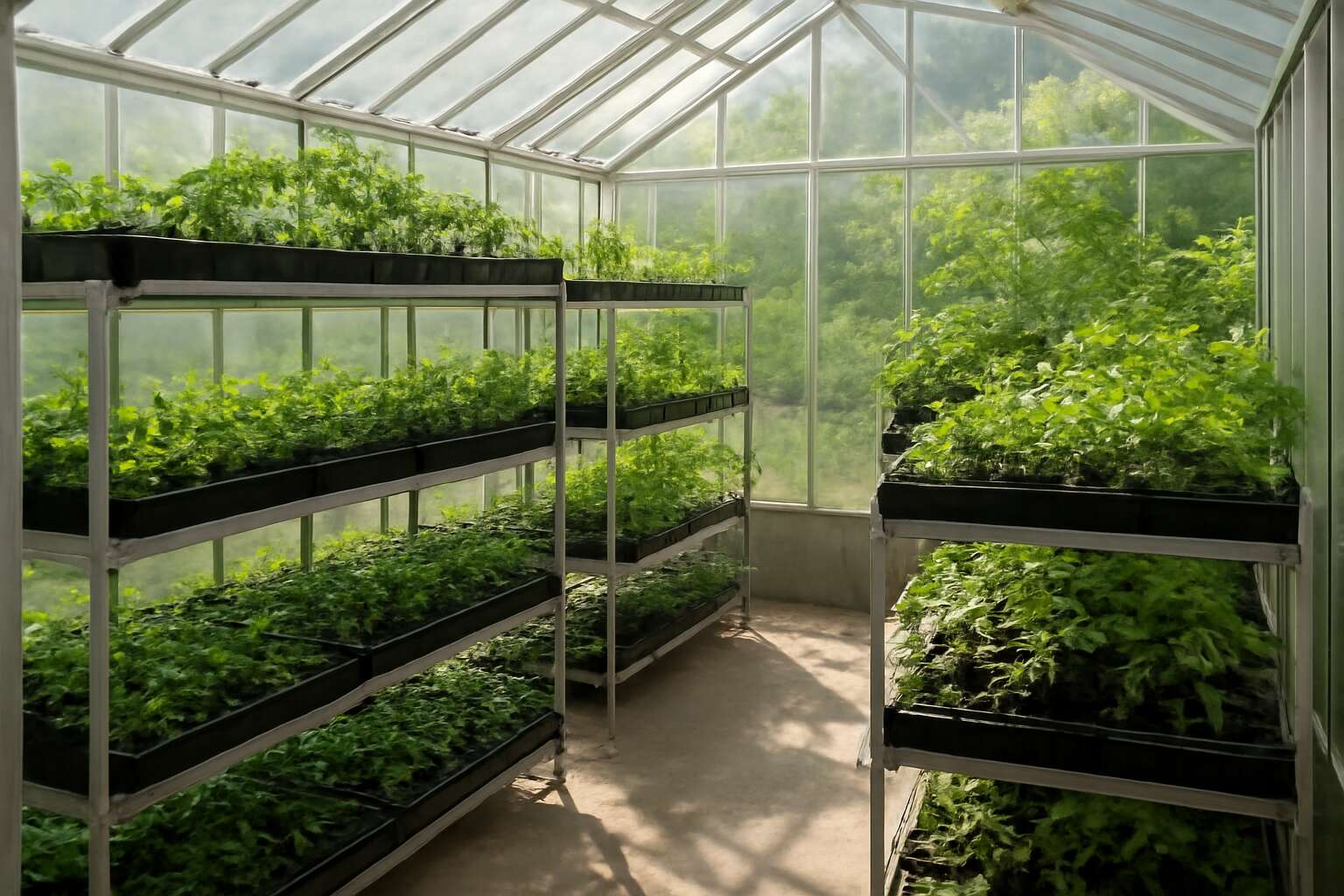
Optimizing Racking in Greenhouses: Space, Safety, and Accessibility
Choosing the Right Racking Materials for Greenhouses
In SA greenhouses, tidy racking isn’t just neat—it’s profitable, freeing space that could house one more bench of peppers. A brisk stat: optimized systems can unlock up to 20% more usable floor area, turning sun-drenched rows into undeniable efficiency. This is the magic of racking for greenhouse environments, where every shelf earns its keep and every square meter makes light work harder for you.
Space, safety, and accessibility are the three pillars of smart rack design. Space means shelves that adjust without crowding aisles; safety means rated beams and secure fixings; accessibility means clear sightlines and reachable heights for harvest days that don’t require heroic contortions.
When choosing materials, think weather, maintenance, and budget. Galvanized steel and aluminum with powder coatings shrug off Durban humidity and sun, while UV-stable finishes keep colors honest after long summers. A modular, light design lets you reconfigure croptasks as seasons shift.
Designing a Flexible Racking Layout for Seasonal Changes
Sunlight is a currency in SA greenhouses, and a smart layout turns it into growth. A well-tuned racking for greenhouse can unlock up to 20% more usable floor area, letting you pack one more bench of peppers where there was room to breathe.
Space, safety, and accessibility are the three pillars of smart rack design in South Africa’s warm climate. Space means shelves that adjust without crowding aisles; safety means rated beams and secure fixings; accessibility means clear sightlines and reachable heights for harvest days that don’t require heroic contortions.
For seasonal changes, design a flexible racking layout that can reconfigure croptasks as the seasons shift. A modular frame, powder-coated steel or aluminum, and thoughtfully placed gaps let summer cucumbers and winter peppers share the same footprint without crowding light. In the sun-drenched provinces, every shelf earns its keep.
Ergonomics and Safety in Greenhouse Racking
Greenhouse gold is sunlight, but only if the racking doesn’t steal it. In SA’s climate, space, safety, and accessibility aren’t afterthoughts—they’re the triad that turns light into growth. Ergonomics isn’t brochure fluff; it shapes harvest days and keeps crews upright while peppers and cucumbers thrive.
- Adjustable bays that don’t crowd aisles
- Rated beams and secure fixings
- Clear sightlines for easy scouting
- Accessible heights that reduce strain
When you optimize racking for greenhouse spaces, you’re embracing modularity, airflow, and safe load paths. A powder-coated backbone shrugs off SA sun and humidity, while thoughtful gaps let light and air weave through without drama. That’s how a smart layout earns its keep, even on harvest Fridays.
Cost-Effectiveness and ROI of Greenhouse Racking
South African growers are discovering that the right racking is more than shelving—it’s space leverage. Across SA, farmers report up to 25% more harvestable floor when aisles breathe and bays align with light. The secret isn’t a flashy gadget; it’s disciplined design. racking for greenhouse becomes a strategic asset that matches climate, crew flow, and yield goals. Modular bays, predictable heights, and secure fixings turn every tray into a measured step toward bigger harvest days.
Cost-effectiveness and ROI come into sharp relief when layout minimizes waste and maximizes throughput. A thoughtful system cuts fatigue, speeds scouting, and reduces risk from improper loading. ROI isn’t a myth here—it follows space, workflow, and durability.
- Space efficiency translates to more crop per square metre
- Labor productivity from accessible heights and clear sightlines
- Lower lifetime costs with powder-coated, corrosion-resistant beams
Sustainability and Weather Resistance of Racks in Humidity
In the cobalt dawn of a South African harvest, space is more than emptiness—it is potential waiting to be ordered. racking for greenhouse becomes the quiet architecture that choreographs light, crew, and trays. When aisles breathe and bays rise in measured accord, harvest days follow with surprising ease.
To chase sustainability and weather resistance in humidity, the system must stand firm against damp and heat. Think of it as a living skeleton: modular bays, lockable fixings, and predictable heights that reduce strain and speed scouting. Consider these essentials:
- Space efficiency with modular bays
- Safety through secure fixings
- Accessibility via clear sightlines
Stiff, powder-coated beams shrug off rust, while corrosion resistance keeps the lineup true across seasons. In this way, racking for greenhouse becomes not mere storage but a quiet engine of resilience—an undercurrent that sustains South Africa’s flourishing crops.
Racking Systems and Configurations for Greenhouse Growth
Vertical Racking Solutions for High-Density Cultivation
Across South Africa’s glasshouses, vertical racking systems transform cramped bays into thriving production floors—unlocking up to 40% more usable space and a gentler flow of crops. This approach—racking for greenhouse—adapts to leafy greens, herbs, and fruiting crops alike, with shelves calibrated for plant height and light penetration. The advantage isn’t just space; it’s a choreography of orientation, airflow, and microclimate that keeps each level productive year-round.
- Modular bays that can be reconfigured for seasonal crops
- Adjustable shelf heights to accommodate different plant profiles
- Corrosion-resistant frames designed for humidity-prone environments
Configuring these systems for high-density cultivation is an art of balance. Thoughtful spacing, accessible aisles, and seamless integration with irrigation and climate control keep productivity uninterrupted. When the racking for greenhouse is thoughtfully arranged, workers glide along the rows, and crops thrive in tuned light, humidity, and airflow.
Tiered Shelving vs. Flow-through Racks: Pros and Cons
A bold promise greets the greenhouse floor: tiered shelving and flow-through racks choreograph light, air, and harvest. In South Africa’s glasshouses, tiered shelving concentrates plant density where space is tight; flow-through racks boost airflow and irrigation reach. Pros include a larger footprint and easier crop scouting; cons can be uneven light and tighter aisles. The trick is balance—leaning into the strengths of each system for configurations that fit seasonal crops.
- Tiered shelving maximizes footprint for leafy greens and herbs while keeping crops at reachable heights, a hallmark of racking for greenhouse.
- Flow-through racks improve airflow and irrigation uniformity, reducing microclimate pockets in the canopy.
- Hybrid modular layouts blend both styles for year-round flexibility across seasonal changes.
I’ve watched teams move with ease as aisles stay clear and light pours along each level—racking for greenhouse becoming backbone of production. When designed, yields feel steadier and maintenance smoother, under humid conditions.
Custom vs. Off-the-Shelf Racks for Greenhouses
Racking systems and configurations for greenhouse growth are the invisible backbone of a productive season. In South Africa’s glasshouses, choosing the right racking for greenhouse setups matters: custom vs off-the-shelf options. Bespoke racks hug awkward footprints; ready-made units deploy fast and keep maintenance lean. A smart layout can shave days off harvest cycles—up to 30% faster in the hands of a disciplined crew. The goal is to balance stability with accessibility so light and air move efficiently and crops thrive.
Custom racks tailor spacing to crops and heights; off-the-shelf options offer speed and tested load ratings. For SA growers, a hybrid approach—modular components that expand with seasons—wins.
- Modular layouts extend with seasonal crops
- Swift deployment vs bespoke tailoring
- Local support and warranty considerations
Let the aisles stay clear; the right configuration echoes through harvests with steadier yields and fewer elbow-grease moments—racking for greenhouse finally feels like a well-oiled machine.
Mobility and Reconfiguration of Racks on Demand
In South Africa’s glasshouses, smart racking for greenhouse systems becomes choreography—weights, rails and spaces moving in concert to keep light in and air flowing. Mobility and reconfiguration of racks on demand transform a fixed grid into a living layout, shaving harvest delays and reducing worker fatigue. A thoughtful set of modular frames, lockable casters, and adjustable shelves offers stability without rigidity, letting footprints adapt to seasonal crops!
- Mobility across aisles to accommodate early-season transplants and late-season legumes
- On-demand reconfiguration to match rotating crops and density plans
With a hybrid mindset—modular components that expand as the season shifts—growers gain resilience without compromising speed. For racking for greenhouse environments, design choices that emphasize accessibility, minimal disturbance to crops, and durable finishes prove vital across SA’s varied climates.
Power, Water, and Drainage Considerations for Racks
Power, water, and drainage aren’t afterthoughts—they’re the backbone of effective racking for greenhouse systems. In SA, moisture mismanagement drives up to 32% of harvest delays, so racks need dependable power, tidy cable routing, and weatherproof connections. With durable finishes that shrug off fertilizer splashes, modular frames stay sturdy while crops migrate through seasons.
- Power distribution and cable management that keeps aisles clear
- Drip tray drainage and shelf slope to prevent runoff pooling
- Water line routing and irrigation compatibility with adjustable shelves
The result is a layout that doesn’t fight with moisture or light, and stays nimble enough to reconfigure as crops shift. This is how racking for greenhouse maintains growth momentum in SA’s diverse climates.
Material Choices and Durability in Greenhouse Racking
Stainless Steel, Aluminum, and Painted Steel: What to Choose
In racking for greenhouse, durability trumps flash and flourish. SA’s sun-scorched days and humid afternoons test metals; industry data suggests corrosion risk drops by up to 50% when you pair stainless steel or coated steel with our climate, a truth that steers every choice.
- Stainless steel: unmatched corrosion resistance, sturdy, but with higher upfront cost.
- Aluminum: light, easy to move, good for dynamic layouts.
- Painted steel: budget-friendly, coated for humidity, watch for wear.
Stainless steel remains stoic against corrosion; aluminum yields elegance with lighter weight; painted steel answers with a budget-friendly coat that resists humidity when properly finished. Whichever path you chase, the longevity of your racks translates to steadier crops and fewer disruptions.
Corrosion and Humidity: Extending Rack Lifespan
South Africa’s sun-scorched days and muggy afternoons test metal like no other canvas. Industry data shows corrosion risk drops by up to 50% when stainless steel or coated steel meets our climate, a truth that guides every choice in racking for greenhouse. Resilience here is a quiet luxury.
Stainless steel stands stoic against corrosion, wedding strength with longevity, though the upfront cost climbs. Aluminum keeps things light and adaptable, ideal for dynamic layouts. Painted steel offers a kinder price and a humidity-ready finish when applied with care, guarding racks through seasonal shifts and steady production.
To extend rack lifespan in humidity and heat, consider these durability factors:
- Coatings and alloys engineered for humidity and salt-tinged air
- Sealed joints to minimize moisture ingress
- Protective finishes maintained to preserve barrier performance
Maintenance Best Practices for Racking Systems
South Africa’s sun-burnished mornings and muggy afternoons demand more than strength; durability in racking for greenhouse is a quiet creed. The frontline is coatings and alloys engineered for humidity and salt-tinged air, with sealed joints that block moisture and finishes that age with grace through seasonal shifts. Every choice becomes a stanza in resilience.
- Humidity-ready coatings and corrosion-resistant alloys tailored to our climate
- Sealed joints and robust fasteners to minimize moisture ingress
- Ongoing protective finishes to preserve barrier performance through heat cycles
Durability here is a quiet luxury, shaping the rhythm of harvests and the ease of reconfiguration. The right blend of finish and fit keeps racks standing with minimal upkeep, turning weather’s tests into a measure of design’s dignity.
Weight Capacity and Load Management
Material choices for weight capacity go beyond metal and paint; they shape a rack’s life in the field and shed. For racking for greenhouse, frames with corrosion-resistant alloys and robust welds stand up to South Africa’s humidity and salt-tinged air. Anodized aluminum, stainless steel, or reinforced painted steel offer different blends of stiffness and give, while braced uprights and sealed joints spread gravity evenly across shelves. Finishes that endure heat cycles guard against fatigue, keeping racks true as seasons shift.
Weight capacity and load management require practical care rather than guesswork.
- Even weight distribution across shelves to prevent sag
- Adequate headroom for seasonal additions and airflow
- Regular inspection of fasteners and joints to maintain seals
Durability here is a quiet luxury that underpins daily harvests and the rhythm of season-to-season reconfiguration. When racks hold steady, crews move with confidence and care, turning a simple frame into trusted workmates.
Rust Prevention and Cleaning Protocols
In South Africa’s humid climate, rust is a creeping risk that quietly erodes performance. For racking for greenhouse, corrosion-resistant alloys and robust welds matter as much as capacity and layout. Anodized aluminum, stainless steel, or reinforced painted steel offer different blends of stiffness and give, while braced uprights and sealed joints spread weight evenly and resist fatigue.
Finishes that withstand heat cycles keep profiles true season after season, turning a frame into a dependable workmate. Durability is a quiet luxury in the greenhouse where steady hardware supports daily harvests.
- Anodized aluminum
- Stainless steel
- Reinforced painted steel
Anti-corrosion coatings and seamless joints minimize maintenance disruption, and designs that reduce crevices help cleaning protocols stay effective in humid air.
Installation, Compliance, and ROI for Greenhouse Racking
Installing Racks Safely: Step-by-Step Guide
Installation: Precision beats bravado. For a greenhouse, start with a flat, dry floor, secure anchors, and square corners. Bolt crossmembers to spec and check alignment as you go. This is where racking for greenhouse becomes a joy, not a garden gnome parade. Plan for even load distribution and clear aisles.
- Inspect floor level
- Anchor each leg
- Attach crossmembers
- Test with a light load
Compliance: Safety and codes aren’t optional. Post weight ratings, keep exits clear, and use corrosion-resistant hardware. Follow OHSA guidelines and local bylaws; proper labeling and training prevent mishaps, especially in SA’s humid coastal climates.
ROI: A solid install boosts capacity and reduces handling time. More space and smoother workflows translate into faster turnover and tangible cost savings.
Compliance with Agricultural and Safety Standards
Installation locks in efficiency. In many SA greenhouses, a well-set rack system trims handling time by as much as 30%, a reminder that Precision beats bravado. Start with a flat, dry floor, secure anchors, and square corners. Bolt crossmembers to spec and check alignment. racking for greenhouse becomes a steady partner in cultivation, not a garden gnome parade. Plan for even load distribution and clear aisles.
- Floor integrity and levelness
- Leg anchorage quality
- Crossmember compatibility
- Load distribution considerations
Compliance: Safety and codes aren’t optional. Post weight ratings, keep exits clear, and use corrosion-resistant hardware. Follow OHSA guidelines and local bylaws; proper labeling prevents mishaps, especially in SA’s humid coastal climates.
ROI: A solid install boosts capacity and cuts handling time. More space and smoother workflows translate into faster turnover and cost savings. For greenhouse operators, racking for greenhouse pays back the investment with reliability and steadier harvest cycles.
Return on Investment: Calculating Payback Period for Racks
Installation sets the tempo for productivity—racking done right trims handling time by up to 30%. A flat, dry floor, secure anchors, and square corners create a reliable spine for racking for greenhouse. Bolt crossmembers to spec and verify alignment; the rack becomes a steady partner in cultivation.
- Weight ratings posted
- Exits kept clear
- Corrosion-resistant hardware
Compliance isn’t optional; it guards people and harvests. Follow OHSA guidelines and local bylaws; post weight ratings, keep exits clear, and choose corrosion-resistant hardware to weather SA’s humid coastal climates.
ROI hinges on capacity and speed. A well-installed system boosts storage, shortens handling time, and accelerates turnover, reducing the payback period—steady harvest cycles and predictable costs!
Integrating Automation with Racking Systems
Installation for racking for greenhouse systems sets the tempo for productivity—up to 30% reduction in handling time when the system is integrated with automation. A layout that harmonizes with automated conveyors, climate sensors, and smart controls turns shelves into a living backbone of cultivation. When frames are plumb, crossmembers bolt to spec, and data points track usage, the workflow moves with ease and precision.
Compliance guards workers and crops alike. Adhere to OHSA guidelines and local bylaws, post weight ratings, and keep exits clear. Choose corrosion-resistant hardware to weather South Africa’s coastal humidity and salt air, ensuring longevity and safe operation across seasons.
ROI shines where capacity meets acceleration. A well-integrated system increases storage density, shortens handling cycles, and speeds turnover, trimming the payback period. With steady harvest cycles and predictable costs, the economics of automation and the system become a confident ally.
Disposal, Recycling, and End-of-Life Considerations
Installation marks the start of a quieter ending. For racking for greenhouse, modular frames and quick-disconnect crossmembers invite easy dismantling, guiding metals, plastics, and fasteners to the right recycling streams. The design now pays dividends later, turning a once-routine exit into a loop of value.
Compliance guards workers and crops alike; follow OHSA guidelines, local bylaws, and post weight ratings. Clear exits and proper labeling keep disposal operations safe and compliant.
- Take-back programs with the original supplier
- Segregation by material: metal frames, plastics, fasteners
- Certified recycler partnerships and documentation
ROI grows when recycling is part of the plan. Salvaged metals, refurbished frames, and negotiated recycling agreements turn downtime into value, trimming lifecycle costs and extending the usable life of your system.



0 Comments