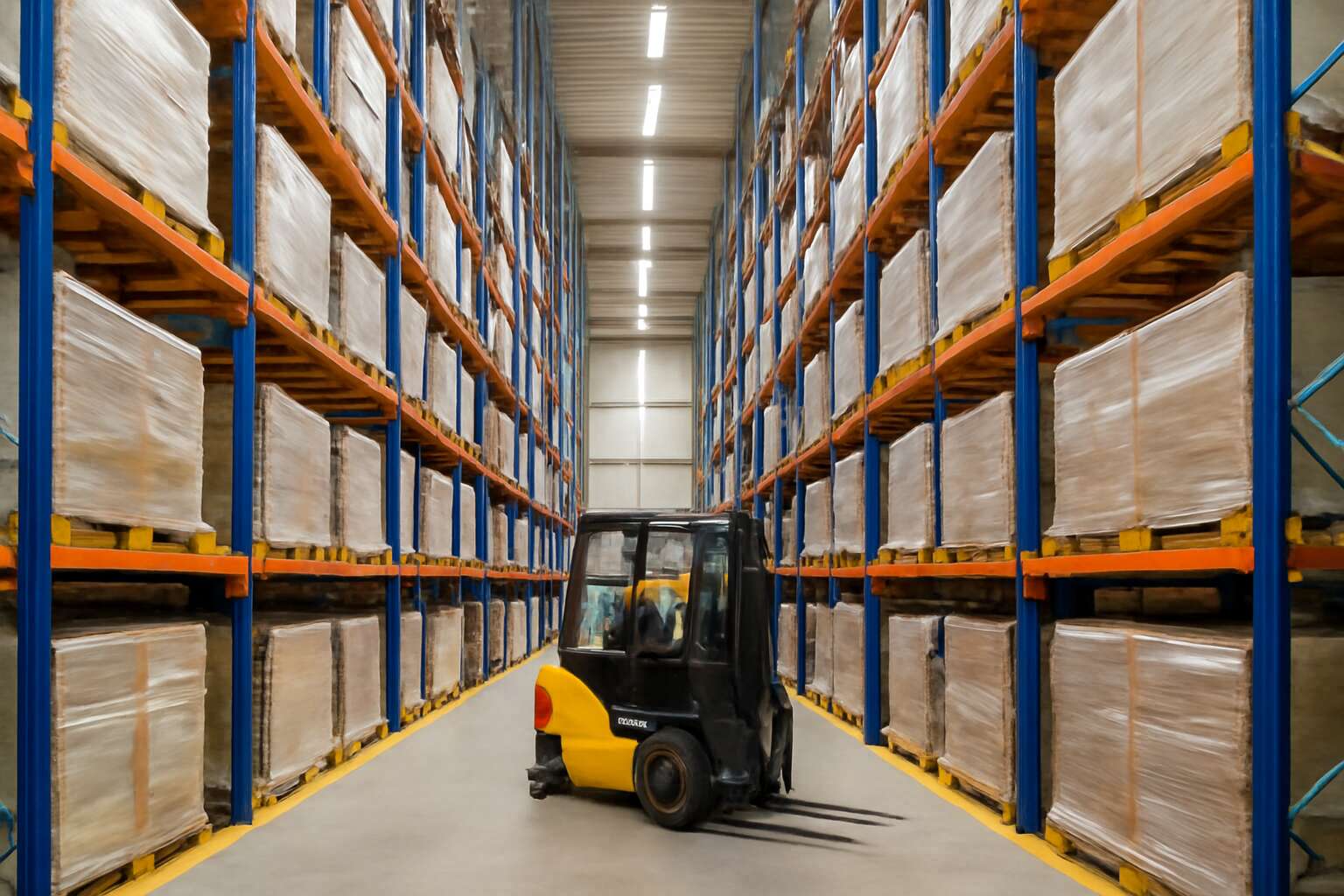
Drive-In Rack System Design Principles
Key design goals for drive-in rack systems
In South Africa’s bustling warehouses, every spare square meter bears weight. A well-tuned layout can trim order cycles by up to 35%. Storage is a living system, and drive in racking system design is where that life takes form, shaping access, density, and safety in one breath.
- Maximize usable pallet density while preserving access for forklifts and safety.
- Provide robust structural resilience to withstand peak loads and temperature variations.
- Enable straightforward maintenance and future retrofits as product lines evolve.
Beyond density, principles highlight modularity and disciplined sequencing. The system should be adaptable to seasonal demand, product mix, and growth without constant redesign. Choose compatible uprights, beams, and safety devices, and align with local safety standards and forklift operations.
Ultimately, the design is a conversation between space, people, and process—a balance of ambition and practicality that keeps warehouses humanity rather than machines.
Pallet compatibility and load handling
In South Africa’s bustling warehouses, space is a living currency, and pallet compatibility tips the balance between chaos and cadence. A statistic lingers: order cycles may drop by as much as 35% when pallets, loads, and lanes align with drive-in principles. This is the heartbeat of drive in racking system design—density without surrender to access.
Pallet compatibility and load handling must harmonize with the system’s unique rhythms. Each pallet size, weight, and load pattern should map onto the lanes, beams, and uprights so that every insertion feels deliberate rather than forced. Consider footprint, stack height, load distribution across a bay, and the impact on forklift travel.
- Pallet footprint and height
- Uniform load distribution
- Beams rated for peak loads
When these elements speak the same language, the structure breathes—resilient during peak season, forgiving during temperature swings, and ready for the next product mix without a rewrite of the skeleton.
Density vs. accessibility trade-offs
In South Africa’s bustling warehouses, space is currency. Dense racks promise more in a footprint, but they demand discipline. A telling stat says order cycles may drop by as much as 35% when density runs ahead of access, a reminder that performance lives at the edge of space and movement.
Density versus accessibility isn’t just a calculation; it’s a design philosophy. Every choice—lane width, bay depth, pallet height—shapes how quickly goods flow through a facility. In drive in racking system design, the aim is a quiet compromise: squeeze as much product as possible while keeping retrieval predictable and safe, even during peak season. The rhythm must adapt to changing product mixes without rewriting the structure.
Structural components and load paths
South Africa’s warehouses run on momentum; space is currency and speed is profit. Field notes show cycle times can rise by up to 20% when pallet flow is misaligned, reminding us that structure and movement must sing together.
In drive in racking system design, the aim is a harmonious load path—from pallet to beam to floor plate. Uprights, beams, braces, and pallet runners form a spine that supports safety, stability, and predictable throughput across shifting product mixes.
Core structural elements:
- Uprights and braces for vertical load transfer
- Beams and connectors that define pallet lanes
- Pallet runners and depth locators that guide movement
- Anchorage and bracing to resist lateral forces
Thinking in terms of load paths keeps decisions anchored to safety and reliability, turning design into dependable performance.
Material selection and corrosion protection
Drive in racking system design hinges on durability as much as density. In SA warehouses, space is currency and uptime is platinum—the right material choices cut downtime and extend service life. The right mix blends strength with corrosion protection.
Material selection and corrosion protection guide long-term performance, balancing cost and longevity. Here are practical strategies that work in real-world South African warehouses:
- Hot-dip galvanised steel for harsh environments
- Stainless steel in moisture-prone, coastal zones
- Powder coatings to resist wear and weathering
- Corrosion-resistant fasteners and compatible bracing
When the metal sings in harmony with the rack, uptime becomes predictable and floor plates stop feeling like a battleground.
Standards, safety, and regulatory compliance
Occupational safety and fire code considerations
Warehouses breathe when their systems combine efficiency with safety. In South Africa, a single misapplied drive in racking system design can ripple through operations, endangering staff and slowing throughput. Standards anchor every detail—from load paths to fire compartmentalization—ensuring occupational safety and fire code considerations shape the build from start to finish.
Within that framework, consider these higher-level safeguards:
- Adherence to fire code separation and clear egress to preserve emergency access
- Preservation of mechanical integrity through thoughtful corrosion protection and robust connections
- Alignment with occupational safety standards governing stacking, reach, and pedestrian zones
Drive in racking system design demands a delicate balance between density and access, resilience and visibility. For Southern African warehouses, compliance with local regulations is not a formality but a professional ethic—the quiet force that keeps operations flowing when demand surges!
Inspection, maintenance, and reliability guidelines
Warehouses in South Africa breathe through standards that fuse safety with speed. A single misaligned beam can ripple through a shift, turning momentum into downtime. In drive in racking system design, discipline is the quiet oath that keeps people secure and throughput steady. “Safety isn’t a rule—it’s the rhythm of operation,” a veteran supervisor likes to say, and the sentiment lands with surprising clarity.
Inspection, maintenance, and reliability guidelines anchor this work. They call for regular checks on corrosion, wear, and connection integrity, plus thorough records and audit-ready documentation. A resilient regime also weighs egress, pedestrian zones, and alignment with occupational safety standards to ensure degradation is spotted before it becomes a fault.
- Corrosion protection and coating integrity
- Fastener and connection reliability
- Audit-ready regulatory documentation
- Maintenance history tracking and trend analysis
Product handling equipment compatibility
Factories in South Africa don’t run on luck; they run on standards that fuse safety with speed. “Safety isn’t a rule—it’s the rhythm of operation,” a veteran supervisor likes to say, and the line lands with surprising clarity. When we talk about drive in racking system design, compliance isn’t red tape—it’s the performance framework that keeps people secure and pallets moving. Standards and regulatory expectations set the score, while audit trails translate daily practice into reliability.
Product handling equipment compatibility is the quiet partner in the design story.
- Forklift types and reach capabilities align with beam spacing and clearance
- Pallet dimensions and handling accessories to avoid snag points
- Automation interfaces and safety interlocks that harmonize with the storage rhythm
Audit-ready documentation, robust maintenance history, and clear alignment with local safety codes carry the design through every shift.
Accessory safety features and end-of-aisle protection
“Safety isn’t a rule—it’s the rhythm of operation,” a veteran supervisor likes to say. In South Africa’s warehouses, that rhythm is the tempo that keeps pallets moving and people safe. Standards and regulatory expectations set the score, while audit trails translate daily practice into reliability. When discussing drive in racking system design, compliance isn’t red tape—it’s the performance framework that aligns speed with security.
“Standards govern the stage, but safety features steal the show.” Among the non-negotiables are:
- Accessory safety features to prevent snag points
- End-of-aisle protection to cushion impacts
Audit-ready documentation, robust maintenance history, and alignment with local safety codes carry the design through every shift. In this theater of steel, drive in racking system design isn’t about bragging rights; it’s about observable reliability inspectors can read at a glance.
Operational efficiency and inventory control
Inventory visibility and WMS integration
Efficiency is not a bolt-on; it’s a melody that clarifies every aisle. “Visibility is the engine,” a seasoned operations leader likes to say, and real-time data turns that engine into motion. In drive in racking system design, thoughtful lane geometry and accessible loading zones cut travel, boost throughput, and keep safety lines bright rather than blurred.
Inventory visibility and WMS integration are the twin lanterns illuminating stock, locations, and movements. Real-time visibility across zones minimizes blind spots, while tight WMS links receipts, put-aways, and picks to the rack layout, driving accuracy from receipt to dispatch.
- Real-time stock visibility across zones
- Seamless WMS integration with barcode/RFID
- Automated alerts and cycle counting
Together, these elements sharpen control for South African warehouses without erasing the density that drive in racking system design offers.
Throughput optimization and queue management
South Africa’s warehouses move at pace, and a tuned layout can cut travel time by up to 25%, turning long aisles into high-speed arteries. The right spacing makes bottlenecks vanish, and throughput learns to hum rather than cough. It’s not magic; it’s layout engineering that respects density and flow.
Operational efficiency and inventory control hinge on throughput optimization and queue management that keep lines short and buffers predictable. The drive in racking system design shines here, guiding lanes to minimize backtracking and ensure fast, accurate moves from receipt to dispatch. With proper integration, drive in racking system design supports steady throughput and clear visibility in South African warehouses.
Slotting strategies for drive-in storage
In South Africa’s bustling warehouses, every pallet has a purpose and every lane a tempo. In drive in racking system design, slotting strategies tune that tempo, turning cramped bays into predictable, fast-moving channels.
Think of velocity-based placement: fast movers near the intake, slow movers tucked deeper. Group related products to cut travel time. And plan for seasonal shifts so density stays balanced.
- Velocity-based slotting keeps fast movers near the access point
- Product-family clustering reduces wandering and search time
- Seasonal re-slotting balances density without choking the lanes
The payoff is smoother throughput and tighter inventory control, minus the drama—like a well-rehearsed orchestra backstage. For South African warehouses, this approach pays dividends in hot months and holidays.
Labeling, zoning, and location accuracy
Across South Africa’s bustling warehouses, a mislabel can turn a simple pull into a chase. A recent audit found a 25% improvement in picking accuracy when labeling, zoning, and location precision are baked into the workflow. In drive in racking system design, those elements turn crowded bays into predictable lanes!
Operational efficiency hinges on three levers:
- Labeling clarity that survives forklift wear
- Zoning aligned with product velocity and storage density
- Location verification that ties racks to the WMS in real time
With these in place, inventory moves with confidence, shrinking search time and bolstering control—an edge that shines in peak season and holidays across the country.
Climate control and temperature variation impact
Peak season in South Africa’s warehouses can push handling time up by as much as 40%—and a sharp drive in racking system design is the difference between chaos and choreography. Climate swings aren’t weather, they’re inventory variables that ride shotgun with every forklift pass.
Operational efficiency and inventory control hinge on predictable flow and clear, real-time cues. In drive-in configurations, that means the environment must stay steady long enough for the equipment to do its job—and for items to move without turning the warehouse into a maze of misreads and reruns.
Climate control and temperature variation can tilt the odds on damage, spoilage, and the odd pallet that refuses to cooperate. Here are considerations that sit naturally inside the design conversation, keeping goods aligned with the rack’s rhythm.
Cycle counting and accuracy metrics
Peak season in SA warehouses can push handling times up by 40%. That spike isn’t random—it exposes gaps in how we track, verify, and move stock in a drive in racking system design. When accuracy lags, the aisle becomes a bottleneck and costs climb.
Operational efficiency hinges on cycle counting and real-time metrics that align with fast moves and long dwell times. Data shows how a small mismatch can tie up a whole bay. A robust design embeds visibility into every transfer, with data that flags variances as soon as they occur so replenishment and pick zones stay in rhythm.
Track these metrics to keep inventory control tight:
- Cycle count accuracy rate
- Location accuracy and discrepancy rate
- Time to reconcile and variance causes
Design optimization, installation, and lifecycle management
Design for scalability and future expansion
In South Africa’s fast-moving warehouses, the edge often hides in how you approach drive in racking system design. A sharp eye on design optimization—paired with careful installation choreography and thoughtful lifecycle management—transforms a steel skeleton into a resilient operating heart.
Design for scalability and future expansion ensures the system grows with demand. To future-proof your project, consider:
- Modular uprights and extensible bays to accommodate growing SKUs
- Accessible service corridors and swing-clearances for forklifts
- Graceful decommissioning paths for phase-in/phase-out of lanes
Lifecycle management is a continuum: design for ease of inspection, predictable maintenance, and staged upgrades. When installation is treated as the first act of a long saga, the shelving survives the decades, guarding your inventory with quiet, steadfast fidelity.
Installation sequencing and commissioning
Design optimization is the quiet engine behind a reliable South African warehouse. In drive in racking system design, every angle and bay—every clearance—shapes speed, safety, and space utilization. Small choices now prevent bottlenecks when orders surge and inventory grows!
Installation sequencing and commissioning set the plan in motion. A disciplined sequence reduces rework and keeps safety margins intact.
- Site preparation and measurements
- Component QA and pre-assembly checks
- Sequential lift, alignment, and verification
Lifecycle management treats maintenance as a continuous thread. Regular inspections, predictable upgrades, and staged decommissioning keep the skeleton honest through decades and changing demands.
From first bolt to last pin, the goal stays the same: a resilient heart that breathes with your business.
ROI considerations and cost optimization
Space is money. A well-tuned drive in racking system design can free 12–18% more storage and cut delays that erode margins. In South Africa, that work translates to faster put-away and steadier picks.
ROI hinges on design choices that stay with you from day one. Key factors include:
- Capital vs operating costs
- Energy efficiency and lighting
- Maintenance frequency and spares
- Future-proofing for SKU changes
- Minimizing downtime during install
Installation efficiency matters as much as the concept. The drive in racking system design mindset shortens commissioning, reduces rework, and preserves safety margins, delivering quicker value.
Lifecycle management turns maintenance into a predictable stream. Regular inspections and staged upgrades protect asset value for decades. That approach supports depreciation and safer operations.




0 Comments