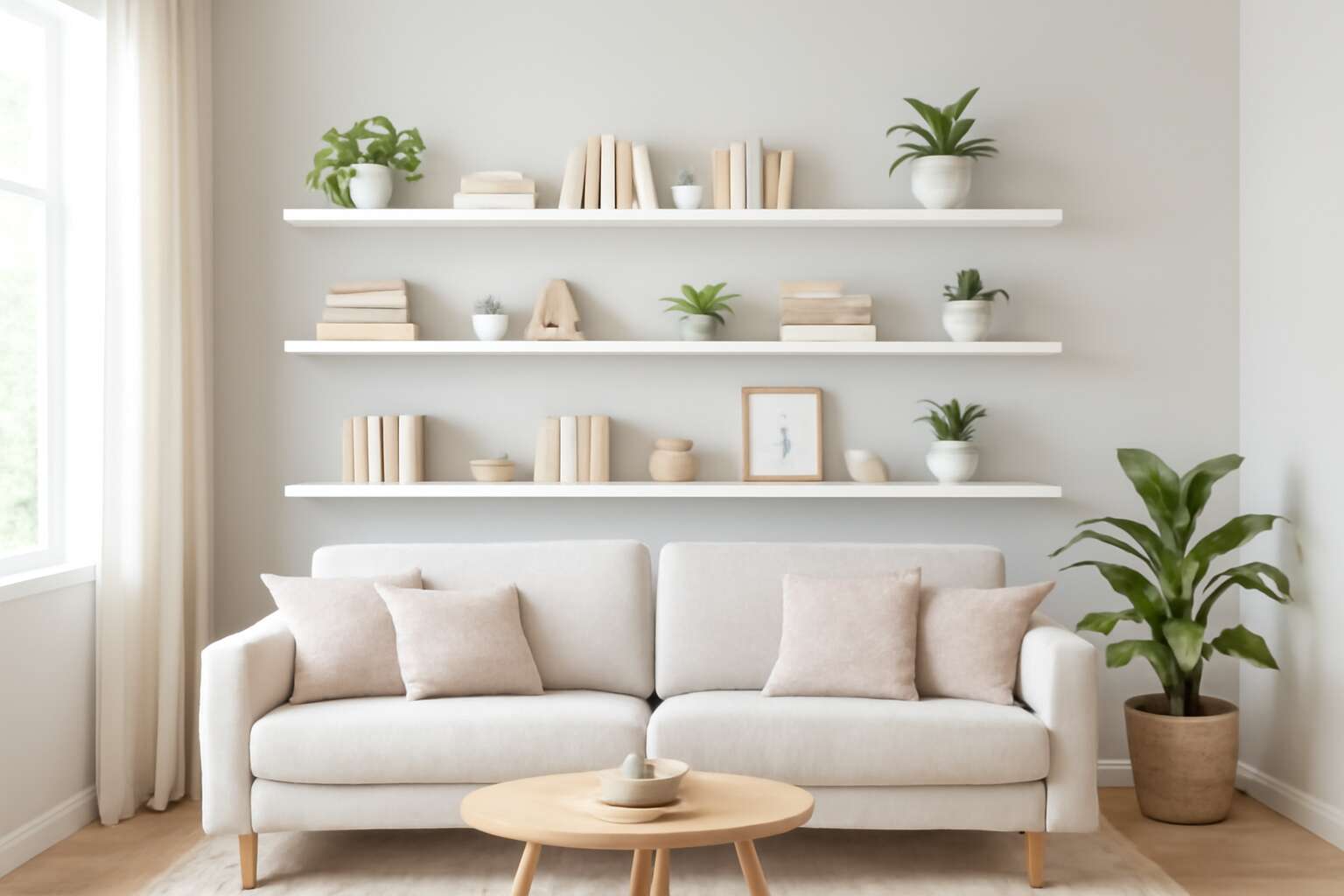
Choosing and Sourcing White Shelving Materials
Key Material Options for White Shelving
Across South Africa’s sunlit living rooms, white shelving boards do more than hold books—they sharpen the lines of a space. A designer quips that “White isn’t a color; it’s a mood.” When chosen well, these boards can make a compact Durban flat feel airy, organized, and surprisingly calm amid clutter.
Here are key material options that keep white shelving boards pristine and practical:
- MDF with white laminate or paint for budget-friendly smoothness
- Plywood with a white veneer for sturdier shelves
- Solid timber with a white-painted finish for longevity
- Melamine-coated boards that resist scratches in busy rooms
Source from reputable SA suppliers who offer durable finishes and moisture resistance for coastal homes. These advantages turn these boards into a design statement with staying power.
Laminate vs Melamine vs MDF: Choosing the Right Finish
Across sunlit South African homes, a well-chosen finish can make a compact room feel unexpectedly expansive. A fresh stat from local designers shows 62% of small-space redevelopments in South Africa favor bright, easy-care surfaces. When choosing laminate, melamine, or MDF for the surface of your shelves, you’re not just picking looks—you’re choosing how much maintenance you’ll face. Laminate delivers a crisp, budget-friendly gloss; melamine adds durability and ease of cleaning; MDF accepts a smooth paint or extra coat of white for a quiet, timeless feel.
To source the right option, partner with reputable SA suppliers who clearly label moisture resistance and warranty terms. Check edge banding quality, backing boards, and whether the finish is appropriate for coastal humidity. For white shelving boards, a well-sealed edge and a durable surface often trump price, especially in busy living spaces.
Where to Buy White Shelving Materials
In South Africa’s sunlit micro-suites, 62% of small-space redevelopments lean toward bright, easy-care surfaces, and white shelving boards are often the quiet heroes. The choice of material for these boards isn’t solely about aesthetics; it’s about resilience, moisture tolerance, and how clean the surface stays over time. A well-chosen finish can transform a cramped corridor into a breathing, organized space.
To source well, seek SA suppliers who clearly label moisture resistance and warranty terms. Check edge banding quality, backing boards, and whether the finish suits coastal humidity. Consider these checks:
- Moisture resistance claims backed by certification
- Quality edge banding and stable backing boards
- Accessible warranty and reliable after-sales service
A well-sealed edge and a durable surface often trump price in busy living spaces.
Thickness, Weight Capacity, and Supported Spans
Bright spaces shape how we move through a room, and in South Africa’s micro-suites, 62% lean toward surfaces that glow with resilience.
Thickness matters when selecting white shelving boards. For airy, everyday use, 18–19 mm yields a clean silhouette; for kitchens or busy home offices, 22–25 mm offers reassuring stiffness.
Weight capacity hinges on more than board grade: even load distribution, backing boards, and edge banding influence how shelves age.
- Short spans up to 600 mm suit lighter loads with 16–18 mm boards.
- Medium spans 600–900 mm pair well with 18–22 mm boards and proper backing.
- Long spans over 900 mm demand thicker boards or additional centre supports.
Spans grow with depth, and every centimetre of length asks questions of stability.
Cost Ranges and Budget Considerations for White Shelving
In South Africa’s micro-suites, 62% lean toward surfaces that glow with resilience, and white shelving boards often seal the mood of a room. They carry daylight into corners and anchor small lives with quiet honesty!
Budgeting for this shelving option means weighing finish, size, and supplier terms. Basic laminates can hit accessible price points, while higher-end boards with smoother edges and tighter tolerances carry a premium that pays off through longevity and less maintenance.
- Finish quality and edge detailing
- Order size and waste minimization
- Delivery, handling, and installation fees
- Warranty and supplier support
Sourcing advice points to local mills and reputable distributors; compare quotes, check stock turnover, and understand lead times. A thoughtful approach preserves the bright, durable effect without surprises down the line!
Design and Aesthetic Considerations
Color Consistency and Brightness for White Shelving
Color is a room’s quiet negotiator, and white shelving boards speak volumes with brightness that never shouts. In South Africa’s sunlit homes, that brightness can read as pristine across kitchens, lounges, and offices alike—but color consistency matters. A mismatch in panels or a warm tint in one batch can create a jagged horizon that unsettles the eye more than any pattern.
Maintaining color consistency and brightness in spaces that rely on white shelving boards comes down to several practical realities that can slip under the radar in a showroom. Consider these factors that influence how the whites read in real rooms:
- Batch-to-batch color variance
- Natural daylight versus artificial lighting balance
- Finish type and its impact on perceived brightness
In practice, the perceived brightness shifts with surrounding decor and fixture lighting. Natural daylight from SA mornings can flatten or sharpen the whites, while ceiling LEDs may introduce a cast that changes how white shelving boards read in photos and real life.
Edge Treatments and Smoothing for a Clean Look
Edge treatments set a room’s quiet drama. For white shelving boards, smooth edges keep reflections honest and the eye from wandering. A lightly rounded or chamfered edge reads refined, not fussy, helping everyday life glide past without snagging. Pair edge smoothing with a uniform seam across panels so the white reads as one composed element.
- Radius or bullnose edges to soften sightlines and reduce snags
- Matching edge banding or lipping for a seamless perimeter
- Fine sanding and top-coat to preserve brightness and an even sheen
- Micro-bevels to catch light without shouting
Edge work is the choreography of light on white shelving boards; when done well, brightness stays even and the room feels intentional.
Style Pairings for White Shelving: Modern, Minimal, and Rustic
Light is the quiet conductor of space, and in South African homes it courses through rooms with a bright, decisive rhythm. “Light is the sculptor of space,” designers remind us, and white shelving boards are its patient, luminous apprentices.
Modern pairings celebrate crisp lines and reflective surfaces. They act as a clean horizon for architectural lighting and steel accents, while Minimal styling hides hardware and embraces a single, quiet continuum. Rustic touches find balance when surfaces echo limestone, plaster, and warm woods.
- Modern: crisp lines, handle-less profiles, and a gallery-like restraint that makes spaces feel expansive.
- Minimal: almost invisible seams, no clutter, letting line and light govern the mood.
- Rustic: textures in contrast—fuzzed wood, gentle grains, and a soft warmth that softens white.
Together, these pairings keep a timeless canvas of brightness.
Textures and Grain Options for White Shelving
Texture is the punctuation in a white room, and South African interiors prove it every day with a bright, confident cadence. “Texture speaks louder than colour,” say designers, and white shelving boards respond with a quiet language of grain and tactile hints that invite you to touch.
Textures and grain options range from ultra-sleek to softly rustic, letting light tango across the surface. Consider these textures to add depth without shouting:
- Fine straight-grain veneer for crisp, contemporary appeal
- Soft fiddleback or gently irregular grain for warmth
- Matte, satin, or gloss finishes to modulate glare
With the right grain and finish, those shelves become a canvas for personal style—bright, balanced, and unafraid to stand up to architectural lighting.
Sizing and Layout Tips for White Shelving
The star of the wall, white shelving boards, sets the tempo of a room, not just its content. “The room breathes when shelves align with daylight,” a Cape Town designer told me! Size and layout should respect function, proportion, and the eye’s natural sweep—tall stacks for height, open segments for air and light.
Consider these sizing and layout ideas:
- Keep modules in multiples of 600–900 mm for cohesive sightlines
- Group items in odd numbers (3, 5) to guide the eye
- Place everyday items at reachable heights for daily use
Let light do the rest: subtle gaps and clean edges keep the surface calm while adapting to changing displays across seasons.
Installation and Assembly
Tools and Prep for Installing White Shelving
Clean lines start with precise prep, and the quiet drama of a room comes alive once white shelving boards are anchored with confidence. The boards are spread to inspect edges and finish, letting the space breathe before the first drill. A moment of acclimation prevents surprises as the shelves finally find their balance.
- Tape measure
- Spirit level
- Stud finder
- Drill/driver with bits
- Pencil and square
- Clamps
- Safety goggles
- Screws and wall plugs
Tools in hand, the mind stays patient—this is where a space reveals its true geometry. The right foundation translates into elegance that remains legible in a busy South African home.
Choosing Brackets, Tracks, and Hardware
A line is a quiet rebellion—the eye notices when truth sits level. Brackets, tracks, and hardware stitch a room’s skeleton into a silhouette the light cannot forget. For white shelving boards, the hardware is a quiet partner—visible only in restraint, never in bravado. The right combination keeps lines clean and space breathing. We value restraint over glare!
Choose components that disappear behind the surface while carrying the load’s exacting weight. Here are the essentials:
- Brackets with slim profiles
- Hidden or edge-mounted tracks
- Wall plugs and screws matched to substrate
In South African interiors, walls range from brick to plaster. Aligning these shelves with sturdy hardware that respects that diversity yields a calm, architectural cadence—modern, moody, and quietly confident.
Mounting Height, Spacing, and Load Distribution
A level shelf is a quiet miracle: a line the room notices without shouting. In South African homes where brick, plaster, and personality collide, white shelving boards read as architecture, not decoration. Mounting height should feel obvious to the eye—just enough to reach what you need while staying inside the line of sight.
Spacing creates rhythm; load distribution keeps that rhythm intact. Keep a thoughtful balance so the board feels steady, not wilful. Use the intended load paths and distribute weight evenly across brackets and tracks, letting the surface stay calm and unbroken.
- Mounts placed to balance vertical loads and preserve the board’s silhouette.
- Respect simple spacing that keeps air around objects and reduces visual noise.
- Heavier items share the load by aligning near strong supports.
When order governs the wall, white shelving boards become a quiet, confident backbone for a room—modern, moody, and quietly sophisticated.
Safety Guidelines When Handling White Shelving
A single misaligned bolt can turn a quiet wall into a chorus of creaks. With white shelving boards, safety isn’t afterthought—it’s the foundation. Flaws in components or moisture in the room become visible when we approach the job with patience, not haste. When we treat panels with care, chips and warping stay at bay, and the dialogue of weight and balance remains calm. The layout reveals itself only when risk is balanced against restraint.
Professional practice leans on manufacturer guidelines and compatible hardware, ensuring the surface retains its clean line. In this approach, safety is a quiet discipline that keeps the room feeling confident rather than tense. The result is a calm, architectural presence that endures in busy South African homes.
Finishing Touches for a Seamless Mount
A precise mount is the difference between a shelf that wears its wall like a crown and one that whispers. When mounting white shelving boards, you chase a clean line across the wall—every centimeter aligned, every anchor chosen for quiet strength. I’ve learned that when alignment sings, the room breathes easier.
Finishing touches to seal the installation include:
- Visual consistency: ensure the line across shelves reads true from edge to edge
- Concealed fasteners and edge flushness: keep hardware out of sight
- Seamless joints: minimize gaps with precise silicone for a unified look
With these measures, white shelving boards stand as a calm, architectural element in South African homes, balancing weight with restraint and turning everyday storage into quiet spectacle.
Maintenance, Cleaning, and Longevity
Cleaning White Shelving Without Damaging the Finish
Bright surfaces invite possibility, and white shelving boards are the quiet, radiant backbone of a room. In South Africa’s sunlit homes, they stay luminous when care is intentional and restrained—an everyday luxury that endures with a mindful touch.
Cleaning should be gentle and consistent: dust with a microfiber, wipe with a damp cloth with mild soap, then dry. Avoid solvents or abrasive pads that mar the finish. Wipe with the grain to keep a gleaming surface.
Longevity rests on protection from moisture and direct sun. Use coasters or organizers, and position white shelving boards away from harsh UV rays when possible. A quick once-a-week wipe keeps the tone even and prevents small flaws from becoming focal points.
- Dust regularly with microfiber to prevent buildup.
- Dampen a cloth with mild soap and water, then dry completely.
- Avoid harsh chemicals and moisture exposure that can nibble the finish.
Stain, Water, and UV Resistance for White Shelving
Light has memory, and white shelving boards remember every sunset. In South Africa’s sun-drenched homes, their quiet radiance hinges on restraint and care. The sturdier the shield between moisture and harsh rays, the longer that gleam lingers as a defining feature of the room.
Maintenance should be gentle: routine microfiber dusting keeps the surface clean without harsh action, while avoiding solvents or abrasive pads that mar the finish. Wiping with the grain helps preserve the gleam and maintains the finish’s integrity.
Longevity rests on protection from moisture and direct sun. Use coasters or organizers, and position shelving away from UV exposure whenever possible. A quick once-a-week wipe keeps the tone even and prevents small flaws from becoming focal points, reinforcing stain, water, and UV resistance in these shelves.
Repairing Chips and Scratches on White Shelving
Sun over the kitchen counter can be a friend or foe. For white shelving boards, a measured touch preserves that crisp glow against SA’s sunlit rooms. Guard moisture with care, shield surfaces with coasters, and place units away from harsh, lingering rays.
Cleaning should be gentle: microfiber dusting and wiping with the grain, avoiding solvents or abrasive pads that dull the finish. A calm, routine pass keeps the tone even and the gleam honest in daily life.
Longevity rests on humidity control and sun exposure. If chips or scratches appear, consult a professional to restore harmony with the finish rather than shoving the fault into the room’s story. With proper care, the luminosity of these shelves endures.
Managing Humidity and Temperature to Prevent Warping
Boldly bright in South Africa’s sunlit rooms, white shelving boards deserve a careful caretaker! A measured touch preserves that crisp glow and guards against warping as seasons cycle through air, heat, and humidity.
Maintenance becomes ritual: little checks on brackets, level units, and finishes. Keep surfaces free of moisture and wipe with a soft cloth to maintain the finish on white shelving boards.
- Monitor humidity to minimize wood movement
- Maintain a steady temperature to avoid rapid shifts
These choices preserve the luminosity and structural integrity of white shelving boards for years.
Seasonal Care Schedule for White Shelving
Maintenance is a quiet, daily ritual that keeps white shelving boards bright in South Africa’s sunlit rooms. “Bright spaces are honest spaces,” a seasoned maker once told me. It’s more than dusting—it’s stewardship: a steady hand that preserves the crisp glow and the clean lines that anchor a space.
Cleaning should be gentle and sparing: dust with a soft microfiber cloth, wipe spills promptly, and avoid harsh cleaners that dull finish. Keep moisture away from the joints to prevent creeping staining or swelling.
Seasonal care follows the year’s natural rhythm. A light touch now and again does wonders for longevity:
- Spring: a quick dust and a moisture check
- Summer: shield from direct sun and heat to maintain brightness
- Autumn/Winter: a gentle polish and edge protection
Done right, this rhythm keeps the space vibrant for years, helping white shelving boards stay luminous.




0 Comments