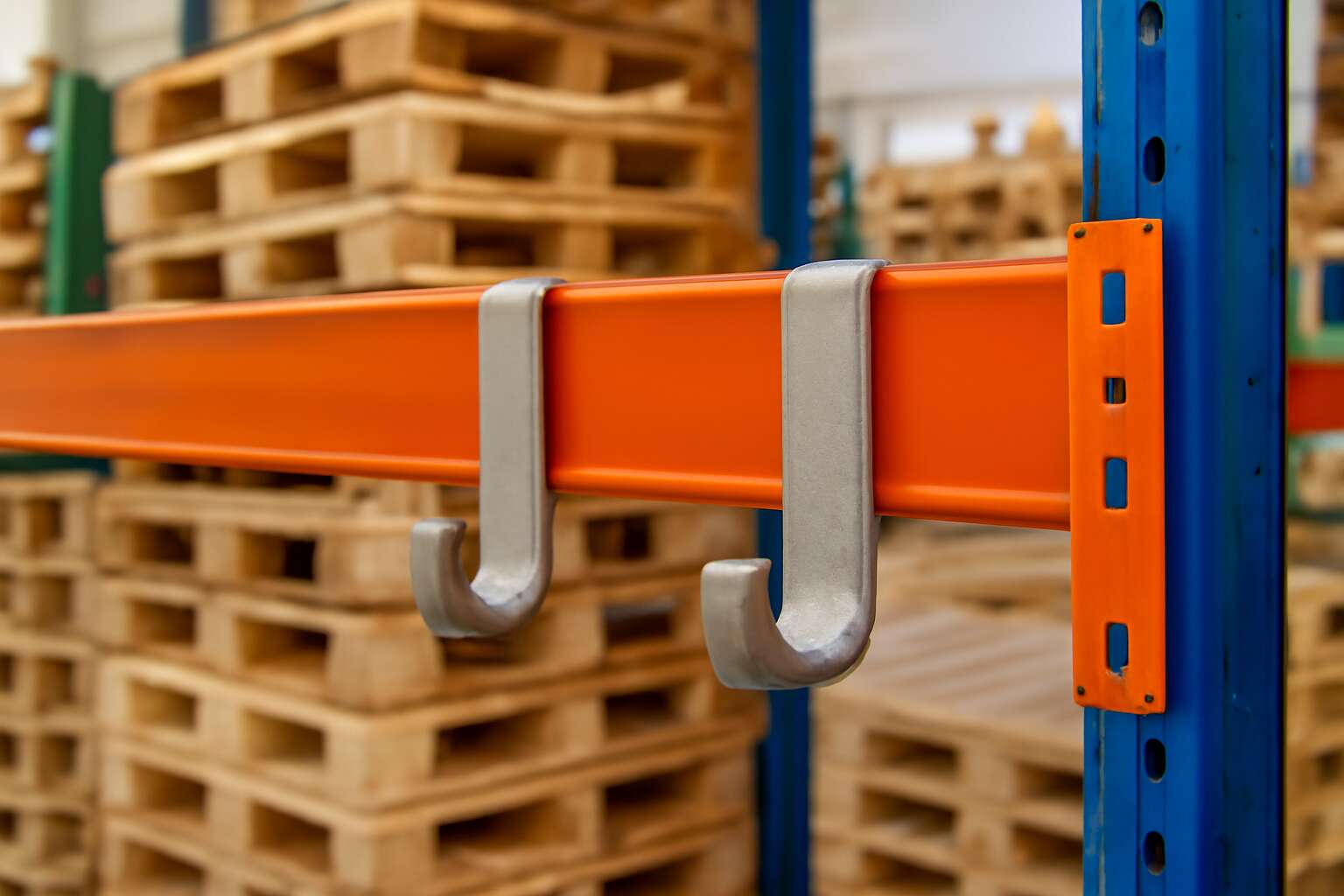
Overview of pallet racking J hooks
Definition and core function of J hooks
In South Africa’s bustling warehouses, downtime costs real money—rand that vanishes in a heartbeat. Enter pallet racking j hooks, the small steel anchors that lock beams into uprights, enabling quick configuration and steady load support. A recent industry note places up to 12% of downtime in high-demand facilities to worn or misaligned J hooks. Their core function is simple and vital: hold beams at the right height and prevent wobble when pallets pass by.
- Fast, tool-free beam changes
- Durable steel for harsh warehouse environments
- Compatibility with standard uprights and beams
These hooks whisper resilience, with the lip of the beam cradled by the curve—pallet racking j hooks become the quiet hinge in the storage ballet. In local practice, corrosion resistance and easy replacement matter most in heat, dust, and forklift traffic.
How J hooks integrate with pallet racking frames
In South Africa’s bustling warehouses, downtime costs real money. A recent industry note places downtime in high-demand facilities at up to 12% of productive hours—a figure that keeps managers awake and forklifts humming into dawn light.
Enter pallet racking j hooks: small steel anchors that lock beams into uprights and keep the storage ballet gracefully coordinated. They ensure the beams sit at the right height and resist wobble as pallets glide past, a quiet hinge in a busy floor.
- Fast, tool-free beam changes
- Durable steel for harsh warehouse environments
- Compatibility with standard uprights and beams
In local practice, corrosion resistance and easy replacement matter most in heat, dust, and forklift traffic. The quiet resilience of these hooks keeps the entire system trustworthy amid heavy daily use.
Key benefits of using J hooks
In South Africa’s busiest warehouses, a single hiccup can cascade into hours of downtime. Downtime in high-demand facilities can climb to 12% of productive hours, gnawing at efficiency and margins.
Enter pallet racking j hooks—the unassuming anchors that lock beams into uprights with quiet resolve. They resist wobble, align beams at the right height, and endure heat, dust, and forklift traffic that define a typical shift.
Key benefits include:
- Rapid adjustments that keep aisles flowing
- Durable steel construction for harsh environments
- Easy replacement and compatibility with standard uprights and beams
Smoothed operations translate to steadier rounds of pallets and a warehouse that hums with confidence.
Common myths about pallet racking J hooks
In South Africa’s busiest warehouses, downtime can climb to 12% of productive hours, gnawing at efficiency and margins. That brittle rhythm makes every component matter, especially the tiny, steadfast anchors that keep racks steady when the forklift horns slice through the air.
Overview: pallet racking j hooks are discreet yet decisive connectors. They secure beams to uprights, resist wobble, and hold line heights with quiet confidence, pairing form and function in steel that endures dust, heat, and the clang of daily shifts.
- Myth: They’re only for light-duty warehouses and light loads.
- Myth: They wear out quickly and require constant replacement.
- Myth: Replacing j hooks disrupts operations and isn’t compatible with standard uprights.
In truth, pallet racking j hooks combine durability with straightforward maintenance and broad compatibility, promising steadier aisles and fewer misalignments without drama.
Materials and construction of J hooks
Popular materials used for J hooks
Across South Africa’s bustling warehouses, the pallet racking j hooks quietly bear the weight of possibility. When the frame and fastener marry in quiet precision, operations feel lighter and safer. These hooks are born from steel—cold-formed for strength or stamped from robust sheet stock, then heat-treated to resist fatigue—and finished with a powder coat or galvanizing to foil rust. Their graceful curves distribute load and guard against abrasion, ensuring a long, steady life on busy racking rows.
In terms of construction, look for hooks that feature clean welds or seamless bends and a stout neck that seats firmly on the rail. Popular materials used for J hooks include:
- Carbon steel with powder coating for durability and cost efficiency
- Stainless steel for corrosion resistance in damp environments
- Hot-dip galvanized steel for outdoor or high-humidity settings
Each choice shapes compatibility with pallet racking j hooks and the frame, harmonizing reliability with aesthetic polish. That’s why pallet racking j hooks deserve a place of respect in any proper facility.
Coatings and corrosion resistance
In South Africa’s busy warehouses, pallet racking j hooks hide in plain sight, turning heavy stacks into smooth, safe movements. The magic lies in materials formed with clean bends and a sturdy neck, then dressed in a protective finish that repels rust and fatigue.
Coatings are the shield against the country’s punishing humidity and warehouse dust. Powder coating offers durability and a uniform, color-stable finish; hot-dip galvanizing provides unrivaled corrosion resistance for outdoor or damp spaces; stainless steel stakes its claim where salt air roams.
- Powder-coated carbon steel for durability and cost efficiency
- Hot-dip galvanized steel for outdoor or high-humidity environments
- Stainless steel for superior corrosion resistance in damp zones
Construction quality shows in clean welds or seamless bends and a neck that seats firmly on the rail. When paired with the right coating, these parts promise a long, dependable life across busy racking rows.
Manufacturing tolerances and quality checks
Materials and construction set the heartbeat of pallet racking j hooks. In South Africa’s bustling warehouses, every hook carries weight and intention. The right alloy and clean bends ensure a neck that seats firmly on the rail, while tight tolerances keep the profile true and free from wobble.
- Dimensional tolerances for neck, bend, and tail are tight.
- Consistent bend radii and smooth edges prevent stress points.
- Surface finish is prepared for coatings and inspection.
- Material certification and batch traceability are documented for every lot.
Quality checks guide every batch: visual and dimensional inspections, simple hardness tests, and non-destructive checks on welds and neck seating. Coating adhesion is verified so rust remains a distant threat. When the gates stay solid, pallet racking j hooks endure the warehouse’s long, demanding shifts.
Standard sizes and shapes
In the furnace’s glow, materials and construction forge more than hardware; they seal reliability into every load-bearing shard of steel. For pallet racking j hooks, South African warehouses demand alloys that resist fatigue—hot-rolled carbon steels, sometimes alloyed for extra resilience—meticulously forged or welded and tempered to a stubborn finish. Clean bends, burr-free edges, and a surface primed for coatings keep the profile true and vibration at bay.
Standard sizes and shapes lend a quiet harmony to a storm of pallets. Common variants balance strength with easy integration across frames:
- Straight-neck with a standard bend radius
- Curved-neck variants for easier seating and withdrawal
- Extended-tail profiles for heavier loads
These standard forms of pallet racking j hooks fit snugly into South Africa’s varied warehouses, keeping aisles calm amid bustle and heat!
Cost vs durability trade-offs
In the South African warehousing world, one fact dominates the loading room: a single pallet racking j hooks can endure tens of thousands of lift cycles before fatigue shows. Materials and construction shape that endurance—hot-rolled carbon steel, sometimes alloyed for extra resilience, forged or welded and tempered to a stubborn finish. Clean bends and burr-free edges keep stress localized and the profile true, while coatings prime the surface for longevity. The price-to-durability balance matters as steel meets heat in the forge of real use.
The cost-durability trade-off hinges on manufacturing choices—heavier, well-forged hooks resist fatigue under dynamic loads but cost more; cheaper welds may reduce upfront outlay yet invite wear sooner. Coatings and consistent tolerances ensure predictable seating in busy aisles.
- Material choice and heat treatment shape fatigue life of pallet racking j hooks
- Forging vs welding influences stress distribution and defect risk
- Coatings protect against corrosion in SA’s varied climates
Applications and compatibility in pallet racking systems
Suitable pallet types and load patterns
Across South Africa’s busy warehouses, space efficiency translates to margins. A recent snapshot shows storage density improving by up to 15% when the right components align. pallet racking j hooks—the quiet connectors that secure pallets to frames—make compatibility a practical asset, not a guess.
Applications span light to heavy, with varied pallet formats and predictable load patterns.
- Euro pallets (1000×1200 mm) with even loads
- Industrial or block pallets for dense configurations
In South Africa, supply chains shape how goods are stacked, and these hooks accommodate common pallet types on the continent, promoting safe, swift stock movement and longer asset life.
Compatibility with pallet rack standards
Storage density in South Africa’s bustling warehouses can rise by double digits when the right components click into place. pallet racking j hooks quietly do the heavy lifting, turning misaligned connections into safe pockets for goods. When these hooks align with frames and standards, the daily rhythm of stock movement becomes faster and safer.
Compatibility with standards and frames across SA’s supply chain looks like this:
- Interchangeability with regional rack frames and boltless systems
- Conformance to ISO and SANS guideline frameworks for safe loading
- Reliability across varying pallet formats and predictable patterns
With this alignment, storage operations stay swift and asset lives extend.
Interchangeability with different hook styles
Across South Africa’s bustling warehouses, the right pallet racking j hooks unlocks a swift, dependable rhythm! When these elements align with frames and standards, misloads shrink and throughput climbs into double digits—the kind of uplift that makes every shift feel lighter.
Applications in diverse rack environments demand interchangeability with different hook styles. From standard boltless frames to rugged bolt-down systems, the ability to swap hooks without reconfiguring beams saves time and preserves asset life. Consider the following styles as compatible players in the SA supply chain:
- Standard J hooks for boltless and bolted frames
- Extended-base J hooks for taller cargo or deeper beams
- Locking or captive-hinge variants for vibration-prone zones
Across varying pallet formats and load patterns, these hooks maintain stable pockets for goods, ensuring smooth cycles from receiving to dispatch with fewer interruptions.
Installation, safety, and maintenance of J hooks
Installation steps and best practices
In SA warehouses, one misfit hook can trigger downtime worth thousands of rand per week. Installation, safety, and maintenance of pallet racking j hooks isn’t glamorous, but it’s where reliability starts. When these hooks seat cleanly on the frame and align with pallet patterns, loads stay stable and access remains straightforward.
- Regular visual inspections for wear, cracks, or corrosion
- Ensure mounting surfaces are clean and free of burrs before fitting
- Replace any hook showing deformation or fatigue
I keep a light maintenance log and schedule periodic checks; after heavy forklift activity or reconfiguration, I verify the hook seating and clearance. Use PPE, and follow local standards and manufacturer guidelines. With proper care, pallet racking j hooks perform predictably and safely in busy South African facilities.
Safety considerations and load limits
Across South Africa’s busy warehouses, one misfit pallet racking j hooks can trigger downtime worth thousands of rand per week. Safety and load discipline are the quiet sentinels of reliability, demanding a patient respect for how weight travels through steel and pallet patterns. When hooks seat cleanly on the frame and align with the pallet rhythm, operations breathe a little easier and the floor keeps its composure.
Safety considerations and load limits for pallet racking j hooks hinge on the harmony between frame integrity, pallets, and the intended pattern. Respect material compatibility, watch for deformation, and heed that forklift dynamics can exceed static expectations. Align with manufacturer guidelines and local standards to preserve a safe, predictable flow of goods.
Guardrails to consider include:
- Load path integrity
- Compatibility with pallet types
- Regular visual checks
- Clean mounting surfaces
Inspection routines and fault indicators
One misfit pallet racking j hooks can trigger downtime worth thousands of rand per week, and South Africa’s warehouses feel that sting in real time. Installation matters: seats must be square on the frame, mounting surfaces clean, and bolts tightened to the manufacturer’s torque. When the hooks breathe with the frame and the rhythm of the pallets aligns, the floor stays calm and the racks stand ready.
- Deformation near the hook
- Cracks on mounting flange
- Loose or missing fasteners
- Misalignment with pallet pattern
- Unusual creaking during movement
Maintenance reveals the system’s heartbeat, turning routine checks into quiet guardians of reliability. Subtle wear on hook tips or mounting shoulders tells a story long before a failure, and fault indicators become part of the ongoing dialogue between metal and weight. In busy SA facilities, pallet racking j hooks stay honest when attention is steady and attentive.
Replacement guidelines and lifecycle
In SA warehouses, a single misfit pallet racking j hooks can trigger downtime worth thousands in a week. Replacement guidelines and a thoughtful lifecycle turn risk into reliability—the quiet heartbeat of the rack. I’ve watched frames breathe easier when hooks retire on schedule, matching frame age to the weight they bear and preserving throughput on a floor that stays calm.
- Wear indicators: tip thinning or mild deformation near the hook.
- Structural concerns: cracks, corrosion, or mounting flange issues.
- Lifecycle planning: document manufacture dates, track retirements, and standardize replacements.
- Handling and storage: protect against impact and clean to remove debris.
This lifecycle keeps the system honest and your operations singing, the rhythm of safety and performance enduring.
Installation tools and accessories
In South Africa’s warehouses, I’ve seen a single misfit pallet racking j hooks derail a shift and cost thousands in downtime. The true magic lies in its quiet reliability when fitted with care and respect for the frame.
Installation demands measured precision and the right tools. When they engage correctly, alignment becomes the anchor of safety and steady throughput.
Tools and accessories that support a calm installation include:
- Protective pads to shield frames
- Soft-faced mallet to avoid marring
- Torque gauge for gentle settling
Maintenance remains a practice of light touch: regular surface cleaning, careful inspection and timely retirement of worn hooks to keep the floor calm and throughput singing.
Common installation mistakes to avoid
A single misaligned J hook can derail a shift and cost thousands in downtime. In South Africa’s warehouses, my experience shows the quiet magic lies in measured hands and a fit treated with respect.
Installation demands measured precision and the right tools. When engaged correctly, pallet racking j hooks anchor safety and sustain steady throughput. Common installation mistakes to avoid are haste, misalignment, and neglecting frame protection.
- Check alignment before seating and retighten in incremental stages.
- Inspect for cracks or deformations; retire any suspect hooks.
- Maintain protective pads, use a soft-faced mallet and a torque gauge to settle gently.
Maintenance remains a light-touch discipline: regular cleaning, careful inspection, and timely retirement of worn hooks to keep the floor calm and throughput singing.



0 Comments