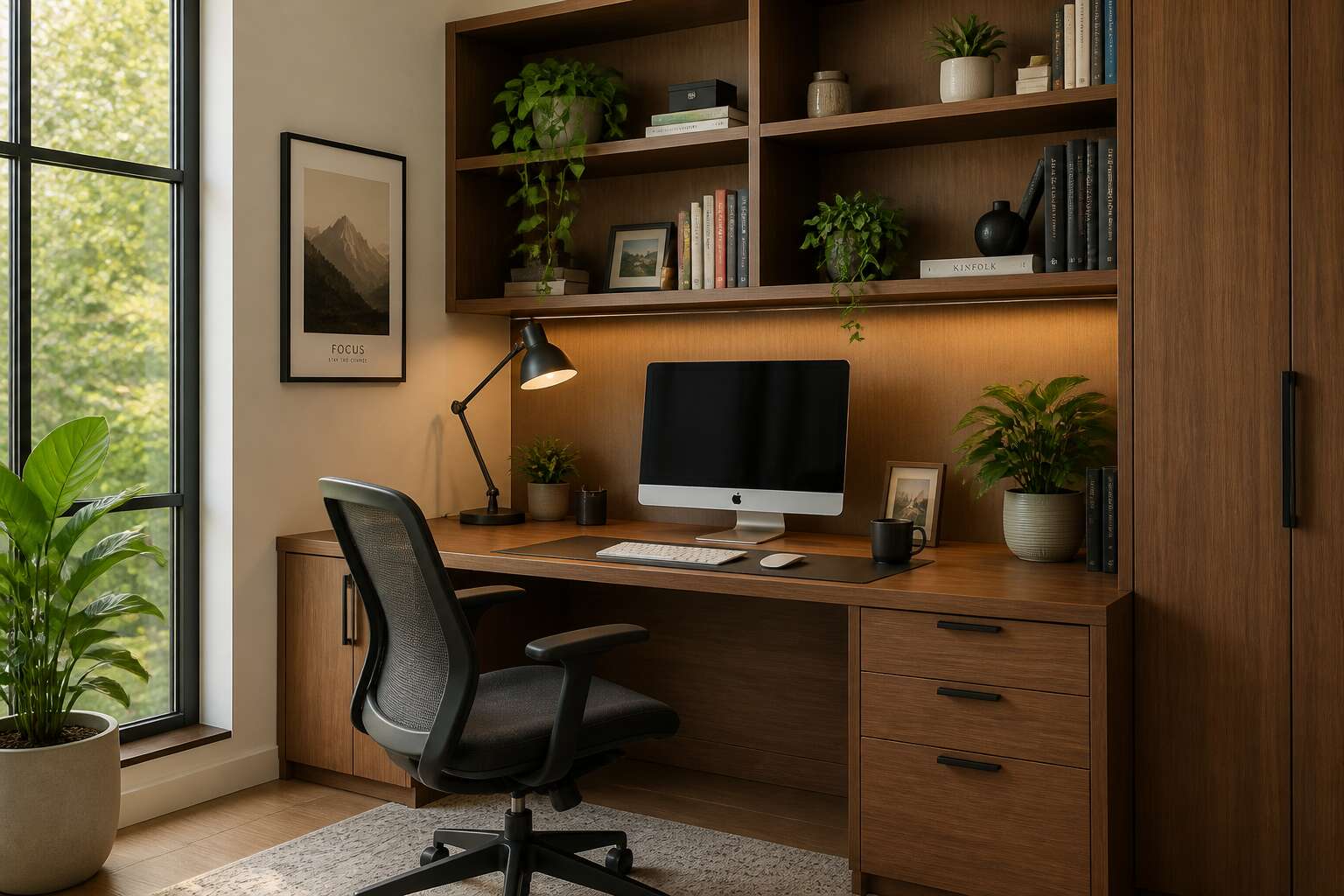
Understanding the All-in-One Workspace Concept
Blending Functionality and Style
In Johannesburg’s quiet hours, the office shelving desk transforms from a mere arrangement of wood and steel into a silent partner in the daily ritual of work. The all-in-one workspace concept acknowledges that the line between storage and surface has grown decidedly thin. A single unit now carries the weight of monitors, files, and the scattered relics of a busy mind, all kept within arm’s reach while the eyes remain fixed on the task ahead.
This blending of functionality and style requires a deliberate eye. The shelving must not overwhelm the desk beneath it. Instead, it frames the working area like a well-kept cabinet, offering order without demanding attention. For the South African professional, floor space is often a luxury, and the vertical dimension becomes a quiet ally in the struggle for clarity. A certain rhythm emerges when the shelves hold only what the day requires, nothing more.
- Open shelves keep reference books and folders near at hand
- Closed compartments conceal the clutter of cables and paperwork
- A solid desktop anchors the entire structure, bearing the daily pressure of deadlines
When selecting this furniture, consider the visual weight of the unit. Dark timber speaks to a gothic sensibility, while pale finishes lighten a cramped room. The office shelving desk, properly chosen, does not shout. It simply holds everything together, a steadfast presence in a world that seldom slows down.
The Rise of Multi-Purpose Furniture
Let’s face it: the traditional home office was a fiction. A desk for the laptop, a bookcase for the files, and a prayer for the rest. The surge in remote work across South Africa exposed that flaw. The answer arrived as the office shelving desk, a unified structure that absorbs the clutter before it multiplies.
This rise is not a design trend. It stems from shrinking apartments and the rising cost of available floor space. In cities like Johannesburg and Cape Town, every centimetre must earn its keep. The unit combines an elevated work surface with storage above and below, turning a dead wall into usable territory.
- Rent per square metre drives the demand for vertical efficiency
- Remote employment forces individual storage habits into domestic rooms
- Load shedding demands all essential tools stay within one reachable frame
The multi-purpose furniture boom reflects a deeper cultural shift. We no longer live in separate rooms for separate duties. We inhabit one space and expect it to adapt. That expectation is precisely what the shelving desk now satisfies.
Key Features to Look For
Let’s be honest about what your workspace has become. A pile of cables, three different chargers, a coffee mug that has achieved sentience, and the paperwork you swear you will file tomorrow. The all-in-one workspace concept asks a simple question: why does your desk hold a single surface while the rest of the room holds your chaos? The office shelving desk collapses that distance. It puts the archive, the hardware, and the work surface into one vertical footprint. You stop walking across the room to find a stapler. You stop losing your notebook to the void behind the monitor.
The key is the configuration, not the size. A smart unit includes:
– A solid work surface with enough depth for a keyboard and monitor
– Adjustable shelves above for books and reference material
– A dedicated cable management channel to tame the cord octopus
– A lower cabinet or drawer for the items you do not want on display
You want load bearing shelves that do not bow after a year of heavy binders. You want a finish that survives the Highveld dust. The office shelving desk earns its rent when it makes your daily routine shorter. If you still walk to another room for a file, the unit has failed you. The best models put everything within an arm’s reach, turning a single wall into a complete command centre. That is the entire point of the concept. It is not furniture. It is a system for staying sane.
Choosing the Right Configuration for Your Space
Assessing Your Room Dimensions
Research suggests that over 70% of employees feel their workspace directly impacts their productivity, yet most of us treat room dimensions as an afterthought. The physical footprint of your office dictates everything about how your office shelving desk will function, from the flow of foot traffic to the very posture you hold during a long workday. Before you fall in love with a particular style, you must first grapple with the raw geometry of the room itself. This is not about mere aesthetics; it is about engineering a space that works with you, not against you.
Start by mapping the perimeter with a tape measure, noting the exact location of windows, door swings, and electrical outlets. A common mistake is to assume a symmetrical layout is the only correct one, but the true magic lies in working with the architectural quirks you already have. For instance, a deep alcove can become a focused work nook, while a narrow wall might be perfect for a shallow, tall unit.
To ensure you get the most out of your available square meters, consider these practical steps:
1. Measure the maximum width and depth of the intended desk area, leaving at least 80 centimeters for a chair to slide back comfortably.
2. Identify the “dead zones” in the room, such as corners or spaces beside doorways, which are prime real estate for vertical storage.
3. Calculate the viewing angle for your screen relative to natural light sources to reduce glare on your monitor.
Once the measurements are locked in, you can pivot the configuration to match your workflow. A linear layout suits a narrow room, while an L-shaped arrangement defines separate zones for a computer and for paperwork within the same footprint. The goal is to create a cohesive unit where the shelving becomes an extension of the desktop surface, rather than a separate piece of furniture fighting for attention. By respecting the dimensions of your room, you allow the office shelving desk to become the structural heart of a well-ordered environment, making every square foot count.
Corner Units vs. Straight-Line Layouts
The most underrated decision in office design is the choice between a corner unit and a straight-line layout. That choice determines how your office shelving desk will function in the room. A corner configuration turns an awkward junction into two functional zones, one for focused screen work and another for paperwork.
The straight-line layout works differently. It gives you a longer continuous surface for tasks that need spreading out. It also keeps the visual field simpler, which I find reduces clutter. But it asks for a clear wall, and that wall must be long enough to justify the sacrifice of floor space.
Points to weigh:
- Corner units can make a small room feel tighter, so the diagonal measurement matters.
- Straight-line desks work well against a window, but side glare becomes a factor.
The right office shelving desk configuration matches the natural path of your day.
Adjustable Shelving for Flexible Storage
A workspace shifts shape over time. A project that demands open surfaces today may need vertical storage tomorrow. That is why the configuration of your office shelving desk matters more than the initial aesthetic. Adjustable shelving lets you recalibrate the unit as your routines change, without spending a cent on new furniture.
In South African offices, where square metres are scarce, movable shelf heights accommodate everything from ring binders to stacked files. Consider these adjustments:
- Raise shelves to clear space for a desktop printer
- Lower them to keep reference books within arm’s reach
- Remove a shelf entirely to create a narrow standing nook
When you choose an office shelving desk, shelf pin spacing matters more than the finish applied to the frame. Half centimetre increments might feel fussy, but they open up far more configurations than you expect.
Material Options and Durability
Choosing the right configuration for your space begins with measuring your workflow, not the wall. A single shelving unit can fit a narrow Johannesburg study or extend along a Cape Town open plan. The weight of your materials decides the frame.
Consider what the desk must carry:
- Steel frames handle heavy binders and printers
- Plywood shelves resist sagging better than particleboard
- Laminate surfaces survive daily coffee rings
Each material changes the unit’s lifespan. Solid steel with a powder coat resists coastal humidity. Timber veneer offers warmth but demands care. An office shelving desk with dense particleboard may save money upfront, but the joints loosen within years.
Optimizing Your Workflow with Integrated Shelving
Placing Essentials Within Arm’s Reach
The average office worker loses two hours daily to misplaced items. A deliberate office shelving desk design eliminates that waste. Integrated shelving turns your workstation into an efficient tool. You place reference files, stationery, and tech accessories where your hand naturally travels. No more cabinet swivels or drawer rummaging. This proximity reduces strain and maintains focus. Consider what belongs within arm’s reach:
- Frequently used documents
- Charging cables
- Notepads and pens
These items occupy the zone where your elbow bends. The result is a workload rhythm without interruption. I’ve observed that professionals gain real time back with this setup. The office shelving desk adapts to your habits, not the other way around. Your workflow speeds up because every essential has a predictable home. Less searching, more producing. That’s the clear advantage!
Reducing Clutter with Vertical Storage
Vertical space is the cheapest real estate in any office. Instead of stacking papers across your worktop, an office shelving desk shifts that weight upward. Files sit above your monitor, reference books occupy a shelf above your keyboard. The result is a cleaner surface for writing and thinking. This is how you optimize your workflow without buying more furniture.
Using vertical storage reduces daily friction. You group items by how often you need them, not by where they land when dropped. That simple change matters. A shelf near your dominant hand holds current project folders. A higher tier stores supplies you rarely touch. The desk itself stays open for the task in front of you.
- Reference manuals for active work
- Standby accessories in clear containers
- Devices that need airflow, not elbow room
In practice, an office shelving desk cuts the amount of time you spend clearing a flat surface. Less clutter means fewer decisions. You start work where you sit, not after a five minute hunt.
Cable Management and Shelf Placement
Eleven minutes vanish daily beneath a standard desk, tangled in cables. I know this from hours spent untangling my own. A well built office shelving desk with integrated cable management removes that snarl entirely. Grommets and internal channels run through the uprights and shelves. Cables travel hidden, arriving at sockets and ports without crossing the work surface. That is the quiet efficiency of a closed system!
- Charging hubs integrated into the shelving spine
- Routing grooves carved along the underside of each tier
- Port access aligned to the dominant hand
Shelf placement is equally deliberate. The eye tier holds active files. The reach tier holds reference material. The high tier holds items used once a season. On an office shelving desk, each tier serves a purpose, and the work surface stays clear.
Balancing Open and Closed Storage
The human mind processes visual information at a speed that makes every exposed item either a tool or a source of friction. Clutter in your peripheral vision, even familiar clutter, taxes your focus with each glance. An office shelving desk that pairs open niches with closed cupboards creates a rhythm. The open shelves keep your daily tasks within reach, while the closed sections swallow up the printer paper, the spare mouse, the unordered stack of files you cannot yet discard.
This duality improves flow. You see the essentials, which prompts action. You hide the rest, which prevents distraction. The balance forces a simple discipline:
– Open tiers for the items you touch hourly
– Closed cabinets for the items you touch weekly
It is not about hiding for the sake of appearance. A desk that only displays everything turns to chaos. A desk that hides everything buries your habits. The correct office shelving desk lets you store without losing the sense of order. When the eye lands on a clean surface, the mind follows.
Creating Visual Zones for Different Tasks
The true value of an office shelving desk emerges when you treat it as a mechanism for cognitive partitioning. The physical layout of your workspace dictates the mental architecture of your day. You do not simply place objects on a shelf; you assign them a meaning, a level of urgency, and a place in the hierarchy of your attention. This is not about storage. It is about establishing a rhythm where your mind does not have to make a decision every time it seeks a tool. Instead, the environment answers before the question is asked.
Consider the vertical spectrum of your work surface. The space directly above your keyboard is prime real estate, reserved for the task at hand. The upper tiers are for the reference materials you consult but do not edit. The lower sections, often shadowed and out of the direct line of sight, are for the mechanical components of your operation, the peripherals and supplies that sustain the machine but do not drive it.
To build this flow, you might organize your zones by a specific logic:
1. The eye-level tier is for the active file, the current sketchbook, the open source code.
2. The upper stores hold the textbooks, the binders, and the archive of completed chapters.
3. The deep, low cabinets swallow the paper stock, the ink, and the hardware that keeps the process alive.
This vertical segregation creates a silent narrative. When you sit down, your gaze naturally falls on the middle zone, the realm of immediate execution. Your focus is directed by the architecture itself. When you reach for a volume on the upper shelf, you make a deliberate, physical choice to leave the present and enter the broader context of your project. That gesture, that extension upward, mimics a mental shift, a conscious move from detail to overview.
The result is a desk that functions with the quiet authority of a well-run workshop. The clutter is not banished, it is arranged. The chaos is not eliminated, it is organized into layers of accessibility. You are not looking for a place to put things; you are building a sequence of decisions that map directly onto your workflow. The office shelving desk becomes a silent partner, guiding your hands and eyes through the day’s demands without a single spoken word.
Ergonomic Considerations for Combined Workstations
Correct Desk Height with Shelf Overhead
An overlooked factor in a combined workstation is the clearance between the seat and the shelf overhead. When you choose an office shelving desk, desk height matters, but so does the space above. A low shelf forces you to hunch, which strains the neck and shoulders. Set the desk so your forearms rest parallel to the floor, elbows at 90 degrees. Then stand up; the shelf must clear your head by at least 150 millimetres.
I also ensure the shelf does not block the monitor. If you tilt your head to see the screen, the shelf is too low. These measurements apply:
- Desk height: aligned with your seated elbow, about 70 to 80 centimetres
- Overhead clearance: 150 millimetres above your standing height
- Monitor position: top of screen at eye level
An office shelving desk works well when every surface matches your alignment.
Monitor Placement and Shelf Depth
In my experience, a monitor placed too close becomes a source of eye strain long before you notice the distance. The screen should sit at arm’s length, with the top edge aligned to your line of sight. This rule holds true even when the office shelving desk has a deep work surface designed for paperwork.
Shelf depth changes how you position the screen. A shallow shelf forces the monitor forward, into your personal space. A deeper shelf allows the keyboard to rest beneath the monitor, reducing neck rotation. Here is what I check:
- Measure the monitor depth, then add 100 millimetres for airflow.
- Keep the screen’s centre at or slightly below eye level.
- Allow 400 millimetres between the eyes and the display.
The result is a workstation where your gaze stays level and your spine remains neutral. That is the true value of an office shelving desk.
Chair Clearance and Under-Desk Storage
Neglecting the area beneath your desk turns a well designed workstation into a daily struggle. A chair without clearance forces you to sit sideways, twisting your spine and straining your shoulders. The office shelving desk you selected should leave at least 600 millimetres of width for your legs, plus 150 millimetres for knee depth.
Under-desk storage often intrudes on this space. A pedestal or shelf placed too far forward compresses your leg zone and alters your posture. I measure from the front edge of the office shelving desk to the storage unit. Then I check the chair’s armrests against the underside of the work surface. That clearance is sacred!
- Keep a clear path between the chair’s castors and the desk legs.
- Position storage behind the knee line, not beneath your thighs.
- Leave 50 millimetres between the chair’s backrest and the shelf.
Lighting Integration on Shelving Units
A poorly illuminated work surface forces the eyes to strain against the contrast between a bright screen and a dim desktop. This constant adjustment leads to fatigue that manifests as headaches and a subtle forward lean of the head. When you integrate lighting directly into the office shelving desk structure, you control the light source. You position it to eliminate shadows cast by your hands and the monitor bezel. The result is a stable visual field where the eyes move with ease. The ambient room light becomes secondary, and the task light becomes primary.
The placement of the light fixture on the shelf above requires a deliberate approach. The fixture should sit at the front edge of the shelf, aiming downward and slightly backward. This angle prevents direct glare from bouncing into your eyes. A diffuser is essential to soften the beam. I prefer a warm neutral colour temperature for this application, as it reduces the blue light spike that interferes with circadian rhythms.
– Aim the beam at a 30 degree angle toward the back of the work surface.
– Use a frosted lens to scatter the light evenly.
– Mount the fixture on a separate switch to avoid relying on the room’s main power.
The integration should also consider heat output. An enclosed shelf unit with a halogen light creates a hot spot that dries out plants and warps documents. LED strips are the superior choice. They emit negligible heat and have a lifespan that outlasts the furniture itself. The cabling for these lights should run through a channel in the shelf’s rear edge. This keeps the wire from dangling into your work zone. A properly lit office shelving desk transforms the space from a passive storage unit into an active tool for visual comfort. The light becomes part of the structure, not an afterthought. I always test the light’s position while sitting in the chair to confirm the beam does not hit the screen directly. A reflection on the glass is a sign of poor alignment. The cost of a good lighting system is small compared to the price of chronic eye strain.
Maintaining Healthy Posture While Reaching
The office shelving desk creates a peculiar problem: it invites you to stretch. You twist, you lean, you extend for a binder and end up with a spasm. The combined workstation tests your flexibility, and most people fail. The key is understanding the geometry of your own reach.
Your shoulder defines the safe zone. Anything beyond your natural extension, that perpendicular line from your torso to your fingertips, requires either stepping closer or adjusting the shelf. I keep a stool nearby!
- Rotating your whole torso instead of twisting your neck
- Using a step stool for items above shoulder level
- Sliding heavy items to the shelf edge before lifting
These small movements protect the lumbar region. The office shelving desk should serve you, not the other way around. Your joints will appreciate the restraint.
Adapting the Setup for Multiple Users
The shared work surface is a contested territory, a silent negotiation of elbows and eye lines. A single office shelving desk, when forced to serve two distinct physiques, often becomes a monument to discomfort. The tall user hunches, the shorter one stretches, and both carry the ache home.
The ergonomics of a combined station demand a level of flexibility previously reserved for acrobats. You cannot simply settle on one fixed height and call the matter resolved. Instead, you must consider the zone of convergence, the space where both users’ reach patterns overlap, and design around that narrow band of compromise.
To manage a dual-purpose system effectively, consider these adjustments:
1. Establish a primary user for the main desk surface, then set a secondary work zone for the other.
2. Use the shelving above to store items only the taller person accesses, while placing shared resources at chest height for the shorter individual.
3. Consider a footrest for the shorter user to bring their seated posture closer to the optimal plane.
The true peril of a shared office shelving desk lies in its static nature. One user will inevitably adapt to the other’s measurements, cursing the geometry each time they reach for a folder. This asymmetry breeds distraction, a slow erosion of focus. The posture you strike in those stolen moments of adjustment is where the spine betrays you. When the station serves multiple masters, it must be designed for the spectrum, not the average, or it serves no one well.
Maintenance and Organizational Best Practices
Dusting and Cleaning Different Materials
In South African homes, indoor dust accumulates at about six milligrams per square meter daily. On an office shelving desk, that fine layer settles into crevices and the grain of wood or laminate. Without regular care, grime bonds to surfaces, making removal harder and accelerating wear. Dusting first, then cleaning, is the correct sequence.
Different materials demand different respect. Solid wood should only be wiped with a barely damp cloth, then dried immediately. Laminate and metal tolerate a mild soap solution, never abrasive pads. Glass shelves require a streak-free cleaner applied to a microfiber cloth, not sprayed directly.
- Use a soft brush attachment on a vacuum for edges and corners.
- Wipe with a lint-free cloth following the grain.
- Apply polish only to sealed wood, never to laminate or metal.
For organizational best practices, group similar items before cleaning. Rotate stored files periodically to prevent indentations. An office shelving desk that receives this ritual will maintain its structure and appearance for decades.
Seasonal Decluttering Strategies
As the Highveld shifts from dry winter to humid summer, your office shelving desk develops a quiet ecosystem of forgotten cables and stale notepads. A seasonal purge is less about tidiness, more about renegotiating your relationship with objects that no longer earn their placement.
Adopt a rotation ritual. Remove every item and inspect each one critically. Ask whether it served you in the last quarter. Cull anything that merely migrated there during a deadline panic, then sort the survivors into logical clusters.
- Clear each shelf and wipe the desk surface with a soft cloth.
- Group similar documents and office supplies in labelled trays.
- Return only active pieces, storing seasonal equipment elsewhere.
This cyclical reassessment prevents the creeping ossification of storage space. Your office shelving desk rewards you with additional room and a clearer mental landscape, which is especially valuable as the year turns.
Rotating Supplies to Keep Shelves Fresh
Your office shelving desk accumulates items in predictable zones. Rotating supplies prevents those zones from becoming permanent. I set a recurring calendar event, no more than eight weeks apart, to shift items shelf by shelf. Move older stock forward and push newer acquisitions to the rear. This action stops useful objects from being hidden. It also reveals duplicates you forgot you owned. One practical approach:
- Label each shelf with a date of placement.
- Swap the contents of the top and middle shelves.
- Discard any item with dried ink or expired adhesive.
The rotation takes fifteen minutes but changes how the entire unit functions. When you reach for a pen, you find a pen. When you need a charger, you find it without searching. That reliability is the value of the practice!
Personalizing Display Areas without Overcrowding
Personalizing your office shelving desk display areas requires restraint. I have watched colleagues bury a functional unit under sentimental debris. A framed photo, three mugs, a dead succulent, and a pile of conference badges. The shelving desk fails as a work surface when every inch holds a memory.
One-in, one-out rules work well here. For every new item placed, an old one leaves. Restricting personal pieces to one shelf per zone keeps the task area clear. The office shelving desk remains a workstation first and a gallery second. Maintenance becomes less of a chore when items do not compete for space.
- Trays corral small trinkets effectively.
- Top shelves suit items you glance at daily.
- Seasonal swaps keep the arrangement engaging.
Dust collects where items crowd. Fewer objects means fewer corners to inspect. Your shelving desk stays practical, and you avoid the awkward conversation about why you still own a cassette tape.




0 Comments