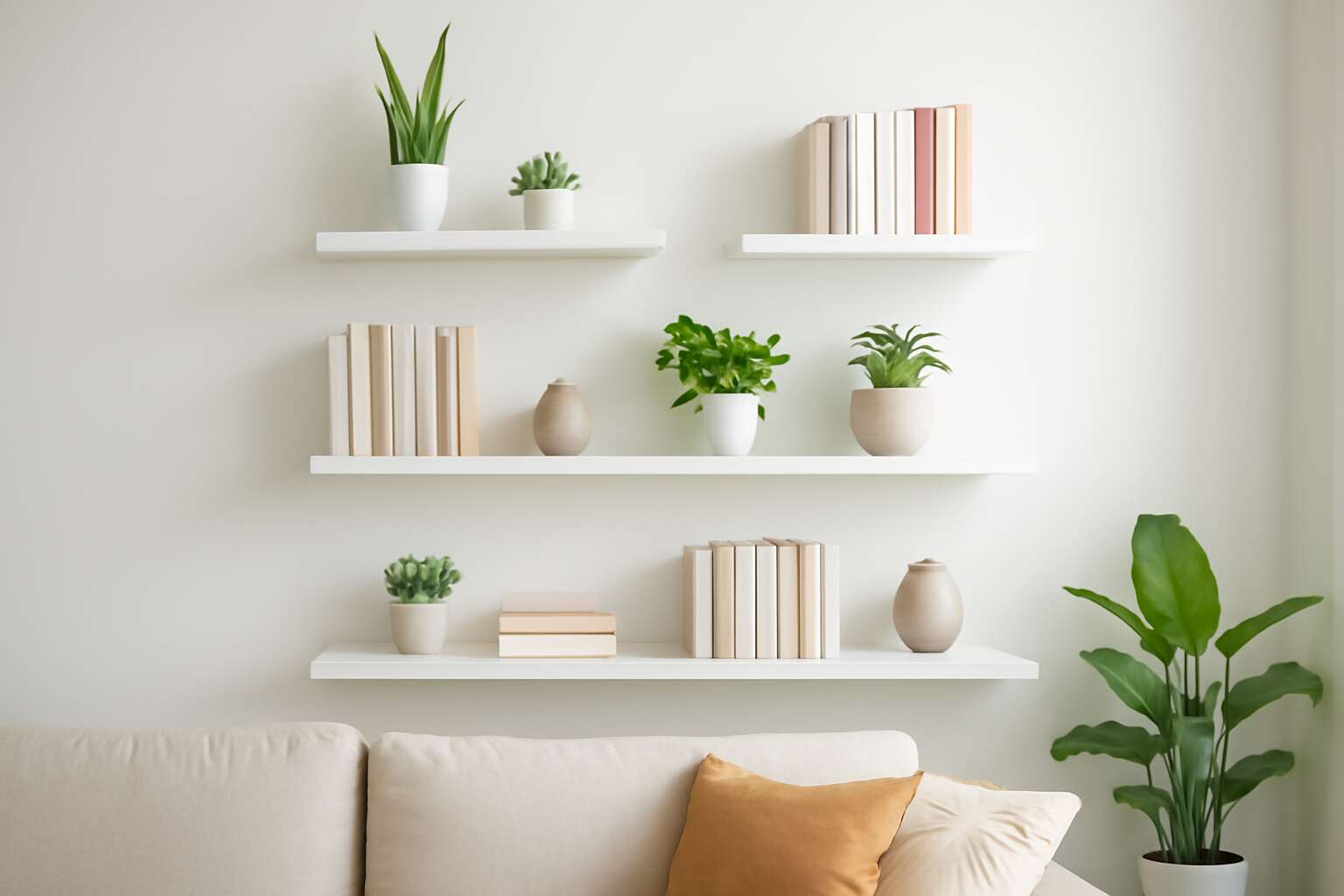
Choosing the right wall-mounted shelving style
Types of wall-mounted shelving
In the realm of wall shelving, choosing the right style is about balancing light, texture, and purpose. I’ve found a well-chosen shelf not only holds items but frames them, like constellations on a rooftop in Cape Town dusk.
To explore options, consider these families of form:
- Floating panels with clean lines for a minimalist habitat
- Bracketed shelves that offer dramatic shadows and robust support
- Open cubbies that invite display and daily interaction
Each style whispers a different mood—from coastal brightness to modern noir—so your choice can become a storytelling feature in any room. In South Africa homes, shelving often doubles as a gallery, catching light from a high window and guiding the eye across textures.
Determining weight capacity and load
Choosing wall shelving, the aim is to balance space, light, and purpose. A Cape Town designer once said, “Shelving is the room’s quiet stage”—the glow from a high window does the talking while hardware stays in the shadows. Some shelves hum with quiet energy when aligned with the room’s rhythm. The right style becomes a storytelling feature, shaping movement and texture in South African interiors, where open sightlines often turn walls into living galleries.
- Estimate total loads across items (books, gadgets, décor).
- Distribute weight evenly to avoid tipping or bracket stress.
- Choose hardware rated above the total load and matched to wall type (masonry, timber, or plaster).
When setting a shelf, consider wall type, anchors, and seasonal shifts in use. In SA homes, these decisions determine how light travels across textures, turning a simple shelf into a trusted companion rather than a risk.
Choosing materials and finishes
In South Africa, light is the room’s most honest critic, and wall shelving writes the dialogue. A Cape Town designer says, “Light is the room’s true author,” and recent surveys show 68% of urban SA homes use shelves to define zones and harvest daylight.
Choosing the right wall shelving style means balancing proportion with the room’s rhythm. Materials and finishes set the mood—warmth, contrast, restraint—and can range from restrained industrial to softly natural. Here’s a quick palette to consider:
- Solid timber with matte finish
- Veneered plywood for warmth
- Powder-coated steel for edge
- Clear or frosted glass for lightness
In all, the aim is serenity that supports daily use, not a shout. Let the lighting carry the conversation.
In the end, wall shelving isn’t just storage; it is a keeper of daylight, a domestic compass pointing toward calm functionality.
Aesthetic styles for wall shelves
In urban South Africa, 68% of homes use wall shelving to define zones and harvest daylight. A Cape Town designer notes, “Light is the room’s true author,” and the evidence is everywhere—shadows drawing lines along a shelf, air brightened by a hidden glow.
Choosing the right wall shelving style means balancing proportion with the room’s rhythm. Aesthetic directions range from restrained industrial to softly natural. Consider these approaches:
- restrained industrial with matte metals and clean lines
- softly natural timber textures and warm tones
- sculptural displays that frame daylight as a feature
Let the light carry the conversation. I find wall shelving a quiet anchor that keeps daylight moving through the room.
Space planning for small rooms
Urban South Africa shows 68% of homes use wall shelving to define zones and harvest daylight, and the effect is felt the moment you enter a room. Light is the room’s true author, tracing lines along a shelf and letting shadows play frame-maker. Let the conversation with daylight guide your choice; wall shelving becomes a quiet anchor that keeps daylight moving through the space!
- Evaluate available wall length and ceiling height to avoid overcrowding
- Choose modular units that can reconfigure as needs change
- Prioritize places where daylight naturally falls for display and mood
Space planning for small rooms rewards restraint and rhythm. I watch daylight move along a single shelf and feel the room breathe. A single, well-placed shelf can define a nook, hold essential objects, and still feel light. By aligning with architectural lines and using lighter finishes, you invite air to circulate and daylight to glow across surfaces.
Installation basics for floating shelves
Tools and hardware you’ll need
Wall shelving can transform a room, but only if secured with the right tools. Floating shelves benefit from invisible support, yet the installation basics demand respect for the wall you’re dressing—be it brick, plaster, or drywall in a sunny Cape Town flat.
Essential hardware includes sturdy screws and appropriate anchors, plus a reliable level and a stud finder to avoid gravity’s cruel jokes. The correct hardware ensures longevity and weight distribution without announcing its presence to guests.
- Stud finder
- Level or laser level
- Drill/driver with assorted bits
- Screws suitable for wall type
- Wall anchors or toggle bolts for hollow walls
With these in place, shelves earn their keep—space-savvy, stylish, and quietly heroic in small rooms from Johannesburg to the coast.
Stud finding and mounting options
Cape Town’s sunlit apartments prove that a single floating shelf can unfreeze a space, making rooms feel noticeably larger. In this world of compact living, wall shelving carries character as effortlessly as it carries books and keepsakes.
From brick to plaster, the installation basics hinge on locating solid anchors for floating shelves. When studs are accessible, they become the quiet heavyweight. For hollow walls, consider alternatives that share the load without shouting out their presence.
- French cleat systems for a clean, nearly invisible mount
- Concealed brackets anchored to studs for heavier loads
- Appropriate anchors for brick or plaster when studs aren’t reachable
With the right mounting mindset, wall shelving becomes a quiet hero—stable, elegant, and ready to hold memories without compromising flow. This approach travels well from Johannesburg to the coast, where every centimetre of room earns its keep.
Leveling and spacing guidelines
Floating harmony in a sunlit Cape Town flat is less about bravado and more about balance. A perfectly level shelf—part sculpture, part utility—speaks volumes without saying a word. This is wall shelving done with restraint and care.
When planning a run of shelves, let the lines themselves guide you: keep a consistent baseline to align with architectural features, window mullions, and nearby furniture. Space your shelves so that the eye travels smoothly, avoiding awkward gaps above or below cushions and lamps. The effect is calm, organized, and distinctly South African in its quiet confidence.
Safety tips and common installation mistakes
Across South Africa, about 68% of homeowners seek to reclaim space by embracing vertical storage. Wall shelving becomes more than furniture—it’s a restrained crescendo, a sculpted perch for memory and objects, aligning with light, architecture, and the rhythm of a room.
Safety first: fixings must bite into solid material, not empty plaster. Measure twice, drill once, and respect the shelf’s load. The following tips guide a confident install:
- Choose fixings appropriate for the wall type and load to avoid risk
- Ensure the support is secure and level to prevent tilt
- Distribute weight evenly across the length of the shelf to prevent sag
Common missteps include guessing what lies behind the wall, neglecting leveling, and underestimating live-load shifts. Correcting these keeps lines honest and the furniture’s quiet authority intact.
Design ideas and placement strategies
Living room display and organization ideas
Across South Africa’s living rooms, space speaks loudly when it has something to lean on. A recent interior design survey finds that 60% of designers rate wall shelving the quickest way to grant a room character. “Space is punctuation,” quips a designer, “shelves keep conversation from wandering.”
Design ideas and placement for living room display hinge on layering, balance, and personality. Let wall shelving vary in height, mix open fronts with a concealed cabinet for tidy charm, and counter the cool neutrals with warm wood to invite lingering.
- Anchor a focal wall with a staggered grid for gallery vibes.
- Group objects by color story to guide the eye through the room.
- Leave negative space to avoid overload.
These choices transform shelving into a social magnet—efficient, elegant, and hospitable to conversations that fill a room after the braai.
Bedroom and home office storage solutions
Across South Africa’s bedrooms, space feels calmer when something leans on it. A recent interior survey finds 68% of designers rate wall shelving as the quickest way to give a room character, turning walls into stories.
- Consider varying shelf heights to create a gentle rhythm in a bedroom or small home office.
- Pair open fronts with a concealed cabinet to balance display with tidy storage.
- Let warm timbers counter cool neutrals to invite lingering.
Bedroom and home office storage should feel intentional, not crowded. Use wall shelving to frame a reading nook or a slim desk zone, and choose finishes that echo the surrounding timber and stone.
Placement tips: anchor a focal wall with a staggered grid that steadies the room’s rhythm, and group items by color story to guide the eye without overwhelming.
Entryways and hallway display layouts
Across South Africa, 68% of designers say wall shelving is the quickest way to give a space character. In entryways and hallways, these shelves become quiet storytellers—welcoming guests, framing memories, and guiding the eye as you move through the home.
Ideas for design and placement:
- Anchor a focal wall with a staggered grid that travels the eye from door to living area
- Group items by color or texture to cultivate rhythm
- Pair open shelves with a concealed cabinet to balance display and tidy storage
Let warm timber tones and soft neutrals keep the flow calm, so wall shelving feels intentional, not crowded, as you pass from the hall to the heart of the home.
Kitchens and bathrooms moisture considerations
In kitchens and bathrooms across South Africa, moisture is the unseen critic of built-in shelving. Yet 68% of designers say wall shelving instantly adds character, proving that practical design can harmonise with steam and humidity rather than fight it.
For kitchens and bathrooms, materials such as teak or acacia, treated plywood, or powder-coated frames hold up well, while sealed backs and tight joints deter condensation. Placement matters: keep shelves clear of direct spray and heat sources, and let light and air circulate to reduce damp pockets.
- Moisture-tolerant materials
- Placement away from sinks and direct steam
- Sealed joints and ventilation considerations
Maintenance matters: wipe spills, re-seal timber annually, and check brackets for signs of rust or warping. When designed with moisture in mind, shelving becomes a durable, beautiful feature in a kitchen or bathroom, adding calm and character to daily routines.
Gallery shelving for art, books, and collectibles
Across South Africa, 68% of designers say wall shelving instantly adds character, turning quiet walls into living galleries that spark conversation and memory.
For gallery shelving designed for art, books, and collectibles, rhythm, scale, and light are your allies. Groupings naturally align with eye level, balancing bold pieces with generous air and using depth to invite the eye to wander. Let reflections on glass and canvas play softly, and allow warm light to cradle preferred pieces.
- Staggered heights to create a dynamic timeline of objects
- Floating profiles that host a mix of art, ceramics, and small books
- Coordinated finishes or mats to unify a diverse collection
Handled with restraint, gallery shelving becomes a narrative rather than a shelf, a place where daily life reads as art.
Maintenance, safety, and longevity
Cleaning and care for various finishes
wall shelving becomes a room’s quiet heartbeat, especially under South African light where even metal gleams with poetry. In a recent survey, 72% of homeowners say spaces feel more refined when shelving is lovingly tended.
Care for finishes—wood that breathes, matte laminates that resist, glass that holds a memory—depends on their nature. UV, humidity, and temperature shifts shape patina and longevity; indulge them with reverent cleaning, gentle cloths, and a respect for the material’s character.
Safety is a silent companion to beauty; inspect anchor points, balance, and load in a spirit of stewardship. With mindful maintenance, a shelf endures as a trustworthy confidant, aging into elegance rather than fading into the background.
Preventing sag and weight management
Solid, enduring wall shelving is a quiet argument for quality in every room. In South Africa’s sunlit homes, designers note that proper weight balance grants shelves a sense of longevity as light shifts across a space. When engineered to breathe with a room, wall shelving becomes more than decor—it carries books, glass, and memories with poise and restraint.
- Balanced load as a design principle to help prevent sag
- Acknowledgement of anchors and fasteners in relation to wall type and load
- Material behavior under humidity and temperature shifts and their impact on longevity
Safety remains the quiet partner of beauty; designed with care, wall shelving can weather SA’s heat and humidity, aging into a subtle architectural feature rather than fading away. That is the essence of good wall shelving—where balance, restraint, and material choice coauthor a room’s quiet rhythm.
Adjusting shelves over time
Maintenance is the quiet hinge that keeps wall shelving speaking softly through the years. In South African homes, care becomes architecture, letting light glide while weight remains balanced and unhurried.
To sustain balance and safety, these touchstones matter:
- Weight balance and load distribution across the span
- Structural integrity of mounting points for your wall type
- Material behavior under humidity and heat shifts
Over time, tiny shifts occur—sag, squeak, a season’s damp. Adjusting with a measured, patient touch preserves longevity, allowing the shelves to age gracefully rather than fade.
Regular checks, gentle releveling, and mindful placement of heavy items keep the rhythm intact. Proper care lets shelves weather SA’s heat and humidity, aging gracefully into a timeless, restrained feature of the room.
Child and pet safety considerations
Storage is a quiet battlefield in South African homes—nearly half of households feel clutter dictates mood. Wall shelving can win that war when it’s balanced and mounted with care. When done right, it ages with the house, quietly speaking value rather than shouting for attention!
Maintenance keeps safety and longevity clear as the light. Small shifts—a sigh of sag, a squeak, or seasonable humidity—talk softly about the shelf’s health. Regular, patient checks help wall shelving stay solid, balanced, and ready to carry what the room needs.
Child and pet safety must guide placement and finish decisions. Consider reach, avoid sharp edges, and choose textures that resist scuffs while keeping the space calm. When design aligns with life, these shelves remain a quiet, dependable feature in SA homes.
Buying guide and cost considerations
Budget ranges by material and size
Shadows crave order, and wall shelving offers it with elegant inevitability. In this buying guide, cost considerations flicker like candlelight: space, material, and budget shape the outcome. A world of nocturnal possibilities awaits—from narrow alcoves to expansive wall constellations—where form and function converge in quiet, deliberate balance.
Budget ranges by material and size crystallize when translated to rand in South Africa. Compact, entry-level units in particleboard or powder-coated steel start around R800–R1800. Veneered wood and lighter metals run roughly R2500–R4500, while solid hardwood or designer frames often land in the R7000–R15000 range.
Size matters: longer shelves demand sturdier fixings and can elevate delivery costs; deeper profiles disrupt room proportions and tune the overall price, even before you load a single keepsake.
- Delivery and installation options
- Warranty and after-sales service
- Material provenance and maintenance
Where to buy: retail vs online
Space is the ultimate luxury, and wall shelving makes that luxury tangible. It turns blank walls into quiet constellations of purpose. As a designer once said, “Less clutter, more character,” and that creed guides every choice in South Africa’s homes.
Where to buy hinges on tempo and trust: retail stores offer tactile reassurance, while online shops promise breadth and doorstep delivery. The choice shapes the cost arc and the story your room tells.
- Retail: in-person inspection, immediate grab-and-go, local stock, and expert advice.
- Online: vast range, side-by-side comparisons, convenient delivery and straightforward returns.
Ultimately, wall shelving selections should align with space, style, and budget, letting the room breathe while still telling its own narrative.
Warranty and returns policy
In South Africa, 68% of homeowners report wall shelving turning blank walls into intentional spaces, marrying form and function in a single, quiet statement.
Buying guide and cost considerations: start with a realistic budget and let materials dictate character. Entry-level wall shelving in melamine keeps costs down, while veneer and solid wood boost presence and durability; add delivery and installation into the total.
- Budget bands: entry to premium
- Material durability and finishes
- Delivery, installation, and service plans
- Returns windows and warranty coverage
Warranty and returns policy: seek warranties that cover sag and hardware, and verify return terms with the retailer. Under SA consumer laws, products must be fit for purpose, with clear support channels and defined remedies.
DIY vs professional installation: cost and time
In South Africa, 68% of homeowners report wall shelving turning blank walls into intentional spaces, marrying form and function in a single, quiet statement.
Buying guide and cost considerations begin with a realistic budget, then let materials dictate character. Entry-level melamine keeps costs down, while veneer and solid wood boost presence and durability; delivery and installation must be included in the total.
- DIY installation can save on labour but may take more time and demands patience and accuracy
- Professional installation speeds up setup and ensures level, safe mounting
- Factor delivery and any service plans into the overall cost


0 Comments