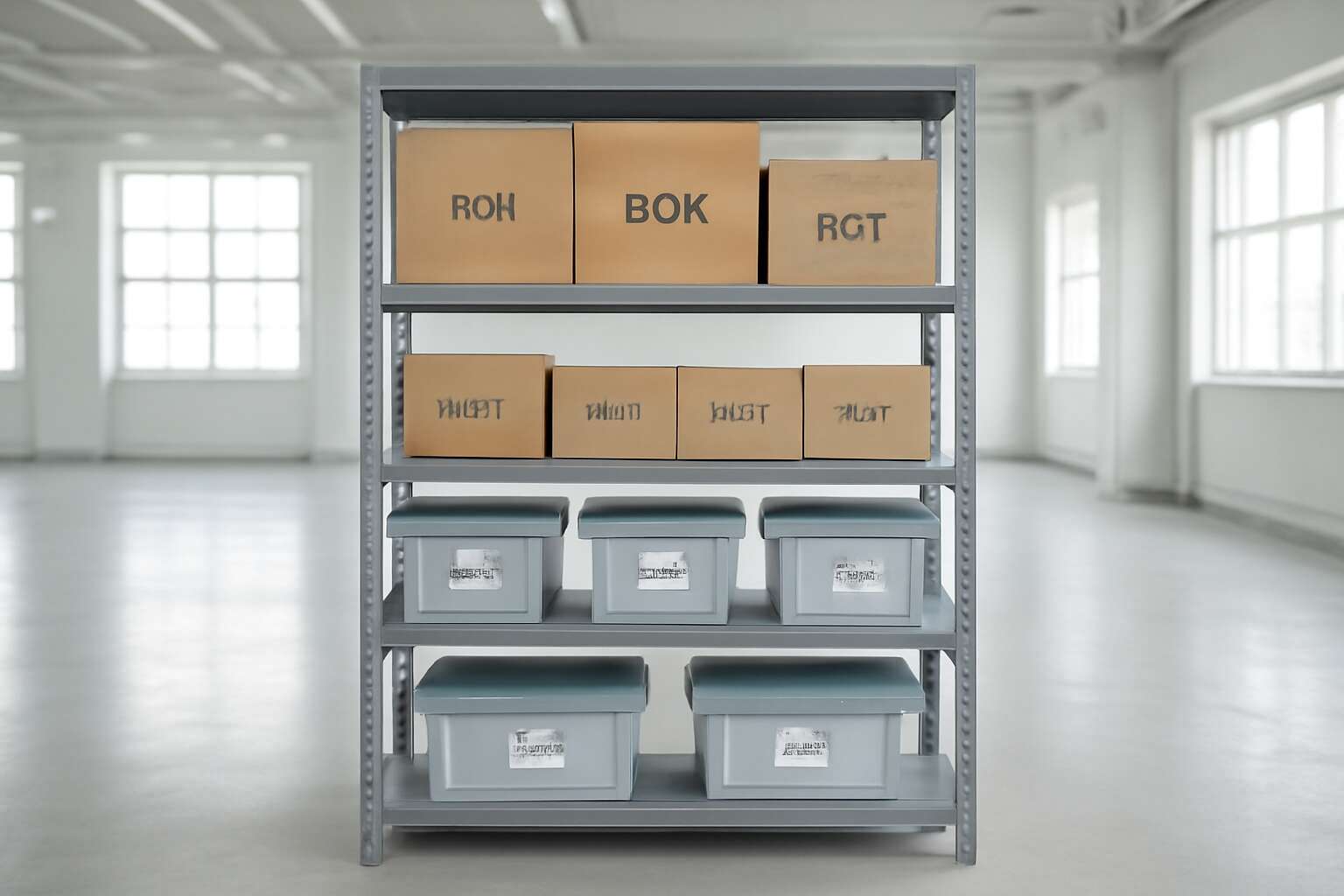
Understanding five-tier racking systems
What is a five-tier rack
Space is king in South Africa’s warehouses, and a sharp eye for vertical space can lift throughput by surprising margins. A recent industry pulse puts storage density gains at up to 40% with smart layouts—this is where racking 5 tier comes into play!
What is a five-tier rack? A five-tier rack is a sturdy, adjustable shelving framework with five levels, designed to hold pallets or bin loads. It pairs uprights, beams, and safety features for swift, reliable access. In our projects across SA, it has become the backbone of racking 5 tier configurations in growing warehouses.
- Load capacity per level and overall safety margins
- Adjustability and spacing between tiers
- Footprint, aisle clearance, and accessibility
In South African warehouses, the right five-tier system translates into safer stacks, clearer aisles, and smoother audits.
Key components of a five-tier racking system
South Africa’s warehouses prize space like a rare gem, and a single column of storage can unlock daylight in a tight footprint. Recent industry pulse suggests storage density gains up to 40% with smart layouts, and that’s where racking 5 tier reveals its quiet magic. Understanding racking 5 tier systems starts with recognizing the spine: uprights, beams, and the safety features that keep pallets steady as hands glide along the aisle.
Within this framework, the elements work in quiet concert. I’ve found that the backbone uprights and level-spanning beams form a stable ladder, while decking cradles loads with the right give. Safety restraints and anti-collapse devices guard against mishaps, and adjustable spacers tailor each tier to pallet heights. Integrated aisle clearance keeps your operation nimble and ready for the next shift!
- Uprights and beams forming the ladder of strength
- Decking and pallet supports tuned to load type
- Safety restraints and anti-collapse devices
- Adjustability mechanisms to vary tier spacing
- Aisle clearance and accessibility integrated into the design
How five-tier racks differ from other rack levels
Understanding five-tier racking systems reveals a choreography of space and efficiency. In South Africa, warehouses prize space like a precious gem, and the racking 5 tier is the quiet engine behind that obsession. Storage density can surge by roughly 40% when layouts exploit vertical space, turning tight footprints into productive boulevards. The framework pays homage to the pallet, rising in measured steps where careful spacing and safety features guard every lift and glide.
Five-tier racks differ from other rack levels in the way they choreograph height, access, and load harmony. The aim is a balance that sustains turnover without inviting risk.
- Vertical density paired with purposeful access
- Even weight distribution across all tiers
- Aisle clearance and turning radii tuned for forklifts
- Decking and uprights sized for typical pallet heights
These distinctions are the quiet magic that makes racking 5 tier a staple in dense South African warehouses.
Typical materials used in five-tier racks
In South Africa’s busy warehouses, vertical density can boost capacity by up to 40%. The racking 5 tier approach turns height into performance, balancing pallet weight with access and safety. Understanding five-tier racking systems reveals this choreography—where every beam and brace keeps turnover moving and stocks visible, even in crowded aisles!
Typical materials used in five-tier racks ensure longevity and consistent performance:
- Hot-dip galvanized steel for corrosion resistance
- Powder-coated steel for durability and a clean finish
- Stainless steel in humidity-prone or hygienic settings
- Steel decking with solid or wire mesh options
These material choices harmonise with South Africa’s varied climates and robust logistics, sustaining long-term performance under heavy use.
Common configurations for five-tier storage
South Africa’s busiest warehouses whisper with the arithmetic of height—vertical density can lift capacity by as much as 40%. Understanding five-tier racking systems shows how height translates into performance, balancing pallet weight with access and safety. This is the rhythm of racking 5 tier, a choreography where space turns into turnover and visibility keeps stock moving through crowded aisles!
Common configurations for five-tier storage arise from practical needs, adapting to pallet dimensions and workflow tempo. Here are a few layouts that routinely perform in busy hubs:
- High-density bays with optimized walkways
- Flexible shelf heights to accommodate mixed pallets
- Aisle-forward designs that speed picking and restocking
Each configuration balances weight, access, and safety while preserving long-term visibility of inventory in South Africa’s demanding logistics landscape.
Benefits and ROI of five-tier racking
Space optimization and warehouse density
In South Africa, warehouses that squeeze every inch of air into the ceiling report a 25% uptick in usable density and noticeably faster order cycles. The racking 5 tier approach is more than tall shelves—it’s a disciplined reimagining of space that converts vertical room into real, measurable value, while keeping stock visible and safe.
ROI shows up as lower operating costs, higher pick velocity, and better space utilization. With five tiers, every pallet has a defined footprint, reducing travel time and fatigue, and enabling more accurate inventory control across shifts.
- Increased storage density per square metre
- Faster picking and lower labor costs
- Improved inventory visibility and accuracy
Here in SA markets, that combination translates to faster payback and a leaner balance sheet, letting businesses reinvest in growth rather than reracking. The broader impact touches margins and resilience when demand spikes—it’s the moral economy of space in action.
Accessibility and ergonomics
In a South African warehouse, efficiency begins with how people navigate the stack. racking 5 tier isn’t just height; it’s accessibility designed for real hands and real shifts, turning vertical room into practical value.
Accessibility and ergonomics are the heart of the ROI. Workers reach, lift, and place with a natural rhythm, reducing snack breaks and back strain. The defined pallet footprints cut travel time and fatigue, while clearer sightlines improve accuracy across shifts.
- Lower fatigue and safer lifting
- Faster picking and higher throughput
- Improved inventory visibility and accuracy
ROI shows up as lower operating costs, quicker turns, and a leaner footprint. In SA markets, that combination frees capital for growth while strengthening margins when demand spikes.
Load capacity and safety considerations
In South Africa’s fast-moving warehouses, a well-placed racking 5 tier can turn vertical space into agile throughput, boosting order accuracy and slashing pick paths by up to 40 percent. The ripple effect is clear: more picks per shift and steadier margins.
Benefits and ROI extend beyond height. Load capacity planning and safety considerations ensure stable, fatigue-resistant workflows, letting staff move with a natural rhythm and keeping injury risk low while throughput climbs.
- Per-tier load limits and total system capacity
- Anchoring, beam integrity, and anti-collapse protection
With the right configuration, ROI appears as lower operating costs, faster turns, and a lean footprint—especially in SA markets where capital must stretch between demand surges and growth ambitions.
Cost efficiency and long-term value
There’s a quiet revolution unfolding in South Africa’s warehouses: racking 5 tier turns ceiling-height space into steady throughput. A well-configured setup reduces travel time, eases fatigue for staff, and lifts order accuracy—delivering tangible margins without sacrificing floor space.
Cost efficiency follows when the footprint is lean and components endure. Consider these ROI drivers:
- Lower operating costs and energy use from streamlined workflows
- Faster turns that free capital for growth
- Longer rack life and easier maintenance to reduce downtime
Over the long haul, the racking 5 tier becomes a partner in growth: adaptable to seasonal shifts, dependable under daily wear, and capable of sustaining steadier margins as throughput climbs.
Versatility for growing inventory
In South Africa’s bustling warehouses, racking 5 tier turns ceiling-height space into steady throughput! Pallets vanish from the shadows into a predictable flow, where every shelf becomes a conduit for speed and accuracy.
The benefits stack quickly, with ROI measured in more than dollars. Consider a layout that reduces travel, minimizes fatigue, and supports growing inventories with adaptable configurations.
- Predictable carrying capacity reduces stockouts and overages
- Modular reconfiguration supports seasonal SKUs without new racks
- Lower downtime thanks to durable components and clear access paths
As volumes rise, the system remains nimble—reconfiguring to seasonal mixes, absorbing daily wear, and preserving margins without a heavy capital drain. A quiet partner that keeps the lights on when demand swells.
Design and installation considerations for five-tier racks
Sizing and layout for aisle width
South Africa’s warehouses move fast, and layout is the hidden horsepower. Industry estimates show aisle sizing can boost picking speed by up to 25%, turning racking 5 tier into a throughput engine!
Sizing and layout for aisle width shape the flow of goods. Align aisle width with forklift turn radii and pallet footprint, leaving room for beam overhang and safe pedestrian zones.
- Aisle widths aligned with equipment footprint
- Clearances for beam overhang and signage
- Accessible walkways for routine checks
Installation considerations: Floor prep, secure anchoring, and corrosion protection are non-negotiable. Verify dimensions, load tags, and schedule inspections.
Material options and corrosion resistance
In South Africa’s fast-moving warehouses, design is the quiet engine behind every pallet. “Design is the silent engine of throughput,” a Johannesburg designer says, and the math proves it: a racking 5 tier layout shapes flow and shortens pickups.
Material options must respect both budget and climate. Here are common choices and their corrosion personalities:
- Hot-dip galvanised steel for coastal and humid zones
- Powder-coated carbon steel for durability at a friendly price
- Stainless steel for maximum corrosion resistance in harsh atmospheres
- Epoxy-coated steel for wear protection and easy cleaning
Design and installation should consider floor flatness, anchoring, and protective finishes that withstand SA’s conditions. Even the best design can falter without proper coatings and regular checks; a thoughtful finish choice keeps the racking 5 tier performing through years of shifts and seasonality.
Compliance, codes, and safety standards
In South Africa’s busy warehousing belt, the racking 5 tier isn’t flashy, but its design sets the rhythm of every shift. Studies show that up to 60% of throughput gains come from layout and flow, making a well-planned five-tier system a quiet engine of efficiency. The right foundations let people and pallets move in concert.
- Floor flatness and anchoring to concrete to withstand forklift dynamics
- Protective finishes that resist SA humidity, dust, and wear
- Regular inspections and maintenance records to sustain performance
To stay compliant, the racking 5 tier must align with OH&S requirements, SANS standards, and local codes. Training, clear signage, and safe operating procedures complete the safety picture, ensuring the system endures through shifts and seasons.
Installation best practices
In a busy SA warehouse, racking 5 tier shapes the tempo of every shift. A 60% throughput gain often hinges on layout and flow, making design decisions here feel almost musical—precise, purposeful, quietly powerful for long-term performance.
Design and installation must respect floor flatness, anchoring to concrete, and robust bracing. These elements are the backbone of installation best practices that keep the system level through forklift choreography.
- Verify floor flatness to the recommended tolerance before assembly
- Use manufacturer-approved anchors for concrete foundations
- Position bracing to resist lateral forklift impacts
- Document installation with level checks and photographic records
When alignment is intentional, it endures through seasons and shifts.
Maintenance and inspection routines
In busy South Africa warehouses, the design and installation of a racking 5 tier must harmonize with the flow of everyday work—creating a framework that feels solid without stifling agility. The focus is on modular compatibility, easy integration with existing aisles, and finishes that resist dust and rust through the seasons.
Maintenance and inspection routines should be steady and discreet—practical checks that note any tremor, misalignment, or corrosion before it becomes a bigger story. Documentation matters: a simple log of inspections and observations keeps the system truthful through shifts and years.
Integration with existing warehouse systems
Design and installation for racking 5 tier must swing with the rhythm of a busy South Africa warehouse—steady enough to feel solid, agile enough to move orders quickly. The right frame offers modular compatibility, clean integration with existing aisles, and finishes that shrug off dust and humidity. When the spine of storage works with the flow, staff move faster and mistakes vanish.
Integration with existing warehouse systems is the hinge. Align with your WMS and forklift routing so stock moves in a smooth, continuous flow.
- Aligned to existing aisle widths and floor grid
- Compatible with common pallet sizes and handling equipment
- Easy to upgrade or reconfigure as inventory grows
On-site realities include grounding and level floors, secure anchoring, and gentle fine-tuning so installation doesn’t eclipse daily operations. I’ve learned that finishes resisting dust and rust stay sharp across SA’s seasons.
Use cases across industries for five-tier racking
Retail and showroom applications
Across South Africa’s bustling retail corridors, the racking 5 tier proves itself a beacon of efficiency, with many partners reporting up to 30% faster stock retrieval and crisper sightlines.
Retail and showroom spaces crave flexibility. Use cases across industries stretch from boutiques to big-box electronics, where the racking 5 tier organizes and showcases products with clear sightlines, quick picks, and tidy backstock:
- Fashion and apparel displays that evolve with seasons
- Electronics showrooms with modular demonstrations
- Homeware and décor corners for storytelling
In South Africa’s fast-paced markets, these rigs support pop-ups, seasonal promotions, and bulk SKUs, turning space into a curated journey. The setup becomes a quiet partner, enabling staff to swap displays and adjust layouts as trends shift.
Manufacturing and industrial environments
Across South Africa’s manufacturing floor, the racking 5 tier adapts to heavy workloads and diverse SKUs. In industrial environments, this configuration keeps parts, tools, and kits organized without sacrificing safety or speed. It translates floor space into a steady workflow on the line.
Use cases across industries include automotive assembly lines, electrical component storage, and maintenance workshops. It supports bins and pallets at reachable heights, reducing handling and improving traceability.
- Automotive and vehicle parts storage
- Electrical and electronic components
- Industrial spare parts and tools for quick picks
The result is a modular backbone that supports scalability, stackable bins, and adaptable workflows in SA’s busy warehouses and factories.
Cold storage and controlled environments
In SA warehouses, time is money in motion—every extra step costs. The racking 5 tier meets heavy workloads and diverse SKUs, thriving in cold storage and controlled environments where conditions demand reliability. It translates floor space into a steady workflow across sectors that prize accuracy and speed.
- Pharmaceuticals and healthcare stock under controlled temperatures
- Perishables and chilled beverages stored for rapid picking
- Electronic components and service kits organized for quick access
In cold storage environments, the racking 5 tier keeps items at reachable heights to minimize handling and maximise traceability. It supports scalable configuration for seasonal spikes and diverse SKUs, enabling rapid picks from bins or pallets with consistent ergonomics and safety.
Automotive and parts storage
Downtime in South African auto hubs often traces to misplaced parts. Up to 25% of delays vanish when everything has a precise home. The racking 5 tier turns crowded bays into a surgeon’s cabinet, delivering rapid picks with dependable ergonomics for busy workshops. It’s more than storage; it’s the pulse that powers throughput.
In practice, it organizes critical categories like:
- Engine components and service kits
- Brakes, suspensions, wear parts
- Electrical and electronic kits
Beyond automotive, the same racking 5 tier principle accelerates service parts distribution and showroom-ready inventories across sectors.
Budgeting and purchasing tips
Across South Africa’s bustling warehouses, a simple truth shines: industry data suggests up to 40% faster picks when every item has a precise home. The racking 5 tier answers that call with a clarity that turns clutter into cadence. It’s more than shelving; it’s a disciplined pulse keeping parts and products moving with quiet confidence.
Across industries, use cases unfold with elegance and speed:
- E‑commerce fulfillment centers, where rapid order-picking meets compact footprint
- Showroom and consumer electronics displays, keeping demos pristine and accessible
- Healthcare spare parts rooms, ensuring critical components are always in reach
Budgeting and purchasing drift on the horizon like dependable weather. Consider the total cost of ownership, supplier reliability, and future scalability; favour modular, locally sourced options to cut lead times in SA.
- Total cost of ownership over upfront price
- Supplier support and warranty continuity
- Modularity and reconfiguration for stock mix changes
Case studies and success stories
Across South Africa’s warehouses, five-tier racking injects rhythm into the floor. Case studies show faster picks and fewer misfiles after items gain precise homes. The change isn’t flashy, but it compounds: a typical e‑commerce hub trimmed pick cycles by about a third once the layout embraced racking 5 tier!
- Pharma distributors tightened inventory control and reduced stockouts, with clearer audit trails.
- Electrical and consumer electronics refurb centers accelerated kitting and returns processing.
- Auto parts depots gained scalable storage as demand and stock mix shift.
Real-world stories show the five-tier approach scales with growth without complicating operations. The advantage is clear: density, access, and resilience in one compact frame.



0 Comments