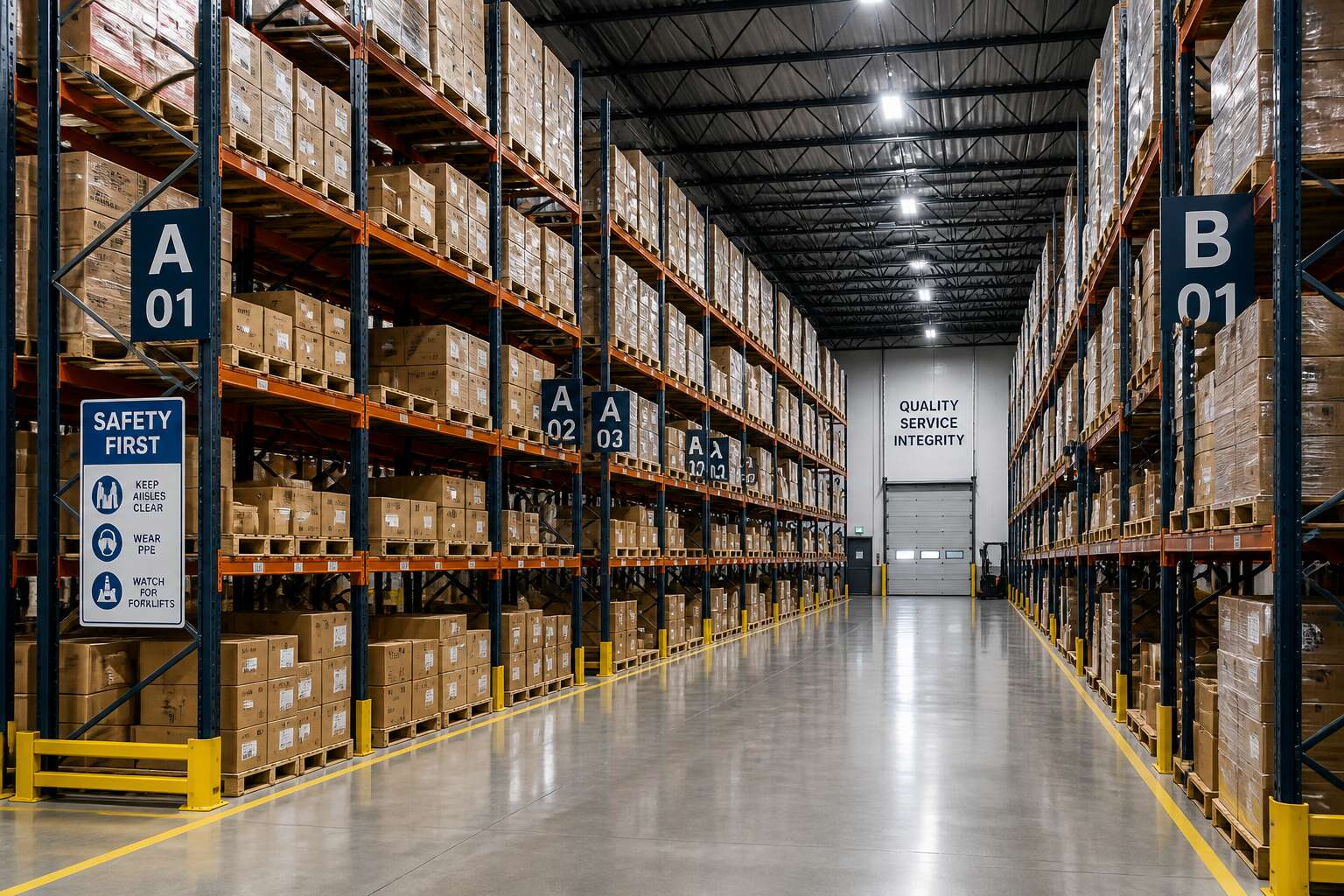
Types of Shelf Racking Systems
Drive-In and Drive-Through Racking
In warehouse design, space is a currency, and selection is a strategy. Drive-in racking embodies the first principle to its extreme, offering a dense storage solution where forklifts enter the rack structure itself to deposit pallets. The system operates on a LIFO basis, last in, first out, ensuring that the most recent product is retrieved before older stock. This configuration eliminates multiple aisles, creating a solid block of shelving that maximizes volumetric efficiency for homogeneous, non-perishable goods.
Conversely, drive-through racking provides the necessary flow for high-turnover inventory. It avoids the constraints of LIFO by allowing access from both ends of the lanes, facilitating a FIFO, first in, first out, rotation. This is a critical distinction for operations managing perishable items or time-sensitive stock. When considering the implementation of either system, one must evaluate specific requirements:
– Pallet weight and dimensions for structural integrity.
– Forklift type and driver skill for safe maneuvering within the racks.
– The required inventory turnover rate to determine FIFO vs. LIFO necessity.
– The seismic rating of the building for adequate bracing.
Both configurations sacrifice a degree of selectivity for heightened storage density. Our experience confirms that for robust shelf racking performance, the choice narrows down to whether your priority is maximum capacity or systematic stock rotation.
Cantilever Racking
Imagine storing 12 metre lengths of timber or steel pipe. Standard pallet racking fails here, because the load extends beyond the bay depth. Cantilever racking solves this with vertical columns and horizontal arms that support long goods without front beams blocking access. The result is an open face that lets a forklift slide material in from the side, and what a difference that makes.
This system shines in hardware supply yards and aluminium extrusion plants. Arms adjust vertically, so you can reconfigure clearance as inventory changes. In my experience, few options match its adaptability for furniture, tubing, or roofing sheets.
- Vertical columns carry the structural weight.
- Arms support the stored material directly.
- No front beams means full length access.
As a shelf racking option, cantilever delivers density without forcing you to sacrifice item length. For the right product, nothing else performs as cleanly.
Push Back Racking
Warehouses lose up to 25% of their usable height to inefficient storage methods. Push back racking confronts this waste directly. Pallets rest on wheeled carts that travel along slightly inclined rails. Each new pallet pushes the previous one back. When the front pallet is removed, gravity slides the next one forward. This creates a dense block with a single access aisle.
The system operates on a last in, first out basis. Consider these traits:
- LIFO rotation suits non-perishable goods.
- Each level works independently for different SKUs.
- Forklifts never enter the rack structure.
Within the broader category of shelf racking, push back offers a compromise between density and selectivity. It does not require a forklift to drive inside, unlike drive-in systems. The tradeoff is a fixed retrieval sequence. For operations that accept this pattern, push back becomes a reliable tool.
Gravity Flow Racking
Gravity flow racking turns momentum into your ally. Sloped lanes with wheeled rollers send pallets gliding from the loading aisle to the picking face, driven by nothing but their own weight. This is shelf racking that respects a simple law: product should move forward without effort.
Unlike push back’s last in, first out rhythm, gravity flow operates on first in, first out. That makes it a favourite for perishables, where rotation dictates freshness. Each lane isolates a single SKU, and operators replenish from one side while picking from the other. The flow is continuous, so congestion dissolves.
Typical candidates for this system include:
- Fast-moving consumer goods
- Cold storage and chilled items
- Seasonal inventory with strict expiry dates
The rails need precise calibration to match pallet weight, and that demands care. But the payoff is tangible. You gain dense storage without sacrificing access, and you never ask a forklift to enter the structure itself. For warehouses chasing turnover, gravity flow turns inertia into an asset.
Key Factors to Consider When Choosing Shelf Racking
Load Capacity and Weight Distribution
A single overloaded beam can collapse a warehouse. In South Africa, uneven floors and humidity alter how weight settles across shelf racking. A bay rated for 2,000 kilograms can fail if force concentrates on one beam. Consider these factors:
- Dynamic loads from forklifts versus static storage.
- Beam deflection limits based on span length.
- Pallet condition and base evenness.
Weight distribution shifts over time. Steel creeps, welds fatigue, and product density rarely matches the spec. The worst case determines safe operation rather than the average. The pallet footprint dictates true load spread rather than the label. The difference between safety and disaster is often a few centimetres of spread.
Warehouse Layout and Space Optimization
Warehouse space in South Africa has become a premium commodity, with industrial property rates climbing over 6% annually in major metros. That square meter cost forces a brutal audit of every storage decision. Choosing the right shelf racking layout is not about fitting the most pallets, it is about orchestrating the flow of labour, machinery, and inventory under a single roof.
Consider the geometry of your daily operations. Aisles wide enough for counterbalanced forklifts sacrifice up to 40% of your footprint, yet narrow-aisle systems demand specialised equipment and operator skill. The real optimisation comes from mapping travel paths before you lock in bay dimensions. Vertical space also rewards a closer look; high-bay shelf racking can triple storage density, but only if your fire suppression system matches the height.
For a typical distribution centre, these factors deserve individual scrutiny:
– Pallet turnover rate versus storage duration.
– Ceiling height and roof pitch constraints.
– Dock door placement relative to racking rows.
Every warehouse has a distinct rhythm, and the layout must hum along with it. In South Africa, load shedding further complicates matters, as powered retrieval systems fail when you need them most. Manual or gravity-driven configurations often prove more resilient. Your shelf racking arrangement should mitigate risk, not amplify it. Space optimisation is a continuous negotiation between what you store and how you move it, a quiet calculus that decides whether your facility thrives or merely survives.
Material and Durability
A rusted upright can take down an entire bay in seconds. South African conditions demand you choose materials with intent. Coastal humidity attacks unprotected steel. The Highveld’s dry air causes different stresses. Select shelf racking built for these extremes.
Hot-dipped galvanised steel beats painted alternatives. The zinc coating protects against corrosion and extends service life. Gauge thickness matters. Thin steel flexes under load and buckles after minor impacts. Thicker columns and beams absorb punishment from forklift collisions.
Some considerations for material selection:
- Coastal warehouses require heavier zinc coatings.
- Cold storage environments need steel rated for low-temperature brittleness.
- Facilities with high turnover benefit from reinforced impact guards.
Welds and base plates often fail before the main beams. Inspect these connection points during procurement. A few extra rands on quality steel saves massive replacement costs later!
Accessibility and Inventory Management
Time is money in any warehouse, but it is an absolute fortune in a high-volume operation. Accessibility is not merely a convenience; it dictates your entire picking strategy and labour efficiency.
Choosing the right shelf racking begins by defining your inventory turnover. Fast-moving SKUs demand immediate access. Slow-moving stock can afford deeper storage solutions. Consider this critical distinction before you commit to a layout.
Enhanced accessibility translates directly into tangible savings.
– Reduced forklift travel time and fuel consumption
– Faster order picking cycles and despatch
– Lower product damage from excessive handling
– Simplified stocktaking and cycle counts
For operations handling perishable goods or strict date-sensitive stock, pallet flow racking enforces a strict FIFO (First In, First Out) rotation. This prevents write-offs and ensures compliance. Conversely, if stock rotation is not a priority, drive-in racking offers dense storage. However, it sacrifices immediate access to individual pallets. You must weigh the cost of lost selectivity against the benefit of maximised cubic space. Matching the system to your specific SKU velocity is a strategic decision, not an afterthought. The most efficient facilities place their fastest-moving lines within easy reach of the packing zone. This minimises travel distance and maximises throughput.
Safety and Compliance Standards
Shelf racking in South Africa is frequently assessed only after a disaster, and that is too late. Instead, examine the legal layer: the latest occupation and safety regulations demand that your installation be tested, inspected, and certified. Compliance with the South African standard is not negotiable. Getting it wrong costs more than a fine. It triggers a stoppage order or a full structural failure, which is inconvenient. Actually, “inconvenient” underestimates it.
A pragmatic checklist is your protection:
- Preventive damage checks, especially on uprights and baseplates.
- Adjustment of load capability within the verified data sheet.
- Evidence of a qualified engineering inspection every twelve months at least.
Document these items, because auditors get suspicious without evidence. Cold hard proof, a dated report and a stamped certificate, carries more weight than a promise. Choose shelf racking that provides a defined safety inspection schedule. The legal issues around racking will save you from failure of your business.
Benefits of Industrial Shelf Racking
Maximized Vertical Space
A 5 metre tall warehouse loses 40% of its usable volume if you only store up to 3 metres. That unused air costs you money every single month. Maximizing vertical space with industrial shelf racking directly addresses this silent inefficiency.
Shelf racking systems transform dead air into profitable storage. The principle is simple: build upwards to reduce your floor footprint. When you install taller racking structures, you increase your inventory density without spending on new real estate. This approach matters in South Africa where warehouse space is at a premium and property costs continue to rise.
The benefits of pushing towards the ceiling extend beyond simple capacity gains.
– You reduce the total floor area required for the same stock volume.
– You shorten travel distances for forklift operators, cutting fuel and labour costs.
– You create a cleaner, more organised environment that is easier to audit.
– You delay the expensive move to a larger facility.
A well-designed tall racking structure requires precise planning around aisle widths and lifting equipment. You must ensure your machinery can safely reach the top beams.
Improved Organization and Efficiency
In a crowded warehouse, order is not an abstract ideal, it is daily discipline. I have seen crews lose an hour to missing SKUs, not from laziness but because the layout hid what they needed. Shelf racking gives each item a fixed location, and predictability is the foundation of efficient work. Workers stop guessing and read the rack.
- Search time drops as zones become obvious.
- Picking errors reduce as stock stays close to its natural neighbours.
- Supervisors see inventory levels without walking the entire floor.
The cost of wasted movement is the real gain. When the layout is legible, decisions are faster and work is less exhausting. That quieter mental load is the long term return, often noticed only after the system is installed.
Enhanced Inventory Rotation
In South African distribution, stock that sits too long becomes a liability. Products reach their expiry, packaging fades, and money stays locked in goods that will never sell at full value. Shelf racking gives you a mechanism to rotate inventory. When each bay is visible, the oldest stock moves first. Workers load from the rear and pick from the front.
This matters for food, beverages, pharmaceuticals, and dated goods. First in, first out becomes a habit rather than a chase. A well designed shelf racking layout enforces that sequence, so fresh stock never buries old stock. In Cape Town warehouses, I have watched write-offs shrink when the rack makes rotation obvious.
- Stock loss from expired goods declines.
- Cash flow improves as goods sell before value drops.
- Quality complaints fall because customers receive fresher units.
The result is measurable: fewer write-offs, quicker turnover, and accurate stock records.
Cost-Effectiveness and Scalability
Every rand spent on storage should work twice: once today, and again when your operation grows. Industrial shelf racking delivers that return. Unlike fixed mezzanines or permanent structures, modular systems adapt to shifting demand. You add bays, adjust beam levels, or reconfigure aisles without rebuilding the warehouse.
Cost-effectiveness emerges in the details. A rack that holds pallets at multiple levels uses the same floor footprint as a single-level system. The price per storage position drops. In Johannesburg facilities, I have seen operators expand capacity by 30 percent simply by re-leveling existing beams, not buying new equipment.
Scalability follows a similar logic:
- Start with a single bay, expand as stock volumes rise.
- Relocate racks to new sites without losing value.
- Match beam heights to changing product sizes.
This is why shelf racking remains a preferred asset for growing South African distributors. It earns its keep through every phase of expansion.
Installation and Maintenance Best Practices
Site Preparation and Flooring Requirements
Uneven flooring accounts for nearly one in three structural failures in storage systems. Before any shelf racking is installed, the slab must be cured to full strength, flat within five millimetres over three metres, and free of cracks or expansion gaps. Moisture testing prevents corrosion and concrete dusting. Anchors need calibrated torque following the exact bolt pattern.
Maintenance becomes a continuous watch: inspect base plates for movement, check epoxy coatings for wear, and re-level after seismic events. A well prepared floor rewards you with stable loads and predictable operations.
Professional Installation vs. DIY
Seismic events and daily forklift impacts reveal the true quality of an installation. In South Africa, a 2023 industry report noted that nearly half of all racking collapses traced back to improperly seated bolts, not structural fatigue. Professional teams bring calibrated torque wrenches and certified alignment tools, while DIY efforts often rely on guesswork.
DIY shelf racking suits light duty storage, yet the risk escalates when pallets exceed two tons. Variables multiply quickly:
- Concrete anchor embedment depth
- Beam deflection under dynamic loads
- Plumb alignment across continuous bays
Each variable demands specific training. Professional installers provide load test documentation that insurers and labour inspectors expect, saving you from costly rework later.
Regular Inspections and Repairs
The silent threat to any warehouse isn’t the dramatic collapse caught on camera; it is the quiet, progressive wear on everyday components. A single fork truck glancing off an upright might seem harmless, but it compromises the structural integrity of your entire shelf racking system. Operators often mistake these dents for cosmetic blemishes. The reality is that any reduction in column thickness or beam straightness creates a point of weakness where load paths are distorted.
Regular inspections form the backbone of a preventative maintenance plan. You cannot rely on memory or casual observation during a busy shift. Instead, establish a documented routine that examines the critical collision points and connection joints. Look for signs of distress such as buckling, loose floor fixings, or damaged welds. These checks should happen monthly, with a full structural audit scheduled annually by a qualified engineer.
An effective inspection protocol should cover several specific criteria.
1. Assess all upright frames for lateral or longitudinal deformation.
2. Verify that beam locks are securely engaged and safety clips are intact.
3. Inspect the base plates for corrosion or lifted anchor bolts.
4. Examine beam levels for deflections that exceed the manufacturer’s tolerance.
This maintenance rhythm requires a shift in perspective. You are not simply fixing problems. You are preserving the lifespan of your investment. A proactive stance avoids the costly downtime of a catastrophic failure. It also protects your team from unpredictable hazards. By treating these inspections as a non negotiable ritual, you keep your operation grounded and your inventory flowing without interruption. There is no magic in this process, only diligence applied to the metal bones of your facility.
Safety Training for Warehouse Staff
Safety training turns the theory of shelf racking into daily habit. An operator who understands load distribution is less likely to overload a bay or damage a column. Induction should cover the rated load limits of the shelving, how to place stock evenly across beams, and how to report visible damage to uprights or welds.
Operational training builds on that foundation. Staff must practice moving goods without striking frames, check base plates for lifted anchor bolts, and recognise when a beam has exceeded deflection tolerance. Refresher sessions every six months keep these skills current.
A practical session should include:
– Sliding beams along columns without forcing the frame.
– Listening for the click of a properly engaged beam lock.
– Walking through the correct response to a suspected overloaded pallet.
This investment in people preserves the structure itself. A trained operator prevents the gradual wear that shortens the life of your shelf racking. Inspections matter, but they only catch what someone already knows to look for.
Common Applications of Shelf Racking
Retail Warehousing
In the fast-paced world of South African retail, shelf racking forms the backbone of distribution centres that serve everything from neighbourhood spaza shops to national supermarket chains. Unlike heavy-duty pallet systems, it excels when individual cartons must be picked quickly and dispatched to multiple storefronts across Gauteng or the Western Cape. It gives warehouse teams the flexibility to segregate thousands of SKUs into logical picking zones, substantially reducing the travel time between orders and keeping replenishment cycles tight.
Common retail warehousing applications include:
- E-commerce fulfilment for online grocery and fashion retailers
- Back-of-store storage for supermarket replenishment
- Seasonal promotion staging for high-volume consumer goods
- Consolidation areas for cross-docking operations
Each scenario demands quick retrieval and precise organisation. Shelf racking allows staff to pinpoint a product within seconds, keeping service levels high even during peak shopping periods.
Cold Storage and Perishables
Cold storage environments impose their own rhythm on warehouse operations. The margin for error shrinks when stock is perishable, and every minute spent searching for a carton translates directly into product degradation. Shelf racking in these settings must withstand low temperatures, frequent washdowns, and the constant shuffle of goods moving from receiving to dispatch.
The cold chain in South Africa extends from citrus packhouses in Limpopo to frozen seafood processors in the Western Cape. I have seen these facilities rely on adaptable shelving to support short cycle times for high turnover items like dairy, fresh meat, and prepared meals. Operators arrange shelves to accommodate different batch sizes, ensuring older stock is retrieved first.
Common applications include:
- Holding rooms for ripening fruit before dispatch
- Interim storage for temperature sensitive pharmaceuticals
- Staging areas for frozen goods awaiting distribution
Each scenario demands precise inventory control and easy access, making shelf racking a practical choice.
E-commerce Fulfillment Centers
An e-commerce order is rarely a single item anymore. It is a bundle of picks from different zones, and every second spent backtracking adds cost. In South African fulfillment centers, shelf racking must support rapid picking while adapting to constant change.
Batch sizes shift daily. New product lines appear without warning. Operators need shelves that adjust quickly without tools to fit odd-sized packaging. A simple frame with repositionable beams often performs better than expensive automated systems in these settings.
Consider the key stations within a typical e-commerce flow:
- Picking fronts for high-turnover SKUs
- Replenishment buffers for incoming stock
- Returns processing areas where items await inspection
Each station benefits from clear shelf racking that keeps products visible and reachable, reducing search time and freeing staff for higher-value tasks.




0 Comments