Core Engineering Principles
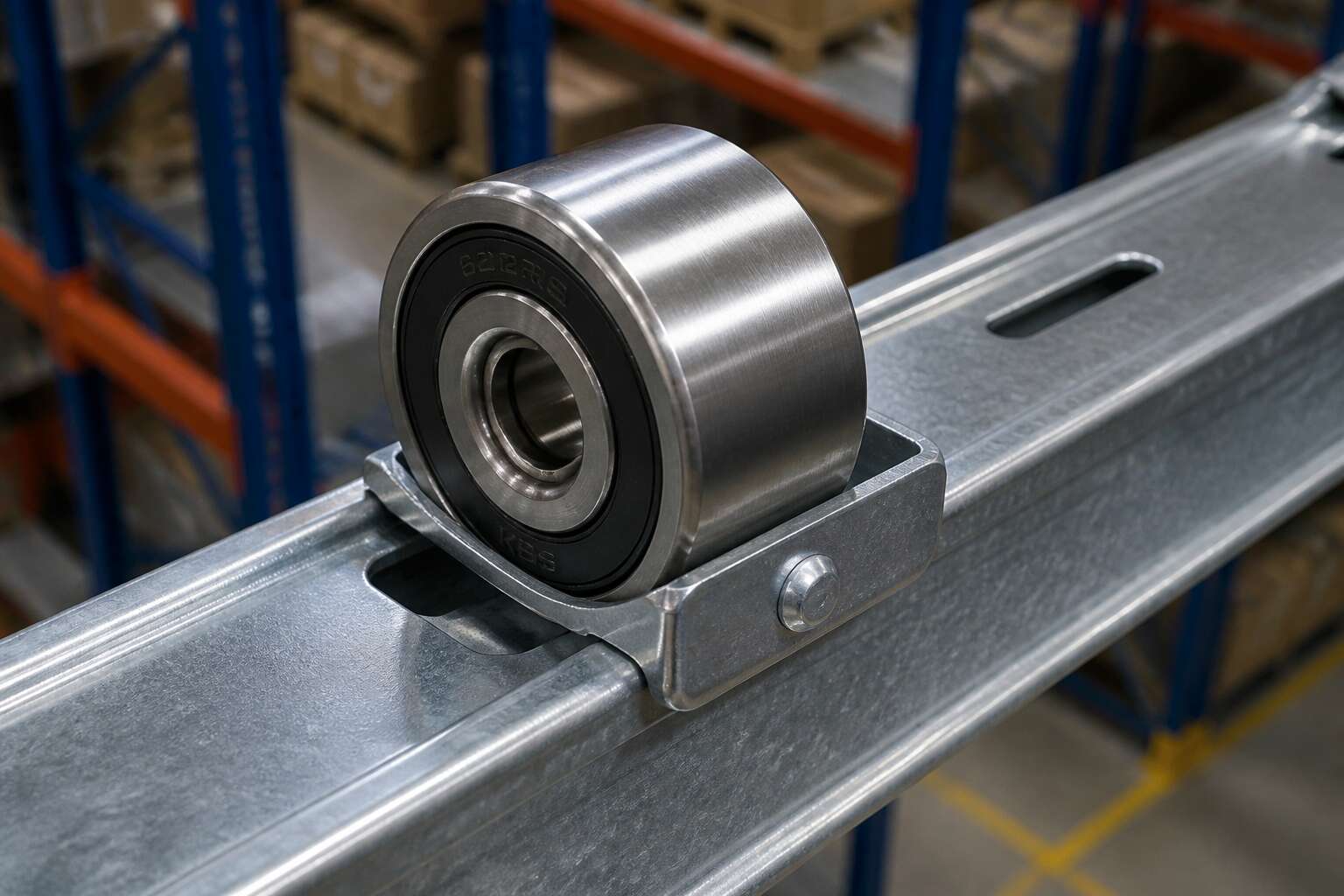
A single seized roller can redirect the entire load path of a storage rack, and operators rarely notice until steel starts to groan. That is why racking roller design deserves more attention than the average warehouse manager gives it. In South Africa, coastal humidity corrodes unprotected bearings, while inland heat expands the steel itself. Material selection and dimensional tolerances are not optional refinements; they are survival mechanisms.
Core engineering principles anchor every durable roller:
- Dynamic load rating must exceed real-world impacts, not just resting weight.
- Roller diameter and tread width directly control contact pressure.
- Spindle hardness and bearing clearance dictate service life under dust and vibration.
When these fundamentals are neglected, the failure is rarely loud, but it is always expensive. A sound racking roller design works quietly, and that silence is the truest measure of its quality.
Structural and Material Considerations
Every warehouse in South Africa contends with a specific set of structural realities. Heat, dust, and coastal humidity all test the integrity of storage systems. Racking roller design must account for these variables from the first engineering sketch. Steel grade matters. So does the thickness of the bearing housing. A roller that performs flawlessly in Johannesburg may fail prematurely in Durban’s salt-laden air.
Consider the load path. The roller transmits forces from the beam to the upright, and any weakness in its material composition becomes amplified over thousands of cycles. We encounter this frequently in facilities that prioritise upfront savings over durability. Common racking roller design options include:
- Carbon steel with zinc plating for interior environments
- Stainless steel for coastal or high-moisture facilities
- Polyurethane-coated rollers for quieter operation and reduced product damage
Each choice alters the dynamic behaviour of the racking system. The designer must weigh cost, longevity, and operational demands before committing to a specification.
Performance and Safety Standards
Safety standards are the quiet architecture of every great warehouse. They rarely make headlines, but they determine whether a system hums or collapses. When evaluating racking roller design, performance cannot be separated from compliance. The best components carry SABS approval and undergo rigorous load testing. That certification is not ornamental. It is the difference between a smooth workflow and a catastrophic failure!
I have seen facilities where warehouse racking components are chosen purely on price. The savings evaporate the moment a pallet shifts. Proper design accounts for dynamic forces, including impact, fatigue, and environmental corrosion.
A robust safety regime includes:
– Regular load testing under real conditions
– Inspection of wheel and track alignment
– Documentation of every maintenance cycle
These practices extend lifespan and protect workers. Ultimately, performance is about trust, built one component at a time.
Design Customization for Specific Racking Types
In South Africa’s busiest hubs, one overlooked component decides whether a pallet glides or grinds. Racking roller design rarely gets the spotlight, yet it must adapt to every configuration, from pallet flow to push back. Standard rollers fail on selective racks because no one accounts for load velocity or aisle temperature.
Customization starts with the racking type. For drive in systems, rollers need flanged edges and hardened steel. For gravity flow, precise tube tolerances prevent jams. Consider these factors:
- Rail spacing and frame pitch
- Impact zones near forklift entries
- Dust levels in the warehouse
Each variable alters bearing clearance or polyurethane blend. A cold storage facility in Cape Town demands different grease than a dry inland depot. The racking roller design must match the structural load and the environmental conditions. Get it wrong, and you will hear failure approaching!
Manufacturing and Quality Control
Every racking roller design we manufacture starts with a simple promise: the wheel must turn true for years, not weeks. We cut, weld, and grind each unit in our Johannesburg workshop, where the dust and heat make precision difficult. Our quality control team checks every roller for bearing alignment and weld penetration before it leaves the floor.
We run three checks on each batch.
- dimensional tolerances using calibrated callipers
- load tests at 150% of rated capacity
- visual inspection for surface pitting
These steps are slow, but they catch the failures that appear long after installation, when the warehouse is full and the shelves are heavy!



0 Comments