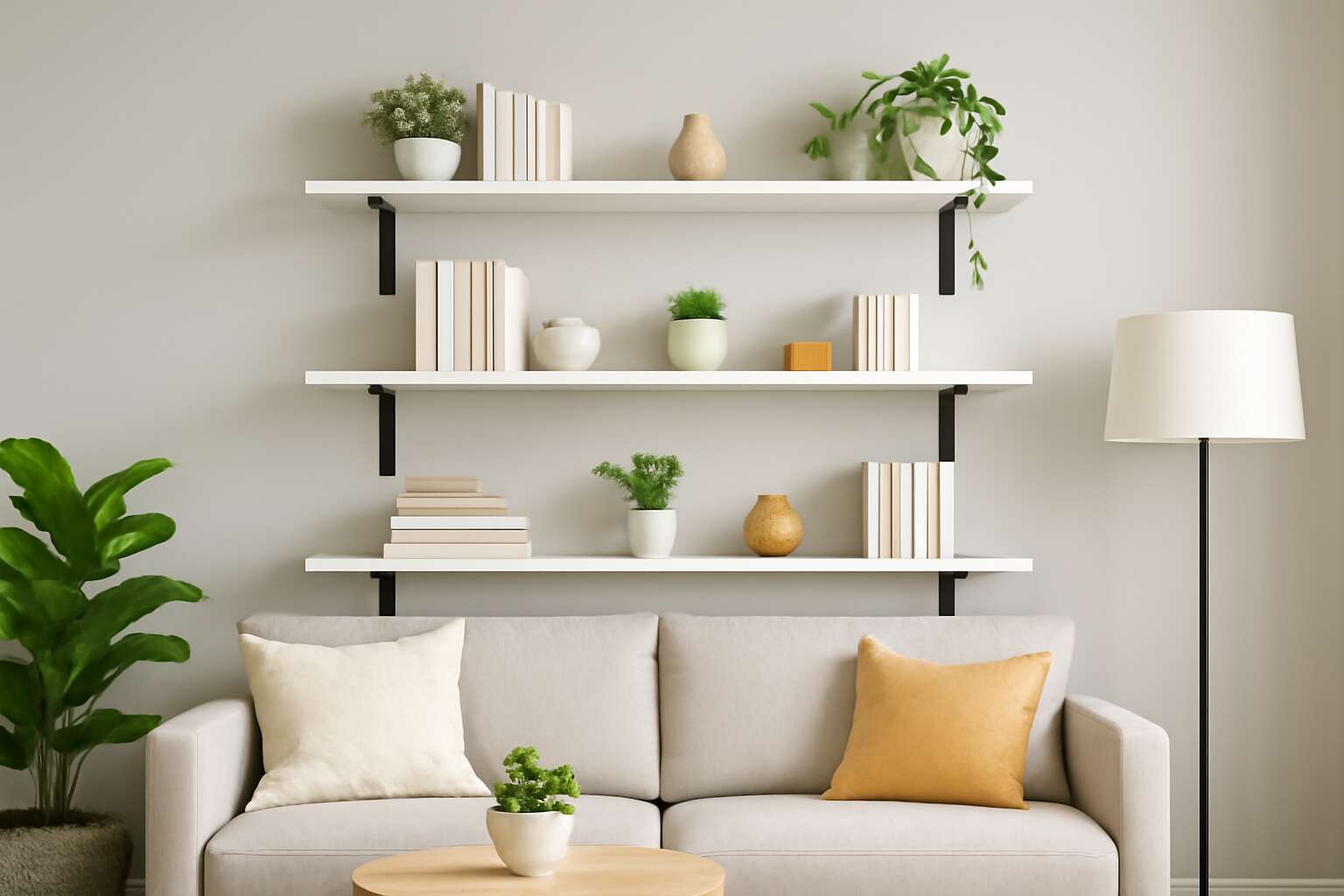
Wall Shelving Fundamentals
Choosing the Right Shelf Style for Wall Space
In South Africa’s compact homes, a well-placed wall shelf can reclaim precious floor space and reshape a room’s conversation with light and air. A single, thoughtful shelf line can suddenly make a wall feel intentional rather than idle.
Choosing the right shelf style for wall space hinges on purpose, proportion, and a touch of mood. For narrow alcoves, a slim, floating plank with discreet brackets lets you display objects without crowding the room; for libraries or kitchens, robust timber with reinforced hardware supports heavier realities. Pairing wall shelving and brackets correctly ties weight, balance, and style into one coherent silhouette.
Consider these factors:
- Wall type and anchor options
- Load-bearing requirements
- Finish, colour, and texture to match décor
Done with care, your selections become more than storage—they speak the room’s language.
Understanding Bracket Types and Their Support
In South Africa’s compact spaces, the wall keeps secrets: a shelf is a breath of light that makes a room feel wider, calmer, and suddenly purposeful.
From fixed metal brackets to hidden cleats, bracket types carry a quiet oath: support without spectacle.
- Fixed metal brackets
- Concealed French cleats
- Angled corner brackets
- Adjustable L-brackets
The choice must honor wall type and load; timber strength and discreet hardware should align with the space’s mood. With proper care, wall shelving and brackets become a language you can read in shadow and shine.
In this theatre of plaster and timber, the silhouette you craft speaks louder than capacity—an echo of balance, weight, and intent.
Load Capacity and Safety Guidelines
Weight is the quiet contract every shelf makes with its wall. In South Africa’s compact spaces, balance becomes architecture: a single misjudged load can shift light into hesitation. Wall shelving and brackets must converse with plaster, timber, and imagination, holding steady while the room breathes.
- Load ratings and shelf materials must align
- Even weight distribution across surfaces
- Environmental influences: humidity, vibration, and daily use
These guidelines form a subtler safety doctrine than overt warnings, a choreography where restraint and ambition meet. When done with intention, your wall shelving and brackets become a steady, serene feature in a room that refuses to shout.
Spacing, Alignment, and Mounting Patterns
Spacing is the quiet architect of perception—one inch can tilt how tall a room feels. With wall shelving and brackets, spacing, alignment, and mounting patterns become more than decoration; they shape light, air, and daily rhythm.
Think in lines, not in individual shelves. Align edges with architectural features and maintain even gaps to create a calm rhythm that reads quickly, even in compact spaces. I design around this rule: rhythm over randomness!
- Grid alignment creates calm symmetry for formal walls
- Continuous lines extend the sense of length along a corridor
- Layered stagger adds interest without chaos
These patterns apply to wall shelving and brackets across South Africa’s varied interiors, balancing function with restraint and ambition.
Hidden vs Visible Brackets: Pros and Cons
“A shelf is a quiet bridge between memory and daily life,” a craftsman once told me. For wall shelving and brackets, that bridge is shaped by choice—the hidden brackets that vanish, and the visible ones that speak. In South Africa’s homes, the right balance of form and function changes a room.
Hidden brackets offer a clean, uninterrupted plane; they let light and objects breathe, doubling as a minimalist canvas. They demand precise mounting and sturdy backing, and can be pricier if walls aren’t perfect.
Visible brackets bring warmth, texture, and easy adaptability. They’re quick to install and often affordable, but they can crowd walls if overused.
- Texture and silhouette emerge
- Quick swaps and flexible spacing
- Weight distribution remains visible
Materials, Finishes, and Durability
Common Materials for Shelves and Brackets
Strong wall shelving and brackets are more than storage— they’re silent commitments you live with daily. “Durability is the quiet partner of design,” a craftsman once told me, and it stays with every choice you make at the wall.
Materials set the stage for supporting systems to perform in harmony with your space. Options range from solid timber and veneered boards to high-grade steel and aluminum, as well as engineered composites that resist warping.
- Wood: hardwoods and plywood cores
- Metal: steel, stainless, or aluminum alloys
- Composite: laminated MDF or birch cores
Finishes protect and personalize, from powder-coated steel to satin wood veneers and marine-grade laminates, especially in humid climates.
Durability hinges on compatibility with environment and mounting, including corrosion resistance, load distribution, and simple maintenance. In SA homes near the coast, stainless steel brackets help resist salt air and fingerprints alike, ensuring the fixtures endure daily use.
Finishes, Coatings, and Corrosion Resistance
Durability is the quiet partner of design, a craftsman once told me, and it travels with every wall shelving and brackets choice in a South African home. Wood brings warmth; metal delivers certainty; composites blend stiffness with lightness.
- Wood: hardwoods and plywood cores
- Metal: steel, stainless, or aluminum alloys
- Composite: laminated MDF or birch cores
Finishes shield and personalize, from powder-coated steel to satin wood veneers and marine-grade laminates, especially where humidity bites. The finish guards against fingerprints and moisture while echoing the room’s character.
Durability hinges on environment and mounting. Coatings act as a shield—powder coats, galvanised finishes, ceramic-sealed surfaces. In coastal SA towns, stainless brackets resist salt air and fingerprints, keeping wall shelving and brackets enduring with minimal maintenance.
Weight Rating and Real-World Load Testing
In the lasting tale of space, materials lend their myth to wall shelving and brackets. Wood whispers warmth and character; metal—steel, stainless, or aluminum alloys—offers a quiet certainty; composites blend stiffness with forgiving lightness. Finishes step in as protectors and style-setters, from powder-coated frames to satin veneers and marine laminates that laugh at humidity and fingerprints.
Durability hinges on more than a gloss card. Weight rating guides a shelf’s duty, while real-world load testing proves it under the sway of daily life—pots, encyclopedias, or a vase on a bookshelf. In SA homes, coastal air and inland humidity demand finishes and brackets chosen for resilience; stainless steel resists salt spray, while ceramic-sealed surfaces shrug off moisture and wear.
- Weight rating categories tested with real-world configurations
- Static vs dynamic load tests for vibrations and bumps
- Environmental endurance in humidity and salt-tinged air
Choose intentionally, so your wall shelving and brackets endure with quiet majesty, a patient companion to everyday living.
Moisture and Temperature Considerations for Bathrooms and Kitchens
In bathrooms and kitchens, wall shelving and brackets must endure steam, splashes, and the slow, gracious wear of daily life. Materials chosen for these rooms carry a quiet courage: moisture-resistant woods, engineered panels with water-guard coatings, and metals—stainless steel, aluminum, or alloy blends—that shrug off humidity and heat. In South Africa, coastal air and inland humidity demand components that resist rust and warping, turning practical choice into lasting style.
Finishes step in as protectors and personality shapers. Stainless steel resists salt spray; ceramic-sealed shelves shrug off moisture; powder coatings guard frames against fingerprints and dampness. Marine laminates and satin veneers, when properly sealed, maintain beauty in steamy kitchens and misty bathrooms, while light-diffusing edges keep glare at bay.
Durability hinges on more than looks: moisture and temperature cycles test joints and finishes. Practical considerations include:
- Steam exposure and water splash patterns
- Temperature swings from hot stove surfaces to cooler rooms
- Cleaning agents and humidity-driven mould resistance
Installation and Mounting Techniques
Stud vs. Anchored Mounting: When to Use Each
Weight is a whisper until gravity answers. In South Africa, mounting missteps account for more shelf drama than any other fixture fail—up to 60% of early failures trace back to how the wall shelving and brackets are anchored. The correct method transforms potential chaos into quiet confidence.
Stud mounting offers unwavering bite: it ties into wall cavities, distributing load along the length of the stud for maximum stability. Anchored mounting favors masonry where studs are sparse or absent, guiding fasteners into brick or concrete.
- Stud mounting: best for heavy items, longer lifespan, minimal creep.
- Anchored mounting: ideal for solid masonry, quick setups, and irregular densities.
In practice, plan your pattern with measured precision, align the brackets with a level, and always test the first live load increment slowly. When done thoughtfully, your wall shelving and brackets become a quiet, confident statement rather than a warning sign from the wall.
Using a Level and Template for Precision
In South Africa, up to 60% of early shelf failures trace back to mounting missteps. The antidote is straightforward: a level and template turn guesswork into precision, transforming wall shelving and brackets into a confident display rather than a warning sign.
Lay out your pattern with patient, measured care, clamp the template to the wall, and mark pilot points. Drill, level again, and drive fasteners with controlled pressure. For a tidy, lasting finish, use a template to transfer every hole and test the first load gently.
- Position the template at the desired height
- Mark holes precisely with a pencil
- Drill pilot holes and set anchors before mounting
With deliberate hands, these shelves become a quiet, confident feature rather than a warning on the wall.
Bracket Placement for Even Load Distribution
When you mount wall shelving and brackets, the real art is in how the load breathes across the wall. A thoughtful layout keeps books, décor, and daily items steady without drama. In South Africa, where homes vary from city apartments to sprawling townhouses, even bracket placement matters more than flash hardware.
Design a plan that respects the wall’s character and the shelf’s intended weight. Look for consistent spacing, align children of brackets, and distribute weight across multiple fixings rather than a single point. Quality screws, wall plugs, and corrosion-resistant materials ensure longevity in your climate. It’s about calm support you barely notice—until it isn’t. I’ve seen the difference a quiet, methodical approach makes to everyday living!
DIY vs Professional Installation: Cost and Risk
Measured, not rushed—that’s the line I hear from seasoned installers when mounting wall shelving and brackets. DIY can save money, but the cost can creep up if walls, anchors, and weight distribution aren’t treated with respect. In South Africa’s varied homes—from city flats to spacious townhouses—the consequences of a sloppy install show up as sagging shelves and unexpected tumbles.
Here are cost and risk considerations distilled for quick decision-making:
- DIY installation can trim upfront fees but may demand replacements and repairs later.
- Professional mounting adds cost upfront but reduces wall damage and misalignment risk.
- Warranties and on-site assessment often protect against hidden defects at scale.
- Time and disruption can rival material costs, especially in busy SA homes.
With wall shelving and brackets, professional installation offers predictable outcomes and long-term peace of mind.
Safety Checks After Installation
When the last screw sinks, the wall shelving and brackets seem to breathe in the dim. A surprising 42% of shelf failures in SA homes start with a misaligned bracket. I’ve seen the quietest rooms turn stormy when weight meets a crooked line, so technique matters, not bravado.
- Double-check fasteners are anchored into solid supports (studs or masonry) and tightened to spec.
- Verify the bracket-to-shelf joints are seated and the whole assembly is plumb with a level.
- Test gradually by loading with light items before placing heavy objects.
After installation, I step back and listen for gravity’s verdict—quiet, balanced, and ready to endure. In SA homes, that calm is the pact you keep with your walls when you chose wall shelving and brackets.
Use Cases and Design Ideas
Living Room and Home Office: Display and Storage
A single wall shelf can redefine a room. It frees floor space and gives display a clean, intentional stage. In South Africa, clever use of wall shelving and brackets turns small living rooms into flexible galleries and tidy storage spaces.
Design ideas that fit living rooms and home offices blend display with function. Consider a shallow run above a desk for reference books, framed souvenirs, and plant life:
- Efficiently staggered heights to create visual rhythm
- Open shelving paired with concealed brackets for a minimalist look
- Corner shelves to maximize alcoves and doorways
Finish choices and hardware moods matter too. Pair warm timber with matte metals to echo SA interiors, and let shelves become a quiet backbone for daily life—neat storage, bold displays, and a room that feels taller.
Kitchen Storage and Small Space Solutions
Kitchen space in SA homes can feel as compact as a shoebox in peak season. Yet wall shelving and brackets transform every inch into a display stage and a practical pantry, proving that style and storage can be the best roommates.
- Pantry verticals in tight spaces
- Glassware displayed above the island for quick grabs
- Corner shelves taming alcoves and doorways
- Compact coffee and mug station near the breakfast nook
Finish and hardware matter in the kitchen too; let wall shelving and brackets lean into resilience while you stage spices and cups.
In the end, these shelves are not mere storage; they are architectural punctuation in daily life.
Bathrooms and Laundry Rooms: Moisture-Resistant Setups
In South Africa’s sunlit bathrooms, moisture is a patient adversary that never takes a holiday. Wall shelving and brackets become a quiet partner in that drama, offering resilience without sacrificing grace. For bathrooms and laundry rooms, choose moisture-resistant finishes and corrosion-resistant hardware—the kind that smiles at humidity and returns the favor with years of quiet service.
Smart placements favor airflow and splash control, turning damp corners into purposeful display zones and practical hampers.
- Epoxy-coated or stainless brackets that shrug at humidity
- Water-repellent shelving materials such as treated timber or composite
- Hidden brackets for a clean, glasslike line that’s easy to wipe down
With these choices, the daily ritual of chores becomes a theatre of order—practical, poetic, and perfectly suited to SA homes.
Retail and Display Environments: Showcasing Items
Retail spaces are a stage, and good display turns footfall into engagement. A well-conceived shelf and bracket system can guide shoppers, spotlight products, and keep aisles feeling calm rather than cluttered. “Good display is good business,” as a South African retailer quipped, and the point holds across stores big and small.
In practice, use cases for wall shelving and brackets in retail span impulse zones, vitrines for premium lines, and back-of-house merchandising scenes. Design ideas emphasize modularity, clean lines, and easy re-merchandising to adapt to seasonal ranges and promotions.
- Create tiered displays that draw the eye from top to bottom without crowding.
- Use modular brackets that snap into new configurations as SKUs rotate.
- Pair neutral finishes with brand colours for a cohesive storefront appearance.
When planning, consider sightlines and accessibility; the right fixtures harmonise with lighting and flooring, turning any shopcorner into a purposeful showroom.
Floating Shelves: Minimalist Aesthetic Options
A spark of retail alchemy: clean, floating displays lift perceived value, especially in small spaces. Floating shelves offer a minimalist stage for goods, while wall shelving and brackets act as a quiet spine—precise, unobtrusive, and ready to disappear. It’s about letting the gaze travel, not shouting with hardware.
Minimalist ideas center on lightness and restraint: slim profiles, hidden fixings, and finishes that catch the light without shouting. Offset stacks create rhythm; neutral tones anchored by a brand color keep the display cohesive. The goal is space, not clutter.
- Offset stagger for depth and movement
- Hidden fixings to preserve uninterrupted lines
- Neutral finishes that harmonise with brand colours
Done well, the setup transforms space into a quiet stage where stories unfold under thoughtful lighting.


0 Comments