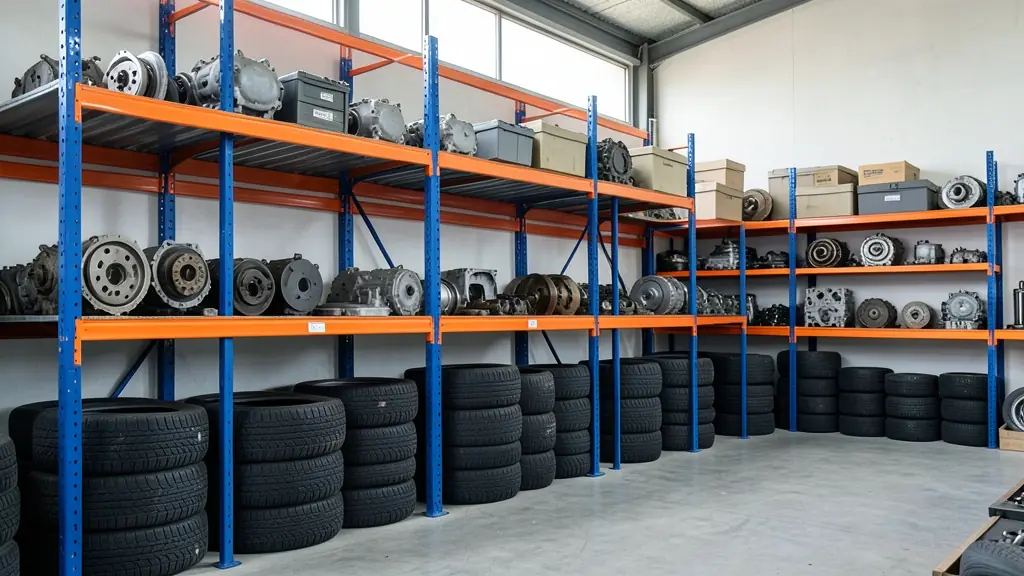
Heavy duty shelving is for stock that would bend ordinary shelves: motor parts, gearboxes, tools, tyres, castings, hardware and full boxes of fasteners. It uses stronger uprights, beams under the decks and steel or chipboard shelves, and the maker rates every shelf for a higher load. This page explains what makes shelving heavy-duty, how to read the shelf ratings, and why tall heavy bays must be anchored or braced. Send one request and shelving suppliers and installers who work near you quote you directly.
What makes shelving heavy-duty
The difference is in the steel and the shelf build:
- heavier uprights, often a thicker gauge or a bigger profile
- beams under the front and back of each shelf, locked into the uprights
- decks of steel panels, chipboard or wire mesh resting on the beams
- bracing at the back or sides of tall bays
Some heavy-duty systems look like small longspan racking, which carries long beams for bulky stock. Light steel shelving suits cartons and files.
Shelf ratings come from the maker
Every system is rated by its maker per shelf and per bay, for a load spread evenly across the shelf. The figure depends on the shelf length, the beams and the deck, so a wider shelf of the same system carries less. Ask for the rating in writing and keep it on a load notice on the bay. A single heavy item on the middle of a shelf is harder on it than the same weight spread out, so tell the supplier about point loads like a gearbox or an engine block.
Anchoring, bracing and loading
A tall bay loaded with heavy parts can tip if it is pulled, climbed or knocked. Fix bays to the wall, tie back-to-back runs together and anchor base plates to the slab where the maker says so. Load the heaviest items on the lowest shelves, keep a step ladder for the top, and never stand on the shelves. Check the bays now and then for bent beams, missing locks or loose fixings, and replace damaged parts before loading them again. If a pallet jack or forklift works nearby, add upright protectors at the ends of the run.
Where heavy-duty shelving is used
Motor workshops and parts shops, engineering and maintenance stores, tyre fitments, hardware stores, mine stores, farm workshops and builders' stores. Mixed stores often combine heavy-duty bays for big parts with industrial shelving and bins for small ones.
When stock gets heavier still or arrives on pallets, it is time to look at forklift loaded pallet racking instead of shelving. Hand loaded shelving is for items one person can lift safely; anything heavier needs a lifting aid, a trolley at the right height or a different kind of storage altogether.
What to put in your request
- The heaviest load per shelf and any single heavy items
- How many bays, and the height, width and depth
- Steel, chipboard or mesh decks
- The floor and wall where the bays will stand
- Whether you need installation, anchoring or protectors
Heavy-Duty Shelving for warehouses, shops, workshops and homes
- Warehouses and distribution centres: heavy cartons and loose parts that are picked by hand, not by forklift
- Factories and manufacturers: dies, castings, spare motors and heavy consumables near the plant
- Shops, supermarkets and spaza shops: stock rooms of hardware, auto spares and tyre shops
- Wholesalers and building supply yards: heavy lines like fasteners, fittings and tools in bulk boxes
- Workshops, contractors and trades: gearboxes, brake parts, tools and tyres in a motor or engineering workshop
- Offices, archives, schools and hospitals: seldom needed, except for heavy archive boxes or equipment stores
- Restaurants, caterers and wine cellars: heavy dry stores, drinks stock and equipment in large kitchens and hotels
- Homeowners: a strong bay or two in the garage for tools, paint and heavy boxes
- Farms, packhouses and co-ops: workshop spares, implement parts and tools in a farm store
Frequently asked questions
Do you make or install heavy-duty shelving?
How do I know if I need heavy-duty shelving?
Can heavy-duty shelving hold tyres?
Is chipboard or steel decking better?
Heavy-Duty Shelving by province and city
- Johannesburg
- Pretoria
- Centurion
- Midrand
- Sandton
- Randburg
- Roodepoort
- Krugersdorp
- Randfontein
- Germiston
- Boksburg
- Benoni
- Kempton Park
- Alberton
- Vanderbijlpark
- Vereeniging
- Durban
- Pinetown
- Pietermaritzburg
- Richards Bay
- Newcastle
- Ladysmith
- Gqeberha (Port Elizabeth)
- East London
- Kariega (Uitenhage)
- Mthatha
- Cape Town
- Bellville
- Paarl
- Stellenbosch
- George
- Worcester
- eMalahleni (Witbank)
- Middelburg
- Secunda
- Mbombela (Nelspruit)
- Rustenburg
- Brits
- Klerksdorp
- Potchefstroom
- Mahikeng
- Polokwane
- Tzaneen
- Kimberley
- Upington
- Bloemfontein
- Welkom
- Sasolburg