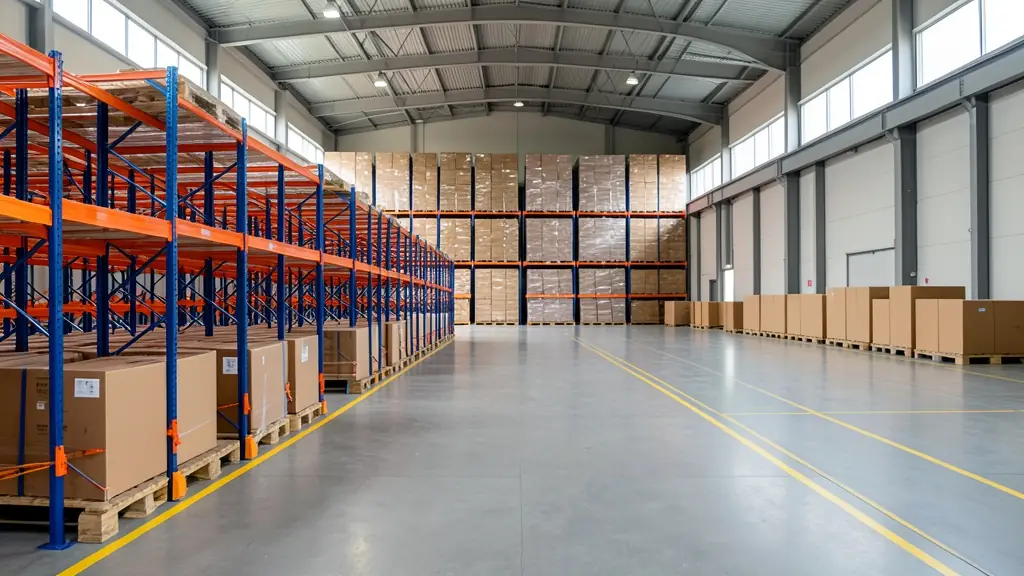
Warehouse racking is not one product but a family of systems, and most warehouses use more than one. Selective racking gives access to every pallet; dense systems store more pallets in less floor space but give up some access; and hand loaded systems handle the small picks. The right mix depends on how many product lines you carry, how many pallets of each, how fast they move and what trucks you run. This page compares the main systems so you can talk to suppliers with a clear idea of what you need.
Selective and double deep
Selective pallet racking is the standard: one pallet deep from each aisle, so every pallet can be reached directly. It suits warehouses with many product lines and is the easiest to change later. Double deep racking puts two pallets one behind the other, saving aisles, but needs a reach truck with extending forks and means the back pallet is only reached after the front one moves. It works well where you hold at least two pallets of most lines, so the front and back positions can carry the same product.
Dense storage
- Drive-in racking: forklifts drive into lanes and set pallets on rails, last in, first out. Good for many pallets of one product and for cold stores.
- Push-back racking: pallets sit on carts or rollers and are pushed back by the next pallet loaded.
- Pallet flow (live) racking: pallets roll on a gentle slope from the loading side to the picking side, first in, first out.
- Shuttle and mobile pallet racking: a powered shuttle in the lanes, or whole runs on rails that move to open an aisle.
Dense systems cost more per pallet place and need good pallets and careful drivers.
Narrow aisle, long lengths and hand picking
Narrow aisle and VNA racking fit more pallets on the same floor with taller racks and special trucks, but need a very flat floor. Cantilever racking handles timber, pipe and sheet. Longspan racking and shelving cover cartons and small picks, often at low level under pallet storage or on a mezzanine floor. Each of these has its own page with the questions to ask before you order, and most warehouses end up with two or three of them side by side.
Picking against bulk storage
Many warehouses split the store in two: bulk pallets up high or in dense lanes, and a picking face at ground level where people or pallet jacks pick cases and units. Fast movers sit near dispatch, slow movers further back. A layout design based on your actual stock data shows which mix gives the most pallet places with the access you need, and it usually saves money before any steel is ordered. Remember the fire and escape routes too: racking changes how sprinklers reach the stock, so involve the fire installer before the layout is final.
What to put in your request
- Number of product lines and pallets of each
- How fast stock moves and whether FIFO matters
- Pallet size, weight and loaded height
- Building size, clear height and column grid
- Trucks you use now or plan to buy
Warehouse Racking Systems for warehouses, shops, workshops and homes
- Warehouses and distribution centres: a mix of selective racking, dense lanes and a picking face near dispatch
- Factories and manufacturers: dense lanes for raw material and selective racking for finished goods
- Shops, supermarkets and spaza shops: racking in regional distribution centres that supply a chain of stores
- Wholesalers and building supply yards: selective racking for many lines and longspan for broken cases
- Workshops, contractors and trades: seldom a whole system, usually a few bays of pallet or longspan racking
- Offices, archives, schools and hospitals: an archive store fitted with longspan racking or mobile shelving
- Restaurants, caterers and wine cellars: a food distributor's cold store with drive-in lanes and selective bays
- Homeowners: not usually needed at home
- Farms, packhouses and co-ops: packshed and cold store racking for bins, cartons and pallets of fruit
Frequently asked questions
Are you a racking company?
No. We are a free quote request service. We pass your request to independent racking suppliers, designers and installers who work in your area, and they quote you directly. We do not sell or install anything ourselves.
Which warehouse racking system stores the most pallets?
Dense systems such as drive-in, push-back, shuttle and mobile racking usually store the most pallets on a given floor, and VNA racking gains height. But they suit fewer product lines with many pallets each. Selective racking stores fewer but reaches every pallet.
Can I change the racking system later?
Selective racking is easy to change and extend. Dense and narrow aisle systems are harder to rearrange because they depend on trucks, rails and floor flatness. It pays to plan for growth before you order: leave room for extra runs, and ask the supplier which parts of the layout could change later without new trucks or floor work.
Do I need new forklifts for a new racking system?
Sometimes. Double deep needs reach trucks with extending forks, and VNA needs turret or man-up trucks. Selective and drive-in racking usually work with the counterbalance forklifts or reach trucks you already have, within their lift height.
Warehouse Racking Systems by province and city
- Johannesburg
- Pretoria
- Centurion
- Midrand
- Sandton
- Randburg
- Roodepoort
- Krugersdorp
- Randfontein
- Germiston
- Boksburg
- Benoni
- Kempton Park
- Alberton
- Vanderbijlpark
- Vereeniging
- Durban
- Pinetown
- Pietermaritzburg
- Richards Bay
- Newcastle
- Ladysmith
- Gqeberha (Port Elizabeth)
- East London
- Kariega (Uitenhage)
- Mthatha
- Cape Town
- Bellville
- Paarl
- Stellenbosch
- George
- Worcester
- eMalahleni (Witbank)
- Middelburg
- Secunda
- Mbombela (Nelspruit)
- Rustenburg
- Brits
- Klerksdorp
- Potchefstroom
- Mahikeng
- Polokwane
- Tzaneen
- Kimberley
- Upington
- Bloemfontein
- Welkom
- Sasolburg