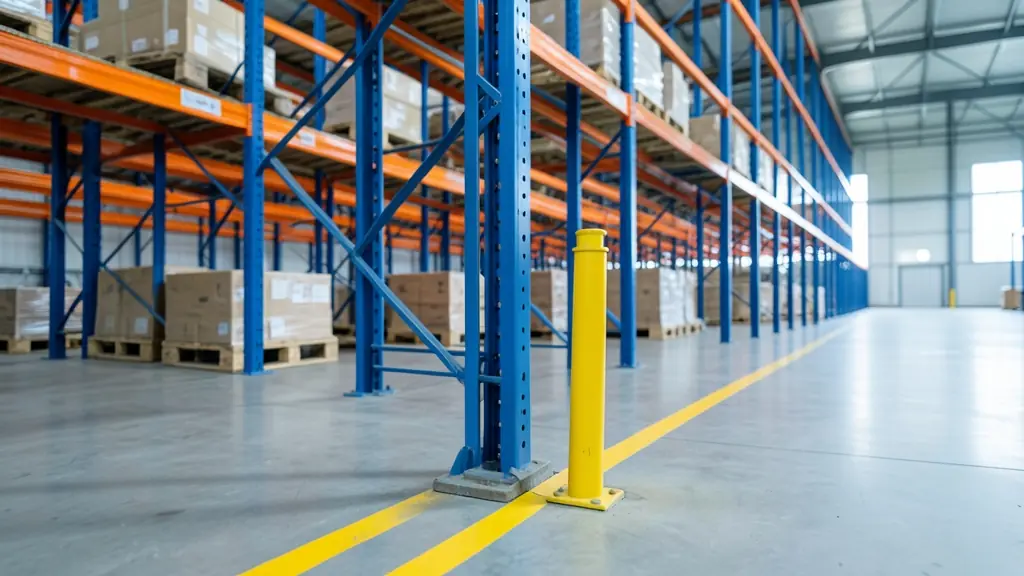
Racking takes knocks every day, and a dented upright carrying full pallets is easy to walk past. A racking inspection is a systematic check of every frame, beam, lock and base plate by a trained person, with each problem graded and written up so you know what to fix and how soon. This page explains your duty as an employer, the inspection routine widely used in warehouses, what the inspector looks at and what the report should give you. Send one request and independent racking inspectors who work in your area quote you directly.
Is a racking inspection a legal requirement?
The Occupational Health and Safety Act, 85 of 1993, makes the employer responsible for a safe workplace and for keeping plant and equipment safe. Racking is part of that. The Act does not set a racking inspection interval of its own, so many South African warehouses follow the European standard EN 15635 on the use and maintenance of storage equipment as good practice. Your insurer, your client or a health and safety audit may also ask for proof that racking is inspected. In practice, a dated inspection report and a record of repairs is the simplest way to show that you take the duty seriously.
How often racking should be checked
The widely used EN 15635 routine has three layers:
- a person responsible for storage equipment safety named on site
- regular visual checks by your own people, often weekly, with damage reported at once
- an expert inspection at least every 12 months by a trained, competent inspector
Busy sites with lots of forklift traffic often inspect more often. Check again after any big impact, a relocation or a change to beam levels.
The traffic light system
Inspectors commonly grade damage in three colours. Green: within limits, record it and watch it. Amber: damage that needs action; offload the bay when it is emptied and do not reload it until repaired, often within four weeks. Red: serious damage; offload the bay at once and isolate it until it is repaired. Amber and red items lead to racking repairs, and repeated damage in one spot is a sign you need better protection.
What the inspector checks and the report
The inspector walks every run and looks at uprights for dents, bends and twists, bracing, beams for damage and sagging, safety locks, base plates and anchors, whether frames are plumb, whether load notices are present and correct, and signs of overloading. You should get a written report listing each defect by location and grade, with photos and the action needed. Keep it on file with the next one, and record when each item was repaired. A good report also notes anything that is not damage but still a risk, such as pallets overhanging the beams, broken pallets, stock stored on the floor in an aisle, or beam levels changed without a new load notice.
What to put in your request
- The number of bays and runs, and the rack height
- The racking system or maker, if you know it
- When the racking was last inspected
- Any damage you already know about
- Whether you want repairs quoted at the same time
Racking Inspections for warehouses, shops, workshops and homes
- Warehouses and distribution centres: a yearly expert inspection of every run, with weekly checks between visits
- Factories and manufacturers: racking near busy production lines checked for forklift damage and overloading
- Shops, supermarkets and spaza shops: storeroom and back of shop racking checked before the busy season
- Wholesalers and building supply yards: tall pallet racking inspected and damage graded so bays can be offloaded in time
- Workshops, contractors and trades: parts and tyre racking checked for bent uprights and missing beam locks
- Offices, archives, schools and hospitals: longspan and archive racking checked for sagging decks and loose anchors
- Restaurants, caterers and wine cellars: cold store and dry goods racking inspected for damage and corrosion
- Homeowners: rarely needed at home, though tall garage shelving should be checked and fixed down
- Farms, packhouses and co-ops: packshed and cold store racking inspected before the harvest season starts
Frequently asked questions
Do you inspect racking yourselves?
Can my own staff do the weekly checks?
What happens if the inspector finds red damage?
What does an inspection cost?
Racking Inspections by province and city
- Johannesburg
- Pretoria
- Centurion
- Midrand
- Sandton
- Randburg
- Roodepoort
- Krugersdorp
- Randfontein
- Germiston
- Boksburg
- Benoni
- Kempton Park
- Alberton
- Vanderbijlpark
- Vereeniging
- Durban
- Pinetown
- Pietermaritzburg
- Richards Bay
- Newcastle
- Ladysmith
- Gqeberha (Port Elizabeth)
- East London
- Kariega (Uitenhage)
- Mthatha
- Cape Town
- Bellville
- Paarl
- Stellenbosch
- George
- Worcester
- eMalahleni (Witbank)
- Middelburg
- Secunda
- Mbombela (Nelspruit)
- Rustenburg
- Brits
- Klerksdorp
- Potchefstroom
- Mahikeng
- Polokwane
- Tzaneen
- Kimberley
- Upington
- Bloemfontein
- Welkom
- Sasolburg