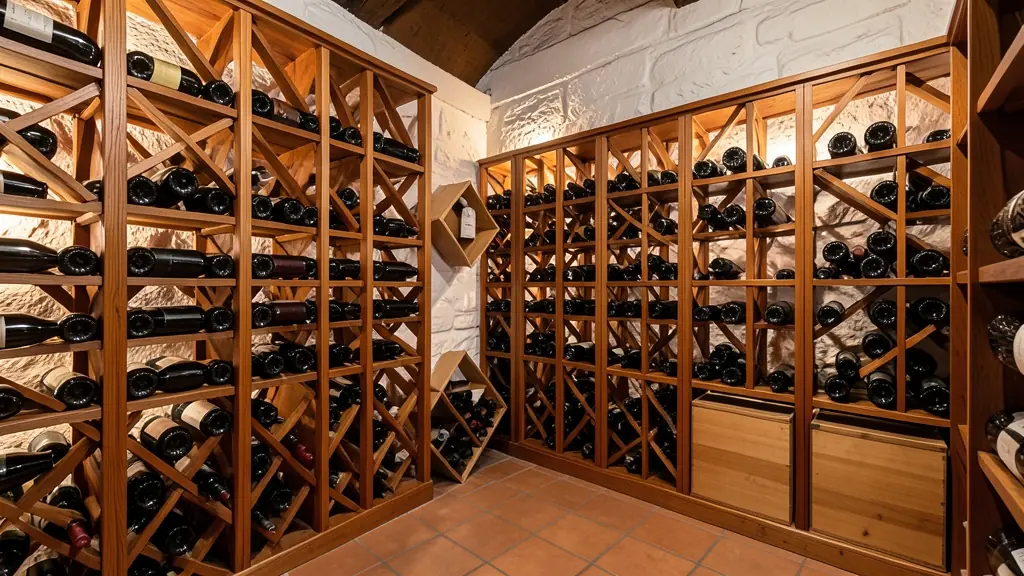
Wine racking holds bottles lying on their side, which keeps the cork moist, and puts every bottle where you can find it. It ranges from a small rack in a home pantry to a cellar of thousands of bottles on a wine farm, and from timber lattice to steel, wire and stone. This page covers home cellars, wine farms and tasting rooms, restaurants and wine shops, materials, sizing by bottle count and the conditions wine needs. Send one request and wine racking makers and installers who work near you quote you directly.
Kinds of wine racks
- Lattice racks: a single bottle in each hole, so every bottle is easy to see and take out.
- Cube and diamond bins: bottles stacked in larger openings, more per square metre, for cases of the same wine.
- Case racks: shelves for 6 or 12 bottle boxes, for wine still in its case.
- Display racks: angled or label-forward racks for restaurants and wine shops, often with a bottle shown face out.
- Wall and pantry racks: small units for a kitchen, bar or dining room.
Timber, metal or stone
Timber racking is the classic cellar look and is gentle on bottles; choose a timber that resists damp and rot, and ask how it is finished. Steel and wire racks are slim, modern and hold more bottles in a narrow space, and suit damp cellars when galvanised or coated. Stone, brick or concrete bins are built into a cellar and hold steady temperatures well. Wine farms with bulk stock in cases and on pallets often add pallet racking or longspan racking in the store.
Sizing by bottle count
Wine racking is sized by the number of bottles. Count what you have now and what you expect to keep, and leave room for growth. Note the bottle shapes too: many racks are sized for standard bottles, and wider sparkling wine bottles or magnums may need their own spaces. Measure the walls, ceiling height, doors and any windows, and say whether you want the racks freestanding or fixed.
Cellar conditions
Wine keeps best somewhere cool and stable, dark and still. Big swings of temperature, sunlight and vibration are what to avoid. An inside room or a basement is better than a garage against a sunny wall. A wine farm cellar or tasting room needs racks that suit the building and the visitors, and a restaurant or wine shop wants a rack that shows the range. Racks loaded with hundreds of bottles are heavy, so fix tall units to the wall.
Humidity matters too: a very dry room can dry out corks over time, and a very damp one can mark labels and rot timber. A cellar specialist can tell you whether your room needs cooling or humidity control, and a racking maker can suggest materials that suit it.
What to put in your request
- How many bottles you have now and expect to keep
- The room size, ceiling height, doors and windows
- Timber, steel, wire or stone racking
- Lattice, diamond bins, case racks or display racks
- Bottle shapes such as magnums or sparkling wine
Wine Racking for warehouses, shops, workshops and homes
- Warehouses and distribution centres: wine and liquor distributors with case racking and pallet racking
- Factories and manufacturers: wineries storing bottled stock before it is labelled and shipped
- Shops, supermarkets and spaza shops: wine shops and liquor stores showing the range on display racks
- Wholesalers and building supply yards: wine merchants holding stock in cases and bins
- Workshops, contractors and trades: joiners and steel fabricators who build wine racks to order
- Offices, archives, schools and hospitals: a wine wall in a boardroom or corporate entertainment area
- Restaurants, caterers and wine cellars: restaurants, hotels, tasting rooms and lodges with a wine list
- Homeowners: a home cellar, a pantry rack or a wine wall in the dining room
- Farms, packhouses and co-ops: wine farm cellars and tasting rooms showing the farm's own wines
Frequently asked questions
Do you make or sell wine racks yourselves?
Why should wine bottles lie on their side?
Can a wine rack be built to fit an odd space?
Do I need a cooling unit for my cellar?
Wine Racking by province and city
- Johannesburg
- Pretoria
- Centurion
- Midrand
- Sandton
- Randburg
- Roodepoort
- Krugersdorp
- Randfontein
- Germiston
- Boksburg
- Benoni
- Kempton Park
- Alberton
- Vanderbijlpark
- Vereeniging
- Durban
- Pinetown
- Pietermaritzburg
- Richards Bay
- Newcastle
- Ladysmith
- Gqeberha (Port Elizabeth)
- East London
- Kariega (Uitenhage)
- Mthatha
- Cape Town
- Bellville
- Paarl
- Stellenbosch
- George
- Worcester
- eMalahleni (Witbank)
- Middelburg
- Secunda
- Mbombela (Nelspruit)
- Rustenburg
- Brits
- Klerksdorp
- Potchefstroom
- Mahikeng
- Polokwane
- Tzaneen
- Kimberley
- Upington
- Bloemfontein
- Welkom
- Sasolburg